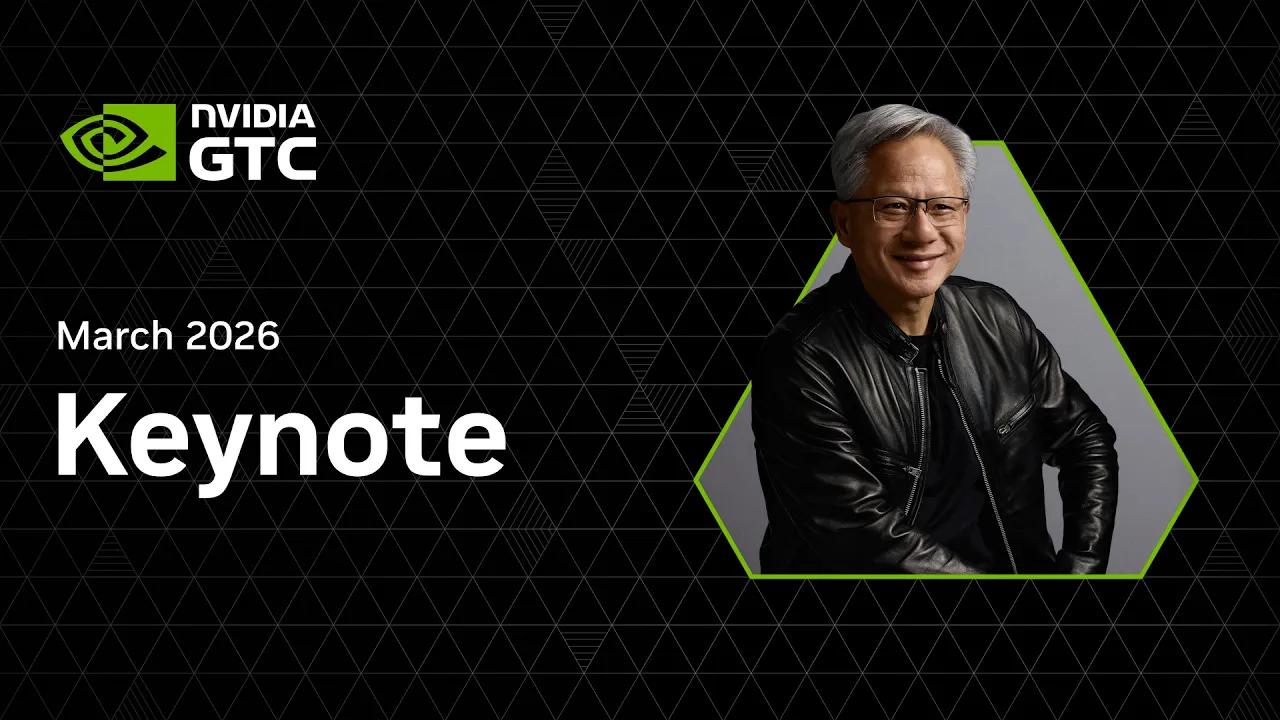
NVIDIA is set to take center stage today with GTC 2026, its flagship AI conference, where founder and CEO Jensen Huang will outline what’s next for the company’s AI vision and unveil new technologies across hardware, software, and the broader platform stack.
The GTC 2026 keynote takes place Monday, March 16 at 11 a.m. PT at the SAP Center in San Jose, with attendees traveling in from around the world. NVIDIA is also offering a free livestream on its official website, making it easy for developers, businesses, and AI enthusiasts to follow along in real time.
GTC has become one of the biggest dates on the AI calendar, and this year’s event is expected to be especially packed. The conference spans a wide range of current and emerging topics, including physical AI, AI factories, agentic AI, and inference—areas that are quickly becoming central to real-world AI deployment. NVIDIA says Huang’s keynote will cover the full stack, touching on chips, software, models, and applications, as the company continues pushing toward AI infrastructure measured at massive scale.
Before the main keynote begins, NVIDIA is also hosting a pregame show starting at 8 a.m. PT featuring a lineup of prominent AI leaders, including executives from Perplexity, LangChain, Mistral, Skild AI, and OpenEvidence. That sets the stage for what’s expected to be a headline-heavy first day, with hundreds of sessions across multiple venues throughout downtown San Jose.
In addition to Monday’s keynote, Huang is scheduled to moderate a panel on open models on Wednesday, March 18 at 12:30 p.m. PT. The discussion will focus on how open models compare to frontier closed models and what that means for teams building products and services on top of them. The panel is expected to include LangChain leadership alongside representatives from major AI and venture groups.
So what should viewers and attendees expect from the announcements? NVIDIA has already signaled that it’s preparing multiple chips the world hasn’t seen before, and GTC 2026 is widely anticipated to mark the formal kickoff of the Vera Rubin platform. That new platform is positioned as the next step beyond Blackwell and Blackwell Ultra, promising another jump in AI performance and capability. There’s also growing anticipation around what comes after Vera Rubin, with talk of future architectures such as Feynman that could bring additional next-generation technologies into NVIDIA’s long-term AI roadmap.
Beyond the data center, there are signs NVIDIA may use GTC 2026 to push further into consumer-facing AI hardware. One of the biggest questions is whether the company will reveal new system-on-chip designs aimed at AI PCs, a market that’s rapidly heating up as Intel, AMD, Qualcomm, and Apple all make aggressive moves to define the next era of on-device AI computing. If NVIDIA is ready to make a more formal entrance here, GTC is the kind of stage where that story would land with maximum impact.
NVIDIA is also expected to share updates tied to its partnership with Intel. The most closely watched possibilities include custom Xeon-based solutions paired with NVLINK connectivity, along with deeper use of Intel’s advanced packaging capabilities. Intel has been spotlighting EMIB interconnect technology heavily, and GTC 2026 could be where that kind of integration becomes more concrete in NVIDIA’s future chip plans.
With major AI platform reveals, potential next-gen consumer hardware, and broader ecosystem updates all on the table, GTC 2026 is shaping up to be one of NVIDIA’s most important conferences yet. For anyone who wants to catch the announcements as they happen, the keynote and livestream are the best way to follow the company’s next big moves in AI.