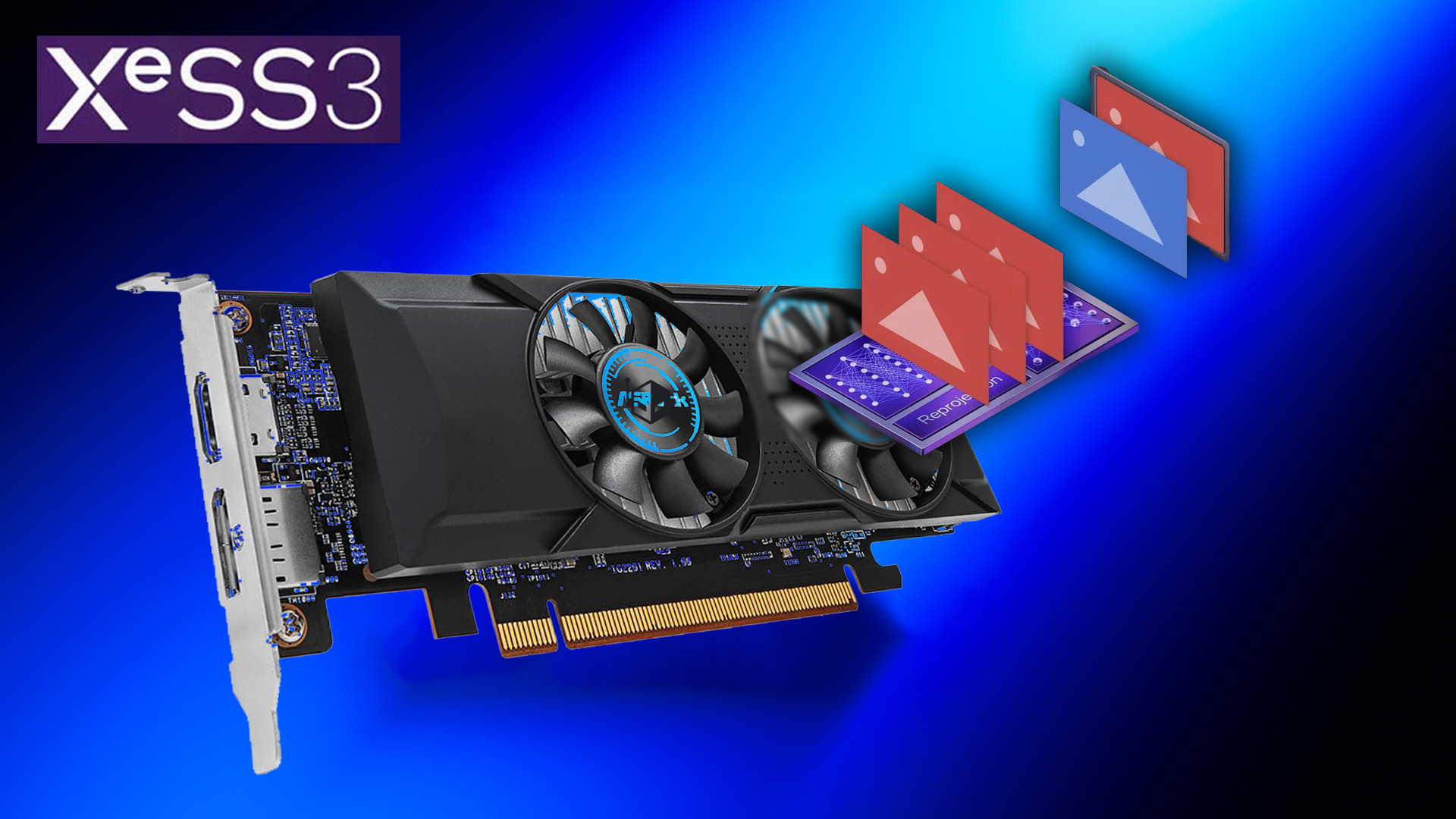
Intel’s XeSS 3 Multi-Frame Generation (MFG) is shaping up to be one of the most exciting upgrades for Arc graphics cards, promising big FPS gains by generating additional frames. Intel has already confirmed the feature is intended for the wider Arc lineup, including first-generation Alchemist GPUs. The problem is that an official driver enabling MFG for older Arc hardware still hasn’t arrived, leaving early adopters experimenting with workarounds to get the feature running ahead of schedule.
Right now, XeSS 3 MFG is officially working only on Panther Lake. Even so, users have been testing ways to unlock the feature on various Arc GPUs, and one recent example is especially interesting: a YouTuber showed XeSS 3 Multi-Frame Generation running on the Intel Arc A380, an entry-level Alchemist card that launched nearly four years ago.
The method used was surprisingly straightforward. It involved copying and pasting two DLL files from one Intel graphics driver folder (Graphics_101.8362) into another (Graphics_101.8425). After making that simple change, the user was able to access Intel’s frame generation options inside the graphics software, including 2x, 3x, and 4x frame generation modes.
To demonstrate the impact, the YouTuber tested Cyberpunk 2077, a demanding modern game that can easily overwhelm budget GPUs. The setup was 1080p resolution, Low settings, with XeSS 2 enabled using the Ultra Quality preset. In that configuration, the Arc A380 reportedly delivered around 50–60 FPS, which is fairly typical performance for an entry-level card in such a heavy title.
Once XeSS Frame Generation was enabled, the results jumped dramatically. Frame rates reportedly climbed into the 130–150 FPS range, pushing the game into triple-digit territory on a GPU that normally wouldn’t come close to those numbers in Cyberpunk 2077. For anyone still using older Intel Arc graphics cards, that kind of uplift is exactly why XeSS 3 and multi-frame generation support is getting so much attention.
There are important trade-offs, though. The biggest downside reported was noticeable input lag, which becomes more troublesome at the 4x frame generation setting. The user also saw some ghosting, though it was described as manageable. These drawbacks aren’t entirely surprising—especially for a low-end GPU—because frame generation techniques can improve perceived smoothness while also increasing latency, depending on the implementation and settings.
The sweet spot in this test appeared to be 3x Frame Generation. Input lag was said to be minimal compared to 4x, while performance still landed around 120 FPS. If these results hold up across more games, it suggests that Intel’s Multi-Frame Generation could extend the useful life of older Arc GPUs and make modern, supported titles feel much more playable—even on budget Alchemist cards.
Of course, this is still an unofficial workaround rather than full, supported functionality. For most users, the best experience will likely come once Intel releases proper drivers for XeSS 3 MFG across the older Arc lineup. But as this Arc A380 test shows, the demand is clearly there—and some enthusiasts aren’t waiting around to see what these older GPUs can really do.