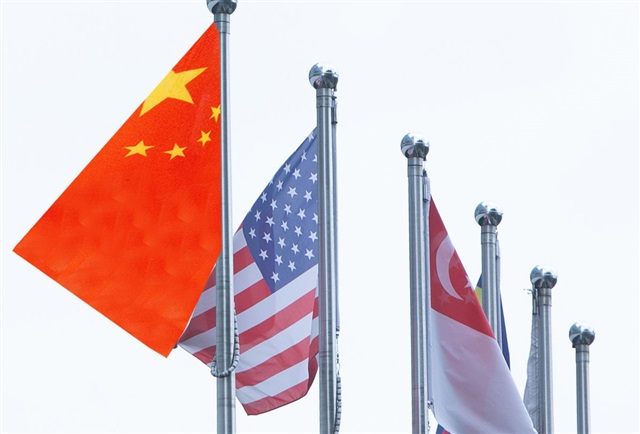
China’s AI Push Accelerates Despite US Tech Restrictions
China’s artificial intelligence industry is pushing forward at a steady clip, even as it remains behind leading US firms in cutting-edge capabilities. Ongoing US export controls have tightened access to advanced chips and tools, but they have not halted progress. Instead, they have reshaped priorities, nudging the sector toward homegrown hardware, efficiency-focused software, and practical, revenue-generating applications.
Across research labs, startups, and major platforms, the emphasis is shifting from raw compute power to smarter development strategies. Teams are refining model architectures, compressing and quantizing large language models for lower-cost deployment, and leaning on retrieval techniques and domain-specific training to improve accuracy without massive training runs. Cloud providers and data center operators are also optimizing infrastructure and energy use to stretch available resources further.
The hardware picture is changing as well. With top-tier chips harder to obtain, companies are stacking clusters of alternative accelerators, improving networking, and using scheduling software to reduce idle time. Domestic semiconductor efforts, while not yet at the leading edge, are steadily advancing and increasingly tailored to AI inference, computer vision, and edge computing needs.
On the commercial side, momentum is strongest in sectors where AI can deliver immediate value:
– Manufacturing: quality inspection, predictive maintenance, and supply-chain forecasting
– Finance: risk modeling, customer service automation, and compliance assistance
– Healthcare: medical imaging support, clinic triage tools, and hospital workflow optimization
– Mobility and robotics: driver-assistance algorithms, logistics routing, and warehouse automation
– Consumer services: multilingual chatbots, recommendation engines, and content moderation
Regulation and governance are also taking clearer shape. Policymakers are publishing standards around data security, model oversight, and content responsibility, seeking to balance innovation with safety and social trust. This evolving framework gives enterprises more confidence to trial and deploy AI tools at scale.
What’s powering the continued growth
– Strong domestic demand for automation and productivity gains
– A pivot toward algorithmic efficiency and domain-specific models
– Investment in talent pipelines across universities and enterprise labs
– Rapid iteration cycles and competitive regional hubs focused on AI
What’s still holding the sector back
– Limited access to the most advanced AI chips and some electronic design tools
– Higher training costs and longer development timelines for frontier models
– Fragmented datasets and varying data quality across industries
What to watch next
– Progress in domestic accelerators optimized for inference and edge workloads
– More efficient multimodal systems that blend text, image, and sensor data
– Expansion of industry-specific AI platforms for manufacturing, healthcare, and finance
– Clearer compliance toolkits that make audits, labeling, and monitoring easier for enterprises
Bottom line: China may not yet match the cutting edge set by leading US companies, but its AI ecosystem is adapting quickly. By prioritizing efficiency, practical deployments, and local innovation, it is steadily building capabilities and market depth, even under export restrictions. This combination of resilience and focus suggests continued, incremental gains across both infrastructure and real-world applications.