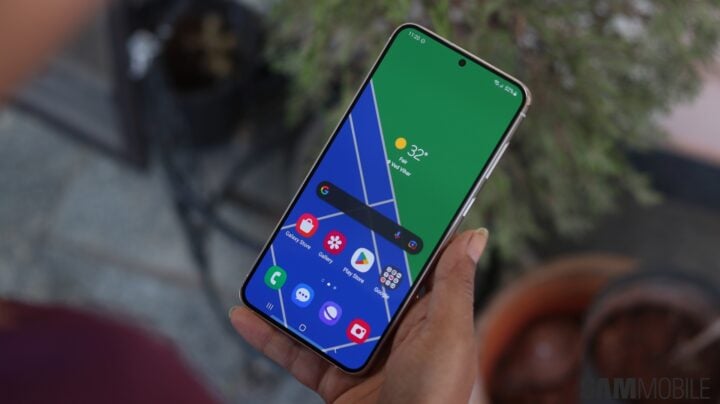
Samsung has recently begun distributing the January 2024 security update to the US carrier-unlocked models of their latest Galaxy S23 series. Following the update’s rollout to international versions of the Galaxy S23, Galaxy S23+, and Galaxy S23 Ultra, it’s now the turn of users in the United States to enhance their device’s security features. This update is specifically for models SM-S911U1 and SM-S916U1, covering the Galaxy S23 and Galaxy S23 Plus respectively, with a corresponding update for the Galaxy S23 Ultra anticipated in the near future.
The update file for the Galaxy S23 is labeled as S911U1UES2BWL9, while the Galaxy S23 Plus receives version S916U1UES2BWL9. With the implementation of the January 2024 security patch, Samsung addresses a total of 75 security vulnerabilities. The breakdown of these fixes includes one critical flaw, 68 rated as high-risk, and six deemed moderate in severity.
For those with eligible devices, your smartphone should prompt you with a notification for the update. If that does not happen, manually check for the update by navigating to the “Settings” menu, tapping on “Software update,” and selecting “Download and install.” Samsung enthusiasts also have the option to download the firmware directly from Samsung’s firmware database.
Simultaneously, Samsung has just unveiled its Galaxy S24 series and made headlines by extending a commitment of seven years for security and operating system (OS) updates for the entire lineup. While some may have been hopeful that the Galaxy S23 series would be included in this extended support program, Samsung has confirmed that the Galaxy S23 phones will instead receive four years of OS updates, which is still commendable. Considering consumer behavior, it’s suggested that many users might opt for a newer device before fully utilizing the offered four years of updates.
Samsung continues to illustrate dedication to maintaining the security and longevity of their devices, and the latest rollout is a testament to this ongoing commitment for Galaxy S23 users in the United States.