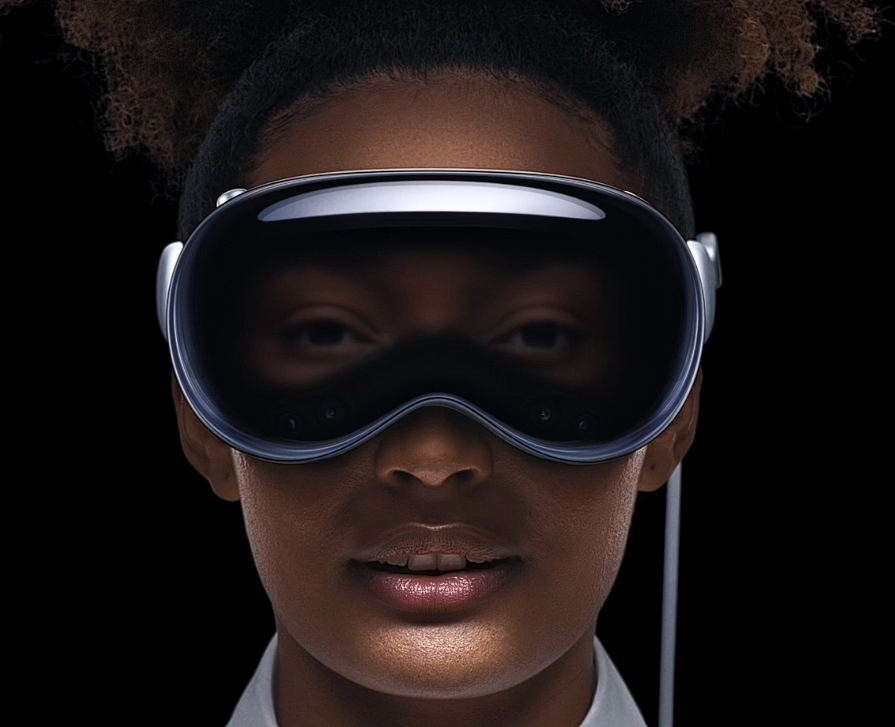
With anticipation soaring, Apple has rolled out the pre-order phase for its innovative Apple Vision Pro. The device’s early sales performance indicates a promising start. Yet, as the Apple Vision Pro becomes available, a new aspect of the device has emerged — the number of native apps tailored for it.
Upon launch, the Apple Vision Pro will have a mere 15 ready-to-use apps that have been perfected for the new sphere of visionOS, Apple’s spatial computing framework. This is a minimal offering when contrasted with the roughly 40 built-in apps customarily present on Apple’s iPad, a device also supported by the Vision Pro.
Adding to the 15 spatial apps, there will be an additional 10 standard iPad applications included, such as Books, Calendar, Home, Maps, News, Podcasts, Reminders, Shortcuts, Stocks, and Voice Memos. However, none of these have undergone a transformation to leverage the 3D spatial computing capabilities at the time of the device’s release. This is particularly unexpected since Apple has prominently championed the concept of ‘spatial computing’ as a core feature of the Vision Pro.
The Vision Pro is being heralded as Apple’s most significant product debut in recent years, with the tech giant viewing it as a potential successor to the iPhone. Nonetheless, the tepid response from developers and the absence of any flagship third-party apps to match the release date means that early purchasers will encounter a scarcity of quality spatial computing experiences.
Major app providers like Netflix, Spotify, and YouTube seem reticent, with no current plans to adapt their iPad apps for visionOS. These industry giants have also expressed no intention to support the standard iterations of their apps on the Vision Pro. The hesitance from third-party developers like Netflix and YouTube could be attributed to the Vision Pro’s fledgling user base and market share in relation to Apple’s well-entrenched iOS and iPadOS ecosystems. However, expectations for Apple’s own app offerings remain untempered.
In a separate promotion, consumers can purchase the Meta Quest 3 from Amazon, paired with Asgard’s Wrath, starting at $499.
Sanjiv Sathiah, a Senior Tech Writer with an extensive track record in the realm of consumer technology, adds his insight. With over 1435 articles to his name at Notebookcheck since 2017, Sathiah’s experience spans various platforms and technologies. His tech journey started with an Apple ][c, blossoming into a career marked by curiosity and a holistic appreciation for the ever-evolving digital landscape.