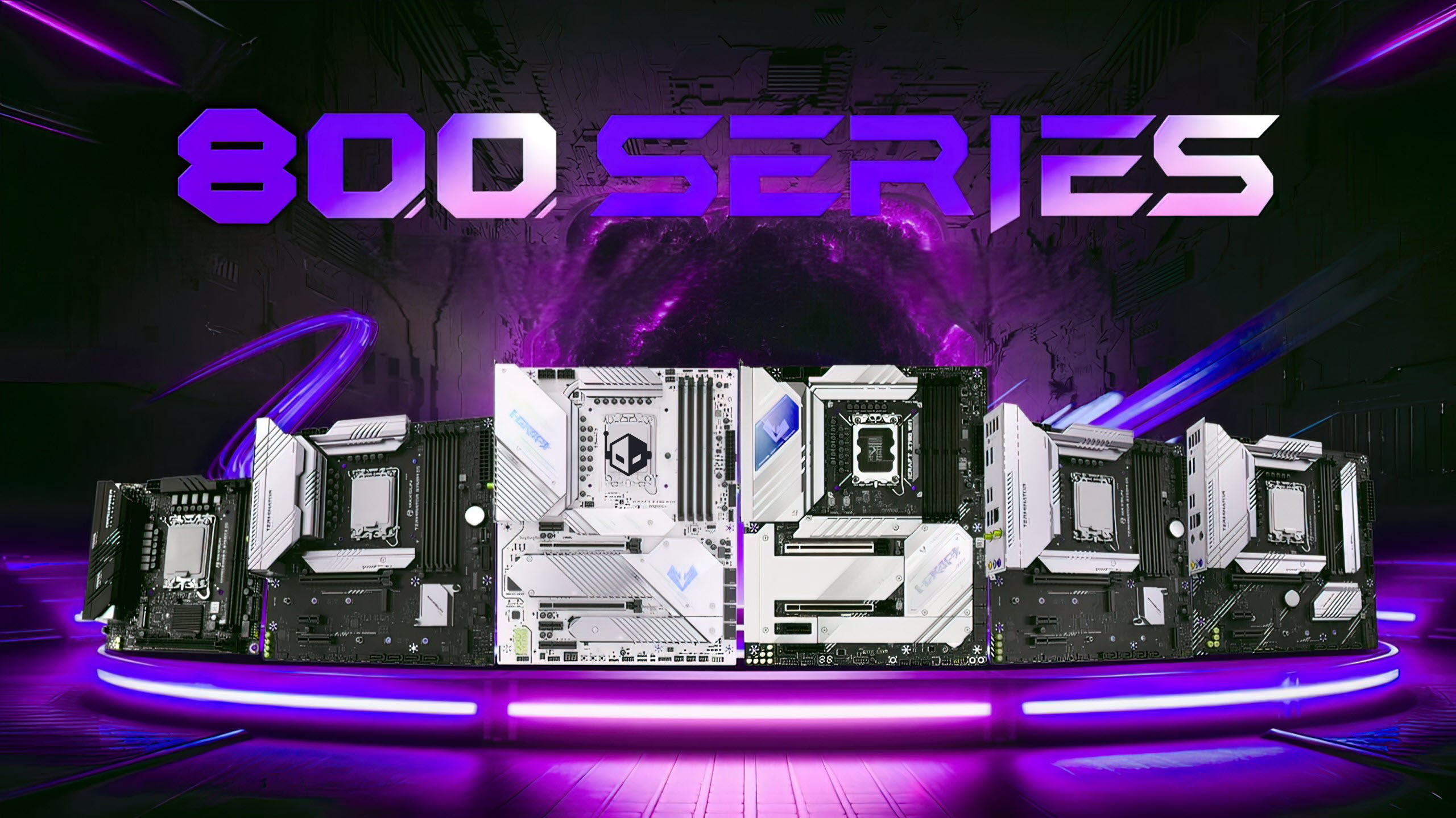
A recent submission to the Eurasian Economic Commission (EEC) by Maxsun has revealed a lineup of next-generation Intel and AMD motherboard chipsets, including Intel’s Z890, B860, and H810, as well as the B850 and B840, which are likely to be for AMD’s AM5 platform. This announcement comes just before Computex 2024 where these new motherboards are expected to be officially unveiled.
The Intel motherboards in the submission cover a wide range of market segments from premium high-end to budget-friendly options. The next-gen motherboards will accommodate the new LGA 1851 socket, making them compatible with Intel’s forthcoming Arrow Lake-S “Core Ultra 200” Desktop CPUs.
The listing suggests Maxsun’s anticipation of AMD’s strategy shift from 700-series to 800-series for its motherboard chipset line as the B850 and B840 designations are included. These new offerings could succeed the B650 series and likely represent mid-tier options. The B850 could be joined by high-end counterparts such as the X870 and X860, reflecting AMD’s nomenclature changes.
The full list of 800-series motherboards from Maxsun includes various models with a range of features designed for esports enthusiasts, budget-conscious gamers, and those seeking high-performance computing. For example, several models are specifically equipped with Wi-Fi capabilities, a testament to the growing demand for wireless connectivity in modern PC builds.
In contrast to Intel’s 800-series motherboards, which are tailored to support only the Arrow Lake CPUs, AMD’s 800-series motherboards are anticipated to maintain compatibility with a broader range of Ryzen processors, including the Ryzen 7000, Ryzen 8000, and Ryzen 9000 series, along with future Zen-based CPUs on the AM5 platform.
Looking at the upcoming desktop CPU platforms from AMD and Intel, we see a competition heating up with powerful specs. These include advancements in core counts, cache sizes, integrated graphics, memory support, and TDP ratings. While AMD’s tentative offerings are expected to be built on a TSMC 3nm process, Intel’s 20A technology could be implemented in their Arrow Lake CPUs. Memory support is pushing the limits as well, with DDR5 standards moving upward to foster even greater performance.
The arrival of these cutting-edge motherboards marks a significant development in the computing world, signaling a new era of versatility and performance for enthusiasts and professionals alike. Users looking to build or upgrade their systems will soon have a diverse range of options to choose from to best meet their performance needs and budget constraints.


