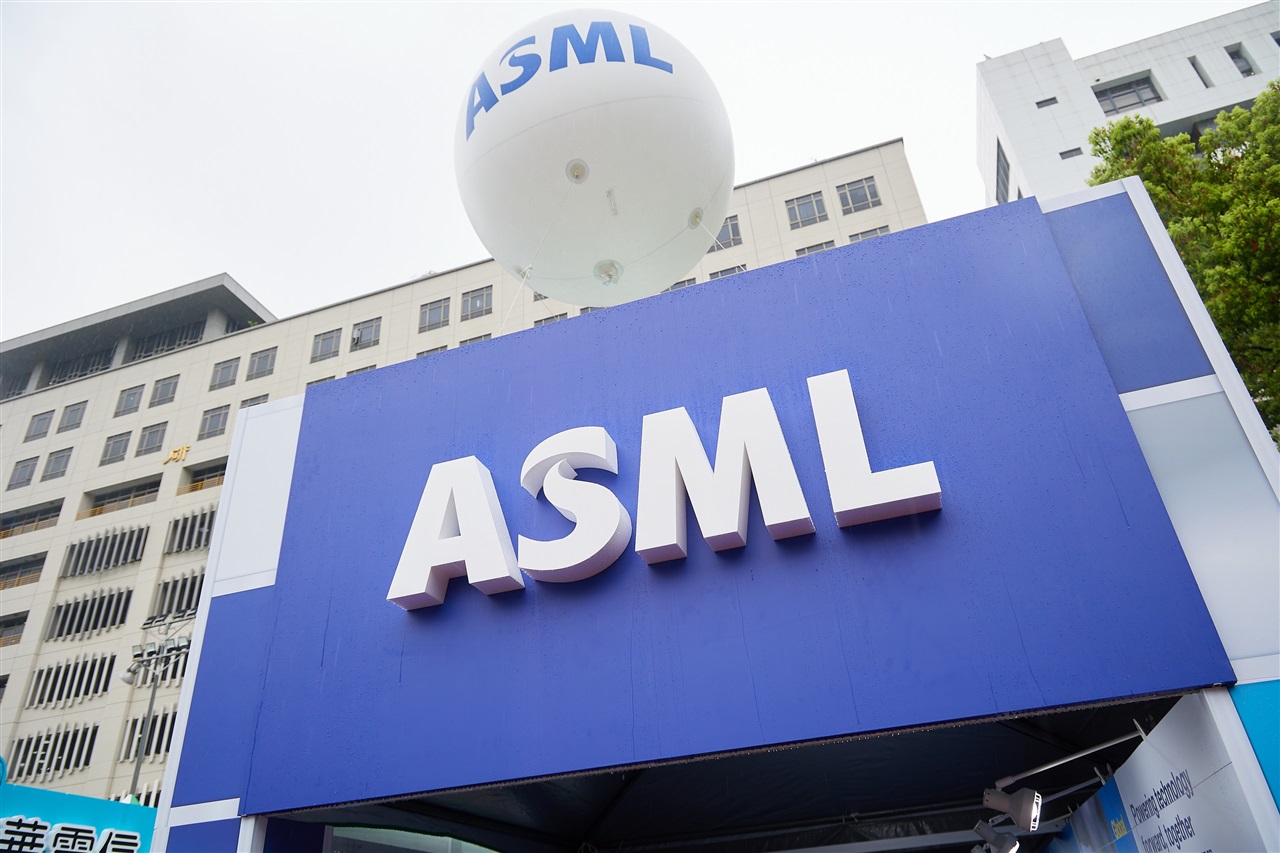
U.S. Raises Concerns Over Possible ASML EUV Chipmaking Machine in China
The Trump administration has reportedly raised concerns with ASML after suspicions emerged that one of the Dutch company’s most advanced chipmaking systems may have reached China, potentially violating U.S.-led export restrictions.
The machine in question is believed to be an extreme ultraviolet lithography system, commonly known as EUV. These highly sophisticated tools are essential for producing the world’s most advanced semiconductors, including chips used in artificial intelligence, smartphones, data centers, military systems, and high-performance computing.
ASML, based in the Netherlands, is the only company in the world capable of manufacturing EUV lithography machines at scale. Because of their importance to advanced chip production, these systems have become a major focus of global technology controls, especially as the United States and its allies work to limit China’s access to cutting-edge semiconductor manufacturing equipment.
According to the report, U.S. officials confronted ASML over concerns that an EUV machine may have entered China despite strict export limits. It remains unclear how the equipment may have reached the country, whether it was transferred through intermediaries, or whether the concerns are tied to a specific customer or facility.
The situation highlights the growing tension between Washington and Beijing over semiconductor technology. The U.S. has been tightening restrictions on advanced chip equipment exports to China for several years, arguing that such tools could strengthen China’s military capabilities and accelerate its domestic chip ambitions.
For China, access to EUV technology would be a major breakthrough. Without EUV machines, Chinese chipmakers face significant challenges in producing the most advanced processors efficiently and at large scale. While China has invested heavily in its domestic semiconductor industry, it still depends on foreign technology for many of the most complex parts of the chipmaking process.
ASML has long been caught in the middle of this geopolitical battle. The company plays a critical role in the global semiconductor supply chain, but its ability to sell certain machines to China has been restricted by export rules shaped by the U.S., the Netherlands, and other allied governments.
If confirmed, the presence of an advanced ASML EUV system in China could trigger a broader investigation and raise new questions about enforcement gaps in global export controls. It could also lead to additional pressure on semiconductor equipment suppliers to strengthen compliance and monitor how their products are shipped, resold, or serviced.
The report comes at a time when the global chip industry is already facing intense scrutiny. Governments around the world are racing to secure semiconductor supply chains, invest in domestic chip production, and reduce dependence on rival nations for critical technologies.
For now, there has been no public confirmation that an EUV machine was successfully transferred to China. However, the concerns alone show how sensitive advanced chipmaking equipment has become in the wider technology rivalry between the United States and China.
The outcome could have major implications for ASML, the semiconductor industry, and future export control policies. As demand for advanced chips continues to surge, control over the machines that produce them is becoming just as important as control over the chips themselves.