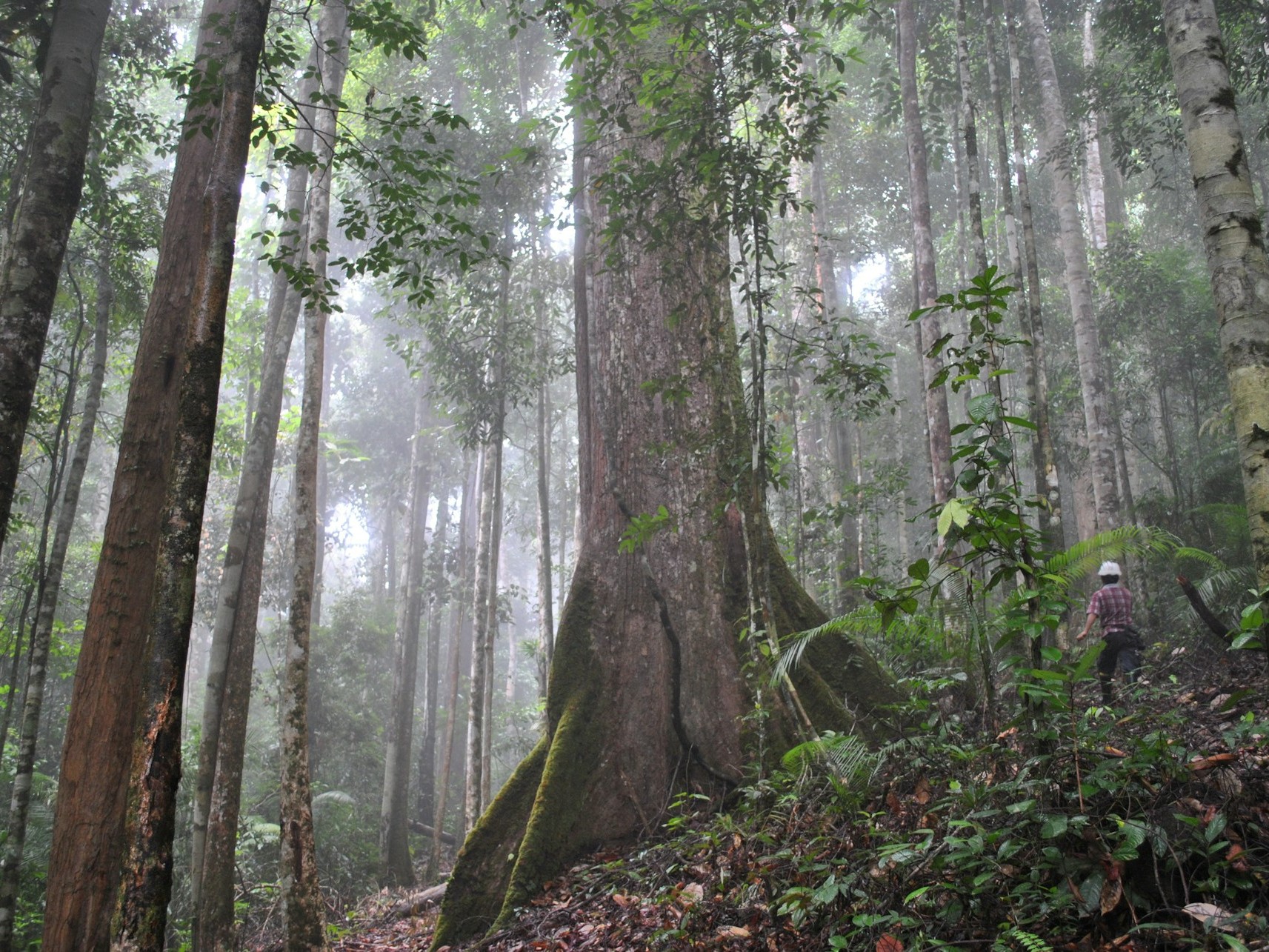
Researchers have uncovered a surprising truth about deforestation in the world’s tropical forests: tiny clearings are driving a far bigger share of carbon damage than many people realize. In fact, clearing small patches of tropical forest is responsible for more than half of net carbon losses across the Tropics—proof that “small” environmental actions can have massive climate consequences.
Why does this matter so much? Tropical forests act like one of Earth’s most powerful carbon sinks. They absorb large amounts of carbon dioxide from the atmosphere, helping slow global warming because carbon dioxide traps heat. When these forests remain intact, they continuously pull carbon out of the air and store it in trees and soil, supporting a more stable global climate.
Deforestation disrupts that balance instantly. When forests are cut down or burned, the carbon stored in trees is released back into the atmosphere. This release—known as carbon loss—adds to greenhouse gas levels and intensifies warming.
The study offers a clearer picture of how serious this problem has become. Researchers found that disturbances in tropical humid forests led to nearly 16 billion tonnes of carbon loss between 1990 and 2020. That’s an enormous amount of carbon entering the atmosphere over just three decades, particularly in regions where forests are dense and rich in stored biomass.
Interestingly, the pattern wasn’t the same everywhere. In tropical dry forests, researchers observed a more balanced outcome—losses and gains roughly evened out over time. One key reason is that disturbances in dry forests are often driven by wildfires, and these ecosystems can recover with regrowth after fire events. In tropical humid forests, however, disturbances are more frequently caused by human-driven clearing. That type of damage is less likely to be followed by natural recovery, especially when land is converted to other uses, leaving little chance for forests to grow back and recapture carbon.
The most striking finding, though, is how much damage comes from small-scale forest clearing. These smaller clearings represented only about 5% of the total disturbed area, yet they accounted for 56% of net carbon losses. In other words, a relatively small slice of forest disturbance is responsible for the majority of the long-term carbon impact.
To reach these conclusions, the research team used detailed satellite observations capable of tracking changes at a 30-meter scale and paired that with new biomass recovery curves to estimate both carbon losses and carbon gains over time. This high-resolution approach allowed them to see what broader measurements can miss: the outsized climate effect that comes from clearing forests in scattered, smaller patches.
The implications for climate policy and conservation are significant. Instead of focusing only on large-scale deforestation events, governments, conservation groups, and environmental planners may be able to reduce carbon emissions more effectively by targeting the smaller clearings that are quietly driving much of the net loss. With better insight into where carbon losses are originating, intervention strategies can be more precise, more efficient, and potentially faster to implement.
The research was published in the journal Nature, adding important new evidence to the global conversation about deforestation, carbon emissions, and how best to protect tropical forests—one small patch at a time.