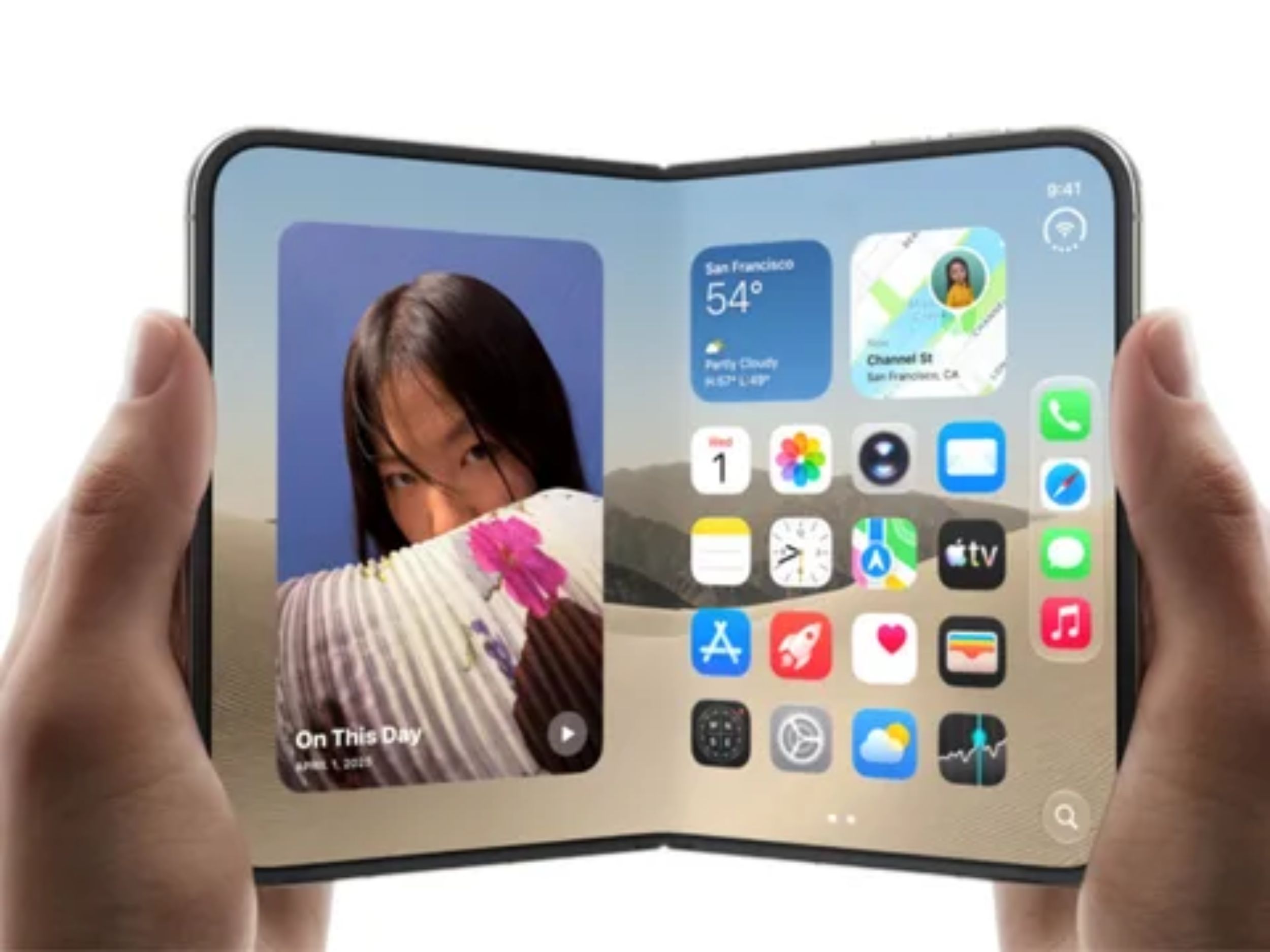
Apple’s iPhone Duo Hackathon Shows How Foldable Apps Could Change the Smartphone Experience
Apple’s first foldable iPhone is not on store shelves yet, but developers are already imagining what it could do beyond simply running standard apps on a larger flexible screen.
At the “Bitrig Hacks: iPhone Duo Edition” event held on September 26 at Y Combinator’s San Francisco office, developers built experimental apps designed specifically for the upcoming iPhone Duo. The challenge was not to create ordinary mobile apps, but to explore what becomes possible when a phone has two displays, a hinge, multiple folding angles and new interface possibilities.
The event was backed by organizations including Y Combinator, OpenAI, RevenueCat, Sentry and Supabase. Apple was not an official organizer or sponsor, but developers used tools such as Xcode 27.1 Beta, the iOS 27.1 simulator and the new Duo APIs to create their prototypes.
Because the iPhone Duo is not expected to ship until October 23, participants did not have access to retail units. Instead, Bitrig provided an interactive simulator that allowed developers to open, close, rotate and test a virtual version of the foldable device at different angles.
The result was a wave of creative app concepts, from music tools and translation apps to beauty assistants, games and focus apps that turn the foldable form factor into part of the experience.
First place: Crate turns the hinge into a music controller
The top prize went to Crate, an AI-powered music sampler built for the iPhone Duo by Shuhan-Zhang Zhang, Aradhya Mishra and Mahin Bharathwaj.
Crate reimagines the classic MPC-style music production workflow for a foldable phone. The bottom display features the performance pads, while the top screen shows samples, track details and extra controls. What makes the app stand out is how it uses the iPhone Duo’s hinge as a music control surface.
By changing the angle of the device, users can manipulate audio effects. For example, opening the phone quickly can trigger a dramatic musical drop. This makes the hardware itself feel like part of the instrument rather than just a screen for software.
The winning team received an interview opportunity with Y Combinator, a $500 Apple gift card and $5,000 in OpenAI credits.
Second place: Duo-Man brings back the Walkman feeling
Second place went to Duo-Man, a retro-inspired music app created by Vidit Bhargava. The app turns the iPhone Duo into a digital Walkman-style player.
When the device is open, users can browse and choose an album or cassette. Closing the phone begins playback, creating a nostalgic interaction that feels more physical than tapping a standard play button.
To make the experience more authentic, the developer recorded real button clicks and interference sounds from a Walkman and added them to the app. The result is a foldable iPhone concept that combines modern hardware with the charm of old-school portable music players.
The second-place prize included $500 in Supabase credits and $2,500 in OpenAI credits.
Third place: Saura uses the foldable iPhone as a beauty assistant
The third-place award went to Saura, an app developed by Gergana Dragoeva Quievy and Prakash Acharya.
Saura uses the iPhone Duo’s half-open position as a built-in stand, turning the device into a hands-free beauty and skincare assistant. One display can function as a mirror, while the other shows step-by-step instructions.
The app is designed to analyze routines from videos and convert them into personalized skincare or beauty guidance. This makes the foldable design especially useful, since users can follow instructions without needing to prop up the phone or switch between camera, mirror and tutorial apps.
The Saura team received $1,000 in OpenAI credits.
Special award: TranslateCat uses both screens for live conversation
TranslateCat, created by Vasanth Sreeram, received a special award for its use of RevenueCat.
The app takes advantage of the iPhone Duo’s dual-display design in a simple but practical way. Two people can face each other, with each person seeing the translated text on the screen facing them. Instead of passing a phone back and forth, the device becomes a shared conversation tool.
The prototype supported 16 languages, making it one of the most immediately useful ideas from the hackathon. The prize for this category was an iPhone Duo.
Other standout ideas: accordions, gaming consoles and pop-up books
Beyond the winning projects, the hackathon produced several unusual and imaginative iPhone Duo app concepts.
Accorduon turns the foldable hinge into the bellows of a virtual accordion, using the opening and closing motion as part of the musical performance.
Arden transforms the iPhone Duo into a compact gaming console, with one screen acting as the display and the other providing virtual controls.
Foldtales uses the folding angle to create a pop-up book effect, making characters and objects appear more three-dimensional as the device opens and closes.
Monster, Ink. offers one of the most playful ideas from the event. It is a focus app where a small pixel cat builds a city while the iPhone Duo remains closed. If the user opens the phone, red cat eyes appear as a warning. Fully unfolding the device wakes the cat as a giant monster, causing it to destroy the city and end the focus session.
The future of foldable iPhone apps may be more than bigger screens
The Bitrig iPhone Duo hackathon showed that foldable smartphones can be more than devices with larger or flexible displays. The most interesting prototypes used the hinge, folding angle and dual-screen layout as core parts of the experience.
Music apps can turn motion into sound control. Translation apps can make conversations feel more natural. Beauty apps can use the foldable design as a built-in stand. Games, productivity tools and creative apps can react to how the device is held, opened or closed.
With 161 participants and 73 submitted projects, the event offered an early look at how developers may approach Apple’s foldable future. If these prototypes are any indication, the iPhone Duo could inspire a new generation of apps built around movement, posture, two-sided displays and more natural physical interactions.