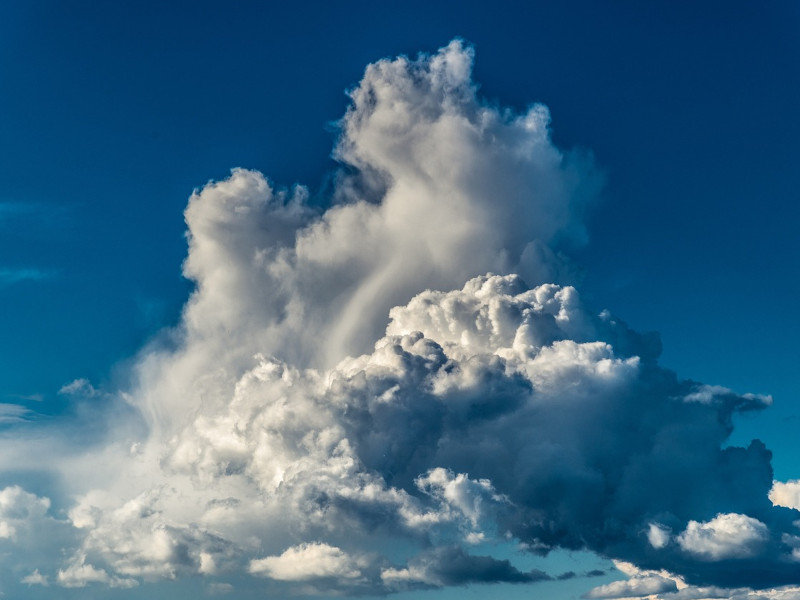
Clouds play a dual role in our climate system, capable of both heating and cooling the planet. Interestingly, the creation of clouds is not just a natural phenomenon; it can also be induced artificially, raising important questions about the potential necessity and implications of such interventions.
Recent research suggests that since 1990, around 30% of observed warming can be attributed to increased water vapor in the atmosphere. Water vapor is particularly impactful when it reaches the stratosphere, which is at least 9 kilometers above the earth. At these altitudes, it significantly strengthens the greenhouse effect.
Transporting water vapor to such heights requires an enormous amount of energy, with warmer oceans potentially serving as ideal launchpads. Drones utilized for weather observations, such as those employed by NASA, have identified vast areas in the Pacific Ocean near the equator where these conditions are present.
The presence of water vapor at high altitudes could be indicative of a feedback loop wherein ocean warming allows more vapor to ascend, further amplifying atmospheric warming. To counteract this, one proposed solution is the use of tiny, non-toxic bismuth triiodide particles to seed clouds. Remarkably, it has been calculated that just 2 kilograms of these particles per week could suffice, and they could be dispersed via weather balloons or drones.
However, the results of such geoengineering techniques remain uncertain. The formation of large cumulus clouds that precipitate and relieve some of the atmospheric water vapor is the desired outcome. The concern lies in the potential formation of high-altitude cirrus clouds. These clouds are less dense and allow sunlight to penetrate while trapping heat, akin to a thin insulating blanket, which could contribute further to warming.
Ultimately, while exploring ways to mitigate the impacts of climate change is valuable, addressing the root causes of such changes must remain a priority. It’s crucial to remain aware of the complex interactions within our atmosphere and be cautious about the potential consequences of any large-scale geoengineering projects.
Please feel free to share this exploration of atmospheric science, as every discussion contributes to our understanding of climate dynamics.


