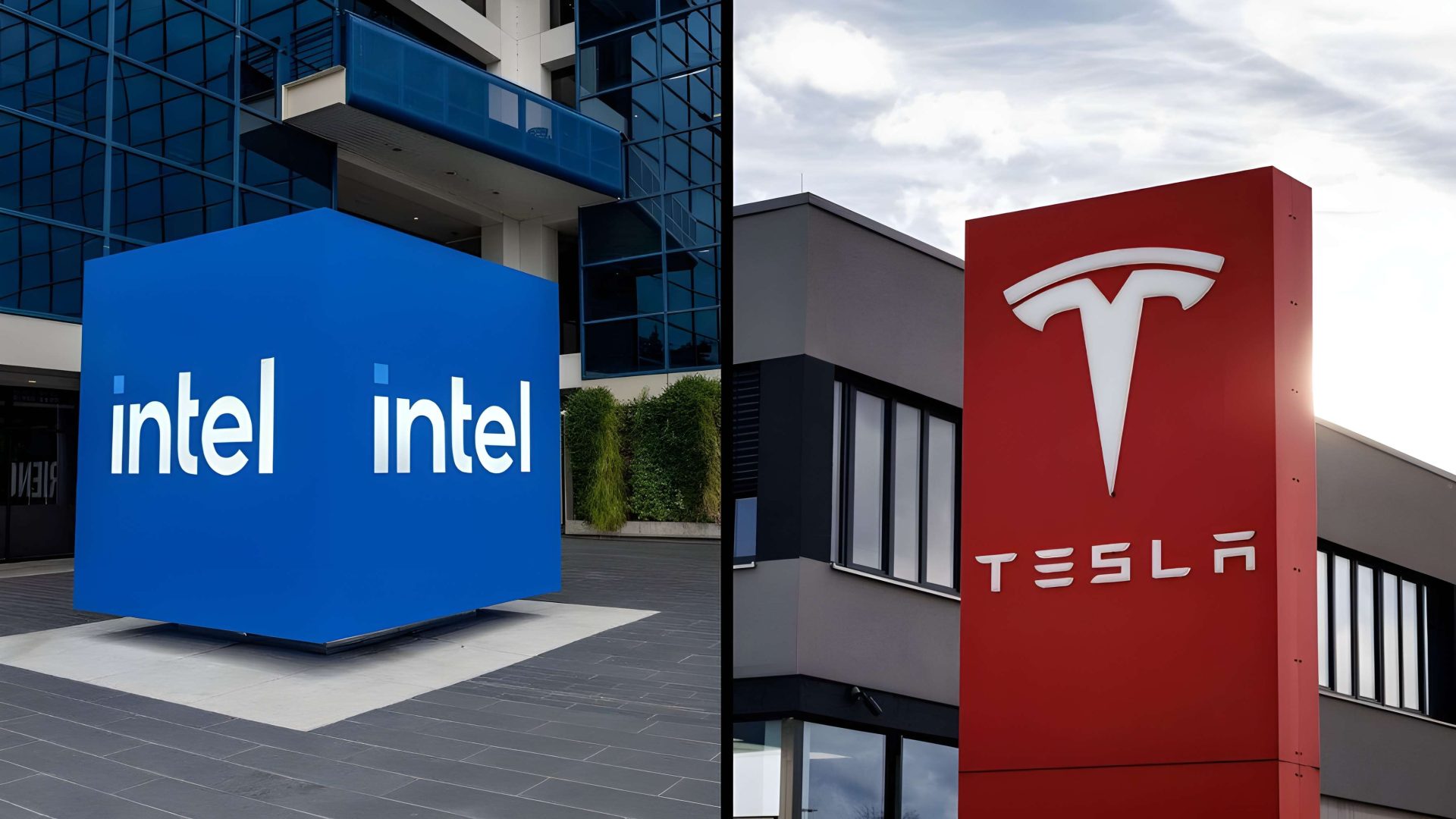
After taking a stake in Intel, the Trump administration is increasingly being seen as more than just a passive investor. The latest chatter suggests it’s also trying to help fill Intel’s foundry pipeline by nudging major American tech names toward Intel’s U.S.-based chip manufacturing—potentially including Tesla.
According to a tip shared by a well-known leaker who cited a Weibo-based source, Tesla is reportedly facing pressure to move production of its upcoming AI6.5 chip away from TSMC and over to Intel. The claim is that the administration, now described as Intel’s largest shareholder in the same source, is pushing for high-profile “made in America” wins that can be showcased ahead of the November midterm elections. Tesla and Apple would be headline-grabbing examples if either company shifts meaningful chip orders onto Intel’s fabs.
This rumor lands at an interesting moment in Tesla’s AI hardware roadmap. Elon Musk recently discussed the company’s progress on AI silicon, noting the tapeout of Tesla’s AI5 chip and laying out where the next generation is expected to be built. In earlier comments, Musk indicated that Tesla’s AI6 chip is planned for Samsung’s 2nm facility in Arizona, while the higher-tier AI6.5 would be manufactured by TSMC at its Arizona campus.
Timing-wise, Tesla’s AI6 chip is said to be on track for tapeout in December 2026, with AI6.5 following a couple of months later. Performance expectations are ambitious. Both AI6 and AI6.5 are reportedly designed with a large allocation of SRAM. Musk has emphasized that roughly half of the TRIP AI computation accelerators are dedicated to SRAM, which in turn boosts effective memory bandwidth far beyond what DRAM typically delivers for workloads that can stay in cache.
On top of that, both chips are expected to adopt LPDDR6 memory. Combined with other architectural changes, these upgrades are expected to deliver roughly a 2x performance jump over Tesla’s current AI5 chip—without increasing reticle size, a detail that matters because reticle constraints can limit how big a chip design can be on advanced lithography.
So where does Intel come in?
The newly circulating claim suggests Tesla may be weighing a shift in foundry plans—specifically moving the portion of AI6.5 production that would have gone to TSMC over to Intel instead, reportedly due to political pressure. The same source frames this as part of a broader effort to build momentum for domestic chip manufacturing, with the administration seeking marquee customers that validate Intel Foundry as a credible alternative to overseas and Taiwan-linked manufacturing.
It’s not hard to see why this would be appealing from a policy standpoint, but the practical realities of Tesla’s current supply chain complicate the story.
Tesla’s existing AI5 chip (reportedly codenamed Helios) has been produced primarily through TSMC, with Samsung used as a backup option—particularly when advanced-node capacity is tight. That relationship matters. Moving a high-stakes AI accelerator chip from a proven manufacturing partner to a different foundry can introduce risk across timelines, yields, cost, and performance consistency. In other words, it’s not simply a matter of picking a different factory; it can require painful redesign work, validation cycles, and a willingness to accept uncertainty.
That’s why many observers would view an abrupt move away from TSMC—especially toward Intel’s advanced nodes, which are still widely seen as less battle-tested at the bleeding edge—as a long shot. Concerns about yield maturity and execution risk remain a major factor any time Intel is discussed as a foundry for top-tier, high-volume silicon.
Still, the political backdrop is clearly shifting. Recent reporting has also suggested the administration has been actively courting major chip customers on Intel’s behalf, including Apple. In at least one meeting narrative circulating around the same theme, the president is said to have emphasized enthusiasm for Intel while pointing to “tens of billions of dollars” in gains tied to the government’s Intel stake as shares climbed.
Whether Tesla actually moves AI6.5 production from TSMC to Intel is still unconfirmed, and for now it remains a rumor sourced through overseas social media chatter rather than a formal statement. But it underscores a growing theme: chip manufacturing is no longer just an engineering and supply-chain decision. It’s becoming a geopolitical and domestic industrial policy lever—and companies like Tesla may increasingly find themselves caught in the middle.