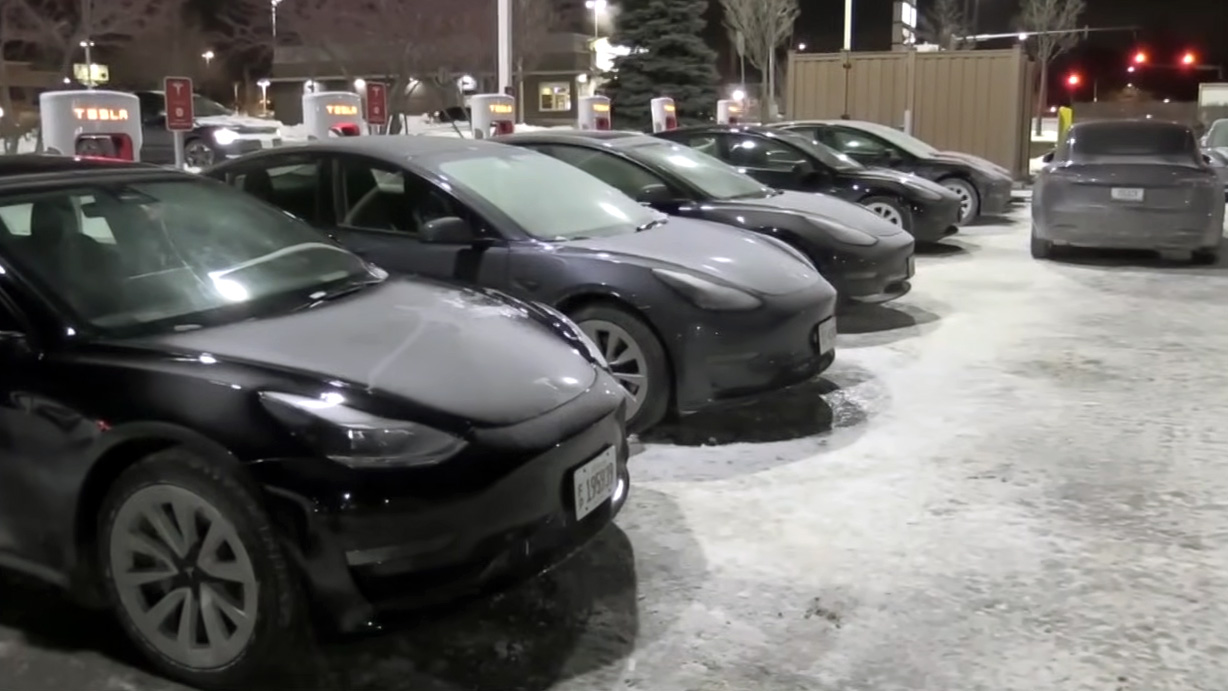
In the midst of the Arctic cold snap barraging the US, Tesla drivers in the Chicago area are reporting significantly extended charging times, with what should be a 45-minute charge stretching to 2 hours. The recent harsh weather conditions have not only affected the duration required to charge electric vehicles but have also led to the malfunction of some public EV chargers, further exacerbating the situation for electric vehicle owners.
An analysis from Recurrent Auto suggests that one of the primary culprits for these charging delays is insufficient battery preconditioning. What is typically expected is that when an electric vehicle (EV) driver navigates towards a charging station, the car’s system starts warming up the battery to optimize it for a quicker charging process. This feature is significant because it allows the battery to more effectively receive and store charge upon arrival at the station.
Recurrent Auto’s examination of over 200,000 recent charging sessions, focusing on the popular Tesla Model 3, revealed that under normal zero degrees Fahrenheit conditions, charging times only increased by an average of 9 minutes in comparison to more optimal weather conditions. With the current weather plummeting even further, complications have arisen including frozen or wet charger connectors and a surge in the number of Tesla vehicles arriving with low or depleted batteries, some being towed in from airport parking lots where they had been left idle for extended periods.
The crux of the issue as per Recurrent’s findings is that if a car does not engage in battery preconditioning prior to arrival at a charging session, the battery will spend a significant amount of time merely warming up before it can begin charging. This means drivers arriving with near-empty batteries may experience prolonged periods without any apparent charging progress.
Despite Tesla vehicles, as well as models from Hyundai and Kia, being recognized for their effective range preservation in cold conditions, many drivers seemed ill-prepared for the approximate 20% drop in range, leading to miscalculated commutes and the inability to precondition their batteries en route to chargers.
These collective issues have led to bottlenecks and lengthy wait times for charging, leaving many drivers frustrated during the freezing weather episode. To contrast this negative publicity, Tesla promoted its Defrost Mode feature, which allows drivers to warm the vehicle’s cabin and clear snow and ice from the windshield through the Tesla mobile app—assuming the car’s battery retains sufficient charge.
For current and prospective Tesla owners interested in home charging solutions, the 48A Tesla Wall Connector with a 24″ cable is available on Amazon. Daniel Zlatev, with his in-depth experience in technology trends and innovations, especially those that have redefined our daily lives, keeps his finger on the pulse of developments across the tech industry.


