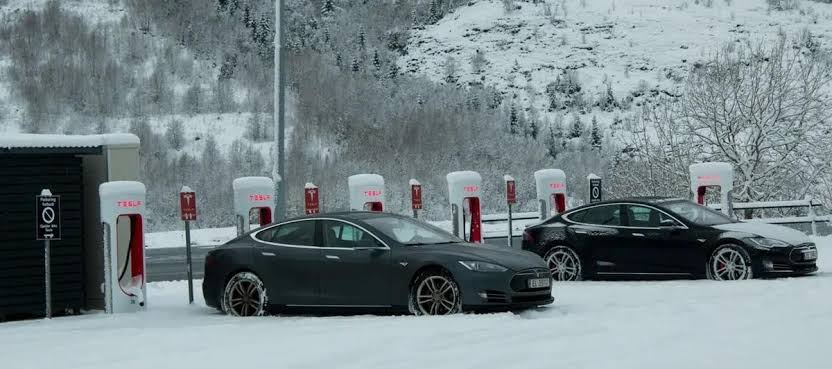
Electric vehicles, including Teslas, have long faced challenges when it comes to supercharging in extreme cold conditions. Owners have struggled with prolonged charging times due to the need for batteries to warm up before they can efficiently charge. Tesla’s latest software update, version 2024.2.6, aims to tackle this issue head-on, offering an improved charging experience for those braving the winter in their electric vehicles.
Tesla’s electric vehicles, particularly the Model 3 and Model Y, are at the forefront of addressing the cold-weather supercharging conundrum. The fresh software update comes in response to previous concerns from Tesla owners about the speed of supercharging during frigid weather, such as complaints arising in Chicago last month.
Internal combustion engine (ICE) vehicles and electric vehicles (EVs) alike are affected by harsh winter conditions that can impact a variety of factors, including tires and windscreen functionality. However, for EVs, the impact on battery efficacy is significant, causing drastic reductions in driving range—sometimes by as much as 29.7%. Research using the Tesla Model 3 revealed that at 0°F (-18°C), charging took an additional nine minutes on top of the half-hour to 45 minutes needed for the battery to precondition.
Frozen charging ports add another layer of complexity. Without properly defrosting the car before driving, the charging port may not be able to securely accommodate the charging cable, resulting in slower charge rates. Tesla recommends practices like preconditioning and scheduled defrosting to avoid such scenarios, but adherence to these suggestions has not been universal amongst drivers.
Tesla’s inclination to overestimate driving ranges has been a point of contention recently, with the company even facing fines for overstated range claims. Nonetheless, the latest software update promises to lead drivers in a better direction. The update will now account for both the time it takes for the battery to warm up before supercharging and the battery’s age when estimating range and charging times, offering more realistic expectations on models S, X, 3, and Y.
Additionally, a noteworthy feature of the update is the automatic defrosting of frozen charging ports. Previously, this required drivers to set up scheduled defrosting. Now, the vehicle’s navigation system intelligently detects when the car is headed into colder climates and activates warming protocols for both the battery and the charging port inlet in anticipation of supercharging.
While these enhancements mark significant progress, Tesla owners are still encouraged to maintain good EV practices, such as preconditioning and scheduling overnight defrosting while charging, to ensure seamless supercharging during winter months.
For those looking to optimize their Tesla charging experience, the Tera EV Charger for Tesla is available for purchase on Amazon, providing a convenient external charging option for Tesla drivers.
In pursuing innovations and making technology more accessible, companies continue to strive toward resolving practical challenges faced by everyday users, driving us closer to a future where EVs can operate with ease, regardless of the weather.
Please share this article to spread the word about the latest advancements in Tesla’s electric vehicle technology.