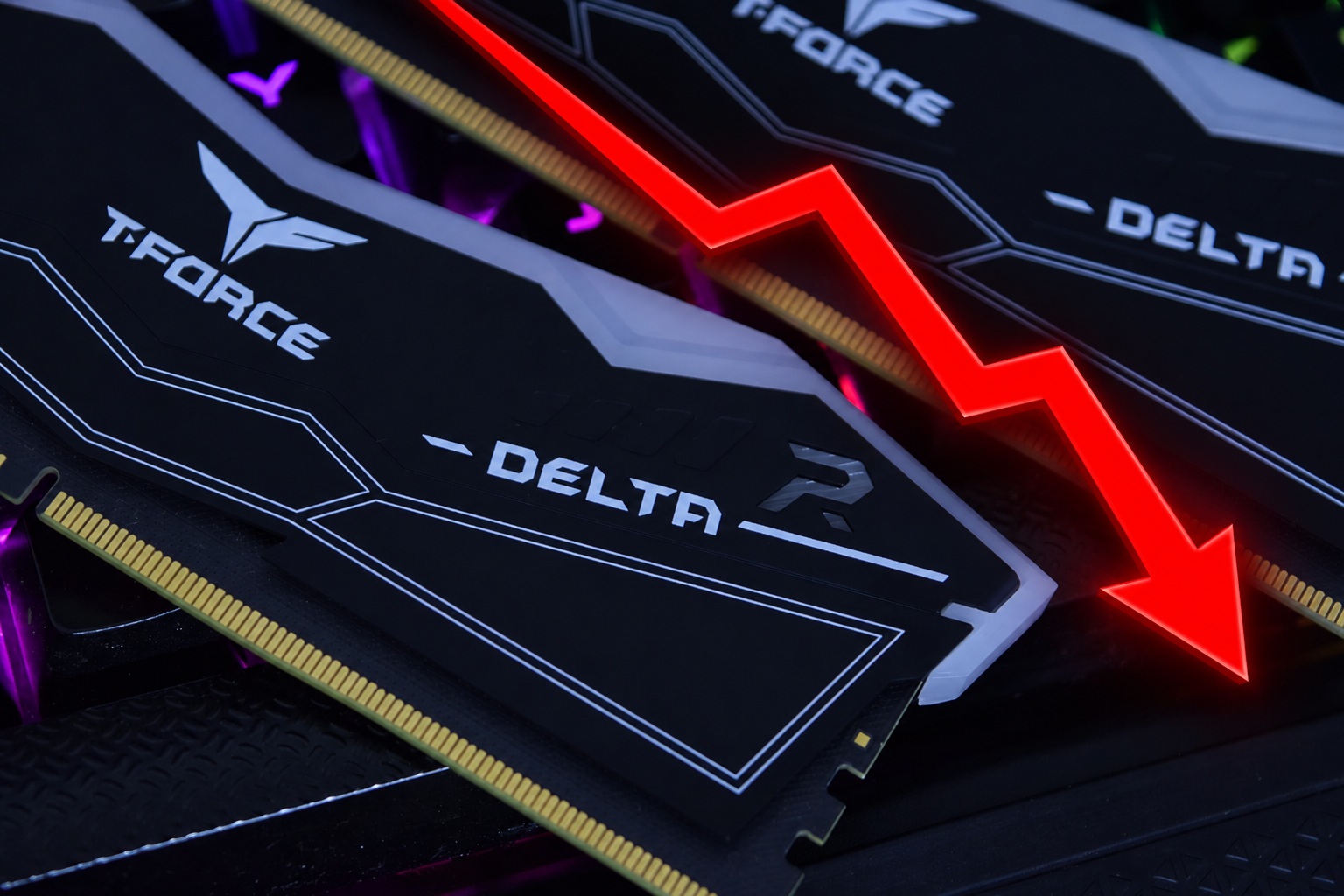
DRAM Shortage Could Get Worse in 2027 as AI Demand Pushes Memory Prices Higher
The global memory shortage may become far more severe in 2027, and the impact could be felt across servers, PCs, laptops, graphics cards, and consumer electronics. TeamGroup CEO Chen Ching-wen, also known as Gerry Chen, has warned that the memory market has not yet reached the most difficult stage of the current supply crisis.
Speaking during the company’s November 2 earnings conference, Chen said the tightest period for DRAM supply is expected between the fourth quarter of 2026 and the end of the second quarter of 2027. He also suggested that meaningful price drops are unlikely throughout next year, with the market potentially not returning to balance until the second half of 2028 at the earliest.
His message was blunt: in the worst part of the shortage, even buyers willing to pay higher prices may still struggle to secure enough memory.
AI Data Centers Are Driving a Major Shift in DRAM Supply
The biggest force behind the DRAM shortage is the explosive growth of artificial intelligence infrastructure. AI data centers require enormous amounts of high-bandwidth memory, known as HBM, as well as large volumes of server DRAM. As cloud providers and enterprise customers race to expand AI computing capacity, memory makers are shifting production toward higher-margin products used in servers and AI accelerators.
Major DRAM manufacturers such as Samsung, SK hynix, and Micron are increasingly prioritizing HBM and enterprise memory because demand from AI customers is extremely strong. This shift leaves less production capacity available for consumer-focused memory products, including DDR5, LPDDR, and GDDR memory used in desktops, laptops, smartphones, and graphics cards.
HBM production also requires more wafer capacity than standard DRAM. That means every increase in HBM output can reduce the industry’s ability to manufacture conventional memory, making the shortage more difficult to solve quickly.
Server Demand Could Dominate the Memory Market by 2027
Industry forecasts show just how much data centers are reshaping the memory business. TrendForce expects servers to account for 43.7% of global DRAM demand and 51.1% of NAND flash demand in 2027. This marks a major shift away from consumer electronics as the main driver of memory consumption.
TeamGroup’s own revenue mix already reflects this trend. During the first nine months of 2026, business-to-business sales represented 64.6% of the company’s revenue, compared with 24.6% during the same period a year earlier. That sharp increase highlights how enterprise customers are becoming more important as AI and server demand accelerate.
The company also reported record quarterly revenue of around NT$10.14 billion, supported by a strong gross margin of 49.27%. While this is positive for memory suppliers, it also shows how tight supply and rising prices are reshaping the market.
DDR5 Prices Have Already Surged
The pressure is already visible in DRAM pricing. Some server memory spot prices are reportedly 30% to 50% higher than contract prices, showing how difficult it has become for buyers to obtain extra inventory outside of long-term supply agreements.
Contract prices for a 16-gigabit, or 2-gigabyte, DDR5 chip reportedly rose from about $8.70 in October 2025 to $48 in September 2026. That represents an increase of more than five times in less than a year. These figures refer to chip-level pricing, not the final retail price of complete memory modules, but they still indicate how sharply the cost of memory production has climbed.
For consumers, this could translate into more expensive RAM kits, higher laptop prices, costlier prebuilt PCs, and potentially more expensive graphics cards if GDDR supply becomes tighter.
More Factory Capacity May Not Arrive Fast Enough
Although memory manufacturers are investing in new facilities and production upgrades, additional capacity will take time to come online. Building and qualifying advanced semiconductor manufacturing lines is a slow and expensive process, especially for cutting-edge DRAM and HBM.
TrendForce expects meaningful new DRAM supply to remain limited until 2028. While NAND flash supply may improve sooner, DRAM is expected to remain under pressure throughout 2027.
This outlook matches earlier warnings from SK hynix leadership, which suggested that 2027 could become one of the worst memory shortage periods the industry has ever seen. The company has also indicated that memory demand may continue exceeding production capacity beyond 2030, despite major investment plans.
What This Means for PC Gamers and Hardware Buyers
For PC gamers, content creators, and hardware enthusiasts, the warning is clear: RAM prices may remain high, and availability could become more unpredictable through 2027. Anyone planning a PC build or upgrade may need to watch memory pricing closely, especially for DDR5 kits and high-capacity modules.
Graphics card buyers could also be affected if GDDR memory production faces pressure from broader DRAM constraints. While gaming GPUs and AI accelerators do not use the exact same memory in every case, they still depend on limited semiconductor manufacturing capacity and supply chain resources.
Laptop and desktop manufacturers may also face higher component costs, which could lead to more expensive systems or fewer attractive discounts during major sales periods.
The Memory Market May Stay Tight Until 2028
TeamGroup’s forecast suggests that the global DRAM shortage is not a short-term disruption. Instead, the industry may be entering a prolonged period where AI infrastructure demand continues to absorb a growing share of memory production.
If Chen’s prediction proves accurate, the most severe supply squeeze could arrive in late 2026 and continue into mid-2027, with recovery not expected until late 2028. The situation will depend on several factors, including AI spending, consumer electronics demand, manufacturing expansion, and how quickly suppliers can increase HBM and DRAM output.
For now, the message from the memory industry is that higher prices and limited availability could remain a major issue for businesses and consumers alike. As AI data centers continue expanding, DRAM may become one of the most contested components in the global technology supply chain.