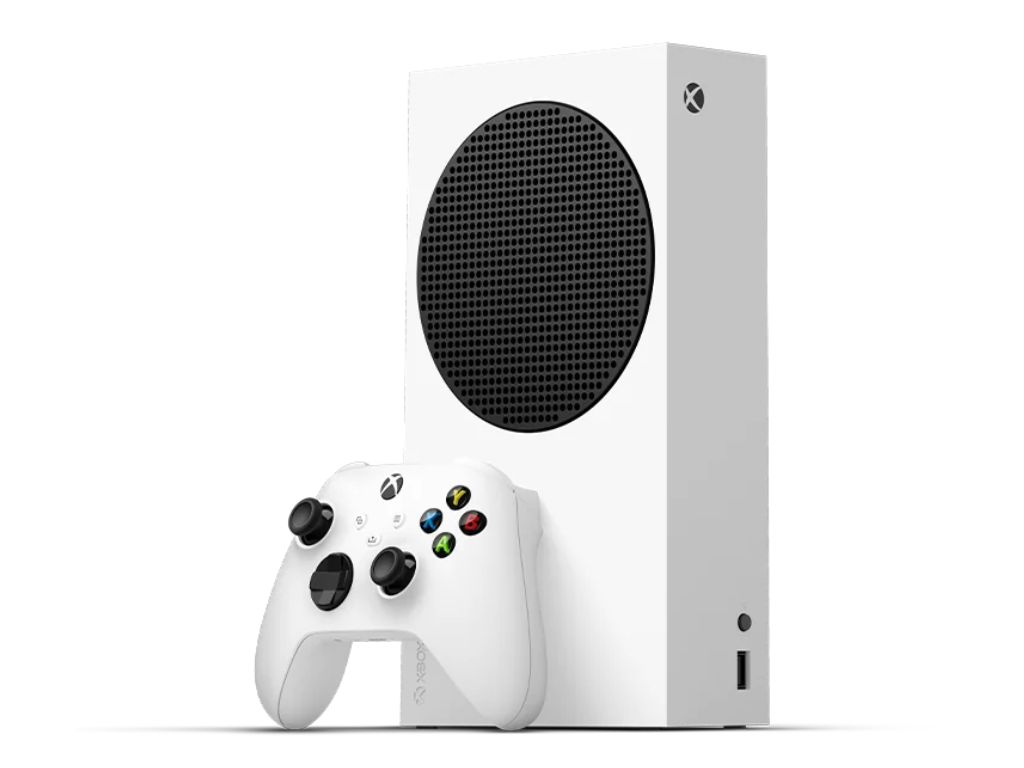
Former Tekken Producer Urges Xbox Not to Repeat the Series S Strategy
Former Tekken boss Katsuhiro Harada has openly urged Microsoft to avoid releasing another lower-powered console like the Xbox Series S in its next generation of hardware. While his comments were delivered with humor during a developer conference in Seoul, the message behind them was clear: the Xbox Series S creates real development challenges for studios.
Harada made the remarks during the closing panel of the Console Game Developers Conference 2026, held on November 9 at the SKY31 Convention in Seoul’s Lotte World Tower as part of Game Days 2026. The panel brought together several major industry figures, including former Sony executive Shuhei Yoshida as moderator, Shift Up CTO DongKi Lee, Too Kyo Games CEO Kazutaka Kodaka, CD Projekt Red associate game director Paweł Sasko, and Ludeon Studios CEO Tynan Sylvester.
Harada, who left Bandai Namco after more than 30 years and now leads VS Studio SNK in Tokyo, was discussing the strengths and weaknesses of console development compared with PC gaming. He initially praised consoles for esports, pointing out that standardized hardware makes tournaments easier, cheaper, and more reliable to organize than setups requiring multiple identical gaming PCs.
Then he shifted to a more controversial point.
Harada noted that a senior Xbox representative was in the audience and said he hoped Microsoft would not release hardware like the Xbox Series S again. The comment drew laughter, but it also highlighted a long-running concern among developers: supporting the Series S often means extra optimization work for a system that must run the same games as the more powerful Xbox Series X.
He then turned to Paweł Sasko and asked whether the Series S had caused frustration during development. Sasko laughed before giving a diplomatic answer, saying the console constantly creates challenges and forces developers to optimize their code very cleanly.
Harada quickly pushed back, joking that Sasko had found a polite way of saying the Xbox Series S was difficult to work with. He explained that the biggest issue is not simply lower memory or weaker performance, but the fact that the console is so closely tied to the Xbox Series X while being significantly less powerful.
According to Harada, developing for a clearly separate platform, such as Nintendo hardware, can be easier to approach mentally because developers understand they are targeting a distinct audience and device. With Xbox, however, studios may first build their best version of a game for Series X, only to then spend additional time making it work properly on the lower-spec Series S.
That difference, Harada suggested, can feel like doing extra work for a system that is weaker but still expected to deliver the same games.
The Xbox Series S has been a point of debate since its launch in 2020. It was designed as a more affordable entry into current-generation gaming, but its hardware is noticeably less powerful than the Xbox Series X. The Series S includes 10GB of GDDR6 memory, split between 8GB running at 224 GB/s and 2GB running at 56 GB/s. It also has a 4-teraflop RDNA 2 GPU with 20 compute units.
By comparison, the Xbox Series X features 16GB of GDDR6 memory, including 10GB at 560GB/s and 6GB at 336GB/s, alongside a 12-teraflop GPU with 52 compute units. That gap in memory and graphics power can create serious hurdles, especially for modern games with high-resolution textures, complex open worlds, and demanding visual features.
Harada also pointed out that developers cannot simply ignore the Series S. In major markets such as the United States, he said, the cheaper model has a large user base, meaning studios must take it seriously. If a game launches with lower-quality textures or weaker visual presentation on Series S, players often blame the developer rather than the hardware limitations.
That puts studios in a difficult position. They must support the console properly, but doing so can require major engineering effort. Some developers have already had to build special solutions to work around the Series S’s limitations. For example, The Coalition worked with Xbox’s platform team on Gears of War: E-Day to use the console’s NVMe SSD as an extension of memory, helping reduce the pressure caused by its smaller RAM pool.
Still, not everyone sees the Xbox Series S as purely a problem.
Sasko acknowledged that Harada was making a fair point, but he also argued that tough optimization work can benefit every platform. He explained that improvements made while optimizing Cyberpunk 2077 for lower-spec hardware were later applied across other versions of the game. In that sense, designing for weaker systems can force developers to make games more efficient overall.
Sasko also defended the Series S from a consumer perspective. Its biggest strength is its lower price. Not every player can afford a premium console or expensive gaming PC, and the Xbox Series S gives more people access to modern games. For Microsoft, that affordability has always been one of the console’s main selling points.
Harada, however, ended the exchange with another joke aimed at Microsoft. He said Sasko had defended the Series S so elegantly that the Xbox representative in the room kept nodding along. Harada then joked that he was worried Microsoft might feel encouraged enough to release a next-generation “Helix S” alongside its future Xbox hardware.
The discussion highlights one of the biggest questions facing the next generation of Xbox consoles. Affordable hardware can expand the gaming audience, but if the performance gap is too wide, developers may again face the same challenge: making increasingly ambitious games run on a lower-powered system without compromising the experience.
For players, the Xbox Series S remains an attractive budget console. For developers, however, it continues to be a complicated piece of hardware that demands extra work, careful optimization, and difficult trade-offs. As Microsoft prepares for its future gaming hardware, Harada’s message was simple: if there is another affordable Xbox model, developers hope it will not repeat the same problems.