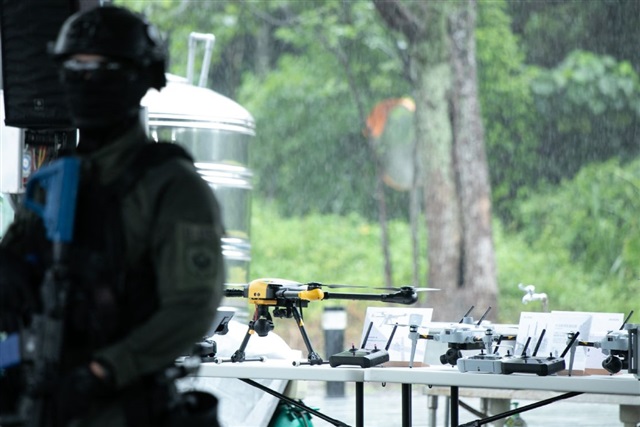
Taiwan Drone Suppliers Target Western Defense Market as Ukraine War Reshapes Global Demand
Taiwan’s drone manufacturers are moving quickly to build stronger relationships with Western defense contractors and Ukraine’s fast-growing wartime drone sector, as global demand for unmanned aerial systems continues to rise.
The shift comes as governments and defense buyers search for more secure, reliable, and diversified supply chains. With drones now playing a central role in modern warfare, many buyers are looking for alternatives to supply networks that depend heavily on China. Taiwan, known for its advanced electronics, precision manufacturing, and strong technology ecosystem, is positioning itself as a key partner in this changing market.
The war in Ukraine has dramatically changed how drones are viewed by militaries around the world. Once seen mainly as surveillance tools or specialized military assets, drones are now essential for reconnaissance, targeting, communications support, and battlefield awareness. Low-cost unmanned systems have proven especially important, allowing forces to monitor enemy movements and respond quickly in fast-changing combat conditions.
This has created a surge in demand for drone platforms, components, sensors, communications systems, and related technologies. Taiwan’s suppliers see an opportunity to support Western defense chains with products that are not only competitive but also aligned with the growing push for trusted manufacturing partners.
For Western defense companies, Taiwan offers several advantages. Its manufacturers have deep experience in electronics production, miniaturized components, and high-quality hardware assembly. These strengths can be applied to drone development, including flight control systems, camera modules, circuit boards, batteries, and communications equipment.
Ukraine’s drone industry is also becoming an important partner. Since the start of the war, Ukrainian engineers and manufacturers have rapidly adapted commercial and military drone technologies for battlefield use. Their experience offers valuable real-world feedback, helping suppliers improve drone durability, usability, and performance under extreme conditions.
By working more closely with Ukraine, Taiwanese drone companies can better understand what modern combat environments require. This could help them design systems that are easier to repair, faster to produce, and more resistant to electronic interference. Such improvements are increasingly important as drones face harsh weather, jamming, and constant battlefield pressure.
The broader trend also reflects a major change in global defense procurement. Countries are no longer focusing only on large, expensive weapons systems. Many are also investing in scalable drone fleets, rapid manufacturing, and resilient supply chains. This creates room for smaller and mid-sized technology companies to become important players in the defense sector.
Taiwan’s push into Western defense supply chains may also strengthen its own drone industry at home. As export opportunities grow, local companies could expand production capacity, improve research and development, and attract new investment. This would support Taiwan’s ambition to become a more influential player in the global unmanned systems market.
However, competition will be intense. Drone producers in the United States, Europe, Israel, Turkey, South Korea, and other regions are also racing to meet rising demand. To stand out, Taiwanese suppliers will need to focus on reliability, cybersecurity, supply chain transparency, and the ability to deliver at scale.
Still, the timing may work in Taiwan’s favor. With defense buyers actively reducing reliance on China-linked supply chains, Taiwan’s technology sector has a chance to fill an important gap. Its combination of electronics expertise and democratic-aligned manufacturing makes it attractive to governments and companies seeking trusted partners.
As the drone market continues to expand, Taiwan’s role could become increasingly significant. Stronger ties with Western defense contractors and Ukraine’s battle-tested drone industry may help Taiwanese suppliers move from component makers to key contributors in the next generation of defense technology.