Taiwan’s Drone Industry Stays Committed to Non-China Supply Chain Strategy Despite Budget Setback
Taiwan’s legislature has approved the final version of a major special defense budget worth NT$780 billion, or roughly US$24.75 billion. However, one notable area was left out of the approved package: drone-related funding.
The decision has quickly become a key talking point across Taiwan’s domestic drone sector, especially as unmanned aerial systems are increasingly viewed as essential to modern defense planning. Around the world, drones have become critical tools for surveillance, logistics, battlefield awareness, and precision operations. For Taiwan, which continues to strengthen its defense readiness, the absence of dedicated drone funding has raised questions about how quickly local manufacturers can scale production and innovation.
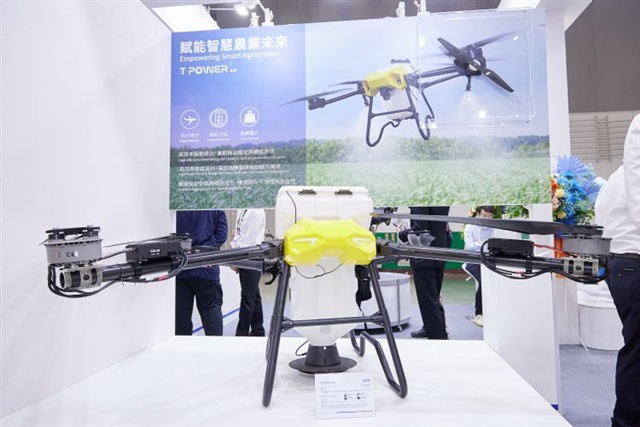
Even so, Taiwan’s drone industry appears to remain focused on a broader long-term goal: building a resilient supply chain that is not dependent on China. Industry participants have continued to support efforts to develop secure, trusted, and locally controlled production networks, especially for sensitive technologies that may play a role in national security.
The push for a non-China supply chain has become increasingly important as governments and companies worldwide reassess the risks of relying too heavily on a single manufacturing base. For Taiwan, this issue carries added urgency. Drone systems require a wide range of components, including chips, sensors, batteries, cameras, communication modules, motors, and software. Ensuring that these parts come from reliable and secure sources is a major priority for manufacturers seeking to serve defense, government, and industrial customers.
The lack of drone funding in the latest defense budget may slow some near-term development plans, but it does not appear to have weakened the industry’s commitment to supply chain independence. Many local companies still see strong potential in Taiwan’s drone ecosystem, particularly because the island already has deep experience in semiconductors, electronics manufacturing, precision engineering, and advanced hardware integration.
These strengths could help Taiwan become a competitive player in the global drone market if supported by consistent policy direction, investment, and procurement opportunities. Domestic drone makers are likely to continue seeking partnerships, expanding research and development, and improving production capabilities despite the latest budget outcome.
The decision also highlights a larger debate over defense spending priorities. While the NT$780 billion special defense budget represents a significant investment in Taiwan’s security, the exclusion of drone-related funds suggests that not every emerging technology received the same level of support. For drone companies, this creates uncertainty, especially at a time when unmanned systems are becoming more central to defense strategies worldwide.
Still, the industry’s response suggests resilience rather than retreat. Taiwan’s drone sector understands that supply chain security is not a short-term project. It requires steady investment, technical development, and coordination between manufacturers, policymakers, and end users. The commitment to reducing reliance on China-linked suppliers remains a strategic priority, regardless of this specific funding setback.
As demand for drones continues to grow in both military and civilian markets, Taiwan has an opportunity to position itself as a trusted hub for secure drone technology. The latest budget decision may be disappointing for some manufacturers, but it is unlikely to end the momentum behind Taiwan’s non-China supply chain ambitions.
For now, the domestic drone industry is expected to keep pushing forward, focusing on resilience, security, and long-term competitiveness in a rapidly evolving global market.