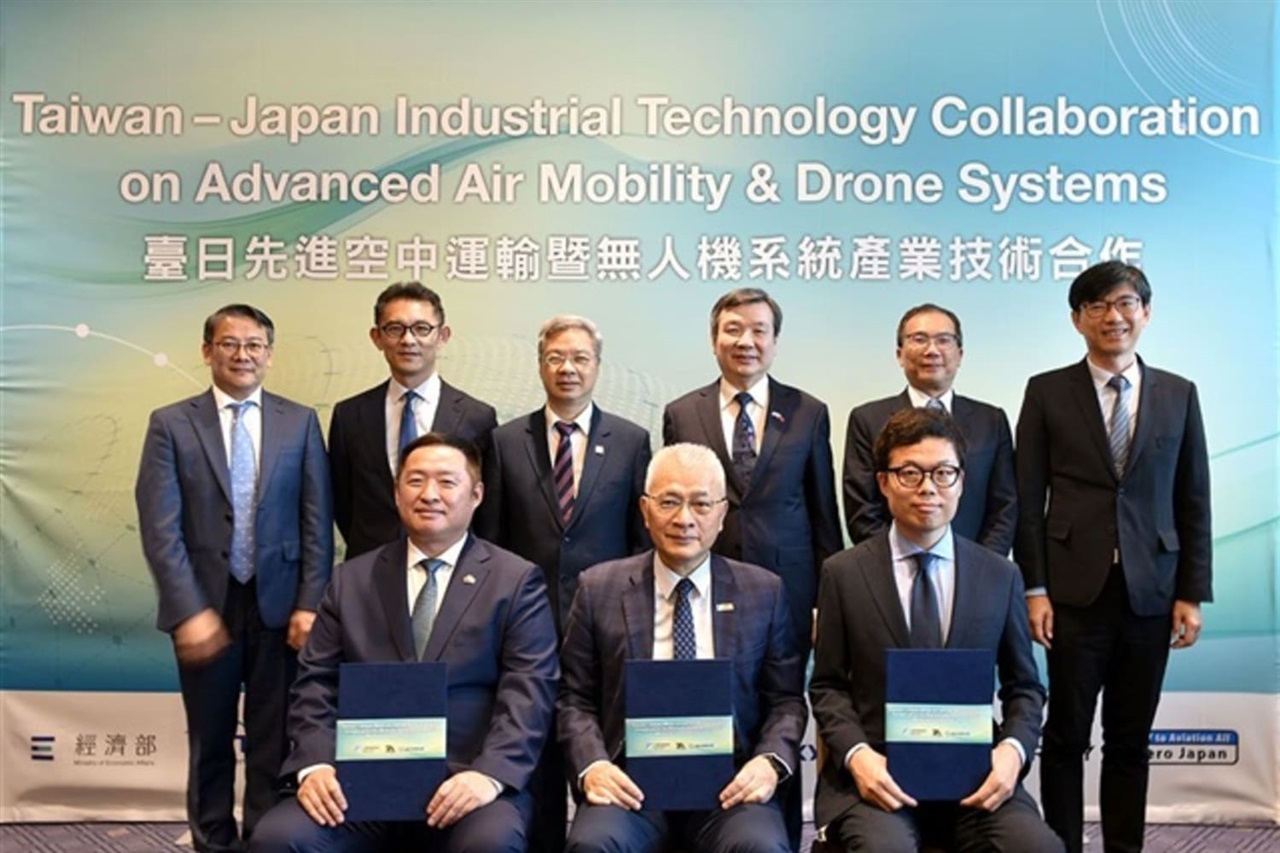
Taiwan’s Drone Industry Gains Momentum as Japanese Partnerships Expand
Taiwan’s drone industry is entering a new phase of growth, fueled by rising production, stronger export demand, and expanding partnerships with Japanese companies. Once a relatively small segment compared with Taiwan’s globally dominant semiconductor sector, the drone market is now drawing greater attention as demand for unmanned aerial systems grows across defense, industrial, logistics, agriculture, and public safety applications.
The sector has expanded at a remarkable pace in recent years. Taiwan’s drone output climbed from about NT$5 billion, or roughly US$154.87 million, in 2024 to NT$12.9 billion in 2025. Export value also saw a dramatic increase, rising from NT$140 million to NT$2.9 billion over the same period. This sharp jump signals that Taiwanese drone manufacturers are gaining stronger traction in overseas markets and are beginning to establish a more visible role in the global supply chain.
Japan has become an especially important partner in this development. As both Taiwan and Japan look to strengthen cooperation in advanced technology and supply chain resilience, drones have emerged as a promising area for collaboration. Japanese companies bring expertise in precision components, robotics, sensors, and industrial applications, while Taiwan offers strong manufacturing capabilities, electronics integration, and experience in building reliable technology supply chains.
This growing Taiwan-Japan cooperation could help accelerate the development of drones designed for commercial, industrial, and security-related uses. As countries around the world seek alternatives to heavily concentrated supply chains, Taiwan’s drone sector may benefit from increasing demand for trusted suppliers and regionally diversified production.
The rapid rise in exports also reflects broader global interest in drones for real-world operations. Beyond consumer photography, drones are now widely used for infrastructure inspection, disaster response, mapping, surveillance, agriculture monitoring, and delivery trials. Governments and businesses are investing more in unmanned systems to reduce costs, improve efficiency, and enhance safety in difficult or dangerous environments.
Taiwan’s strengths in semiconductors, electronics, communications hardware, and precision manufacturing give its drone industry a solid foundation. Many drones rely on advanced chips, sensors, batteries, cameras, and communication modules, all areas where Taiwan already has deep technical experience. This creates opportunities for local firms to move beyond assembly and into higher-value areas such as flight control systems, secure communications, AI-assisted navigation, and customized industrial drone platforms.
However, the industry still faces challenges. Although growth has been impressive, Taiwan’s drone sector remains much smaller than its semiconductor industry. To compete globally, companies will need to scale production, improve software capabilities, meet international safety and certification standards, and develop complete drone ecosystems that include hardware, software, maintenance, training, and data services.
Even so, the momentum is clear. With production more than doubling in one year and exports rising sharply, Taiwan’s drone industry is becoming a sector to watch. Expanding partnerships with Japanese firms could further strengthen its competitiveness and open the door to new markets.
As demand for unmanned aerial technology continues to grow worldwide, Taiwan is positioning itself as a serious player in the next generation of drone manufacturing. If the industry can build on its electronics expertise and deepen international cooperation, drones may become one of Taiwan’s most promising emerging technology sectors.