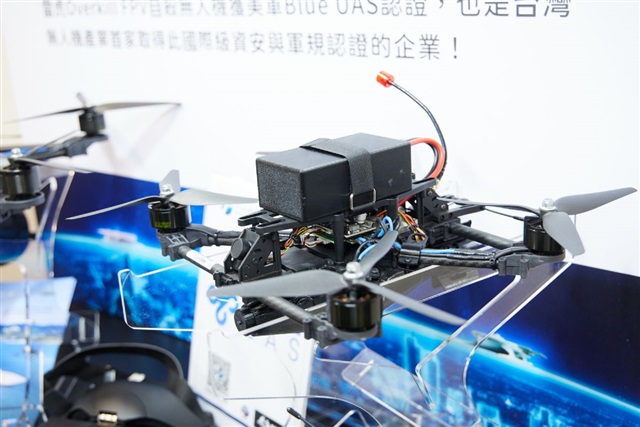
Taiwan is moving quickly to expand its unmanned aerial capabilities, signaling one of the country’s most ambitious defense procurement efforts in years. After completing a classified report to the Legislative Yuan tied to a special military procurement bill worth NT$1.25 trillion (around US$39.4 billion), the Ministry of National Defense (MND) has also outlined plans to acquire more than 200,000 drones.
While details of the procurement remain limited, the scale of the planned order stands out immediately. A purchase of this size suggests the program isn’t focused on a single type of unmanned aircraft. Instead, it points to a broad, layered drone strategy that could include everything from compact reconnaissance drones for frontline units to larger systems designed for surveillance, targeting support, and potentially strike or loitering missions.
The timing is just as notable as the numbers. Taiwan’s defense planning has increasingly emphasized mobility, rapid response, and distributed capabilities that can remain effective under pressure. Drones fit naturally into that approach: they’re comparatively fast to deploy, can provide real-time situational awareness, and can help extend detection and response ranges without exposing personnel to the same risks as manned platforms.
This drone procurement plan also aligns with a wider global shift in modern warfare and national defense. Unmanned systems have proven their value in recent conflicts by supporting intelligence gathering, battlefield monitoring, and precision engagement. For Taiwan, scaling drone inventory could strengthen deterrence by improving surveillance coverage, enhancing early warning, and enabling more flexible defense tactics across different environments.
With the special procurement bill reaching into the tens of billions of U.S. dollars and drone acquisition now part of the public discussion, attention will likely turn to how the MND intends to distribute these systems, what roles they’ll prioritize, and how quickly deliveries could begin. Even without full program specifics, one takeaway is clear: Taiwan is preparing for a future where drones are not an add-on to defense planning, but a central pillar of it.


