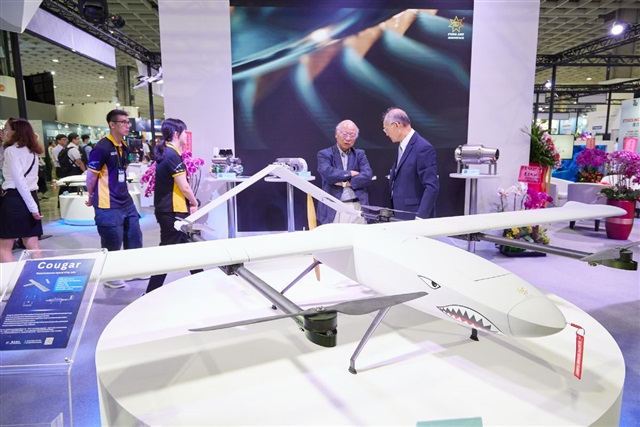
Taiwan’s drone industry doubles in value in two years as homegrown UAV makers challenge DJI’s long-held lead
Chinese drone maker DJI once controlled over 70% of the global consumer drone market and as much as 90% in the United States. That era of near-total dominance is giving way to a more competitive landscape. In just the past two years, Taiwan’s domestic drone sector has surged, with the industry’s value doubling as local manufacturers gain traction in the fast-growing dual-use market that serves both civilian and defense needs.
What’s powering Taiwan’s rapid ascent is a mix of technology depth, supply chain resilience, and shifting global demand. The island’s strengths in semiconductors, optics, motors, batteries, and precision manufacturing are translating naturally into high-performance unmanned aerial vehicles. At the same time, buyers across government and enterprise are diversifying suppliers, prioritizing secure, reliable platforms for missions that range from public safety to frontline reconnaissance.
Key drivers behind the momentum:
– Rising demand for dual-use drones that can pivot between civilian and military roles
– A focus on secure supply chains and trusted manufacturing for sensitive applications
– Strong electronics and component ecosystems that shorten R&D cycles and reduce time to market
– Growing local investment, integrations with defense contractors, and expanding test and training programs
Where Taiwan’s UAV makers are gaining ground:
– Aerial mapping and surveying for construction, mining, and smart city projects
– Infrastructure inspection across energy, telecom, and transportation networks
– Agriculture applications including field analysis and precision spraying
– Emergency response and disaster relief, from damage assessment to delivery of essentials
– Intelligence, surveillance, and reconnaissance with modular payloads for day/night operations
Technology themes shaping the next wave:
– Longer endurance airframes with efficient power systems
– Secure, resilient communications and anti-interference capabilities
– Modular payload bays for rapid switching between cameras, LiDAR, and specialized sensors
– Computer vision and on-drone AI for navigation, object detection, and autonomous mission profiles
Opportunities and challenges ahead:
– Competing on performance and reliability rather than pure price in a market long dominated by a single brand
– Meeting evolving regulatory requirements and certification standards across export markets
– Scaling production while ensuring quality and mission-readiness for critical use-cases
– Building global service networks, training, and lifecycle support to win long-term contracts
What to watch next:
– More cross-border partnerships with systems integrators and defense contractors
– Wider adoption of locally made platforms by public agencies and enterprise operators
– New product categories spanning compact field-ready drones to heavy-lift industrial UAVs
– Continued innovation in autonomy, swarming, and edge AI to reduce operator workload
With the market value doubling in just two years, Taiwan’s drone makers have moved from promising newcomers to credible contenders. By combining advanced components, agile engineering, and mission-focused design, they are redefining how unmanned aerial vehicles are built and deployed. The result is a more diverse, resilient global drone ecosystem—one that gives buyers real choice and sets the stage for the next chapter in both civilian and defense UAVs.