Government’s bigger defense budget gets industry backing as ZyFlex debuts reusable hard-kill drones and multi-supplier strategy is urged
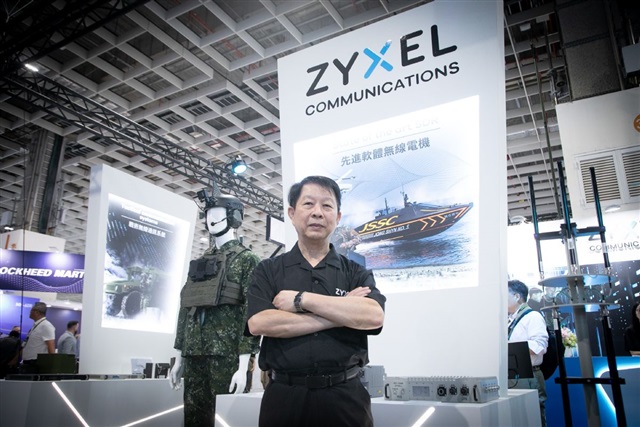
Zyxel Group chairman Shun-I Chu has thrown his support behind the government’s decision to boost defense spending, calling it a necessary step for national security and industrial resilience. He emphasized that higher budgets must be matched with procurement policies that genuinely advance defense autonomy—prioritizing domestic innovation and secure supply chains over short-term fixes.
A central pillar of his outlook is how the country should acquire and field drones. Rather than a one-off, single-vendor buy, Chu advocates a phased procurement model that brings multiple suppliers to the table. This approach encourages competition, speeds up innovation, and reduces risk by preventing dependence on any one platform or company. It also helps the armed forces iterate faster, absorbing lessons from early deployments and channeling them into upgraded batches.
That vision dovetails with a notable industry development: Zyxel’s subsidiary, ZyFlex, has launched reusable hard-kill drones designed for counter‑UAV operations. While details remain high-level, the concept is clear. Hard‑kill systems physically neutralize threats—unlike soft‑kill methods that rely on jamming or deception—and a reusable interceptor can dramatically lower lifecycle costs. In an era where low-cost hostile drones can appear in swarms, affordability, rapid turnaround, and reliability are essential. A reusable hard-kill platform aims to deliver exactly that, blending survivability with cost effectiveness.
Why a phased, multi-supplier drone strategy matters
– Faster innovation cycles: Procuring in stages allows defense agencies to pilot early versions, gather operational feedback, and roll improvements into subsequent lots. This keeps capabilities aligned with fast-evolving drone and counter‑drone threats.
– Greater resilience: A diverse vendor base safeguards against supply disruptions, export restrictions, or single points of failure, strengthening defense autonomy.
– Better value: Competition typically drives sharper pricing and more responsive support, while phased buys minimize the risk of overcommitting to a platform that may quickly become outdated.
– Interoperability from the start: Multiple suppliers encouraged to meet common standards can build an ecosystem where systems communicate and cooperate, from sensors to shooters to command-and-control nodes.
The promise of reusable hard-kill interceptors
– Cost control at scale: Reusability spreads costs over multiple missions, crucial when countering inexpensive threats at volume.
– Operational tempo: Rapid refurbishment and redeployment enable quick turnaround during periods of sustained pressure.
– Sustainable logistics: Fewer single-use components mean leaner supply chains and less waste, improving readiness and sustainability.
From policy to battlefield impact
Chu’s support for a larger defense budget is not just about spending more—it’s about spending smarter. Aligning investment with a procurement framework that values domestic capability, modular upgrades, and open standards can accelerate delivery of practical battlefield tools. With systems like ZyFlex’s reusable hard-kill drones entering the picture, a phased acquisition plan can validate performance in real scenarios, scale what works, and retire what doesn’t without tying the hands of planners.
For the local technology sector, this approach signals opportunity. Clear, multi-year roadmaps and fair competition attract talent and capital, fueling an innovation loop that strengthens both national security and the broader industrial base. It also positions domestic firms to meet stringent requirements at home, often a stepping stone to international credibility and export potential.
The bottom line
– Increased defense spending, when steered toward true defense autonomy, can deliver tangible gains in security and industrial strength.
– Phased procurement with multiple suppliers reduces risk, lowers costs, and accelerates innovation—especially in fast-moving domains like unmanned systems and counter‑UAV defense.
– Reusable hard-kill drones from ZyFlex exemplify the kind of practical, cost-conscious capability that can thrive under a modernized acquisition strategy.
As drone threats become more sophisticated and persistent, pairing smart budgets with smarter buying will be the difference between keeping pace and falling behind.