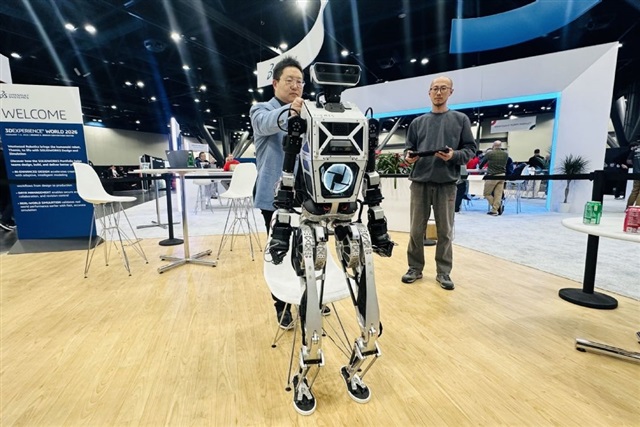
The global robotics market has been picking up serious momentum since 2025, and that growing buzz is now reshaping how the supply chain prepares for what comes next. From factory automation to service robots and emerging AI-powered machines, robotics is increasingly being treated as a long-term growth engine rather than a niche category. That shift is pushing more companies to quietly position themselves early—especially across Asia’s semiconductor ecosystem.
Within the chip industry, Taiwanese IC design firms are watching the robotics wave closely, but many remain cautious about the timeline. The general view is that today’s real-world robot deployments still haven’t reached the kind of large-scale adoption that would immediately translate into massive, sustained chip volumes. In other words, the opportunity is real, but it isn’t fully “here” yet in terms of demand at scale.
Still, that hasn’t stopped supply chain development from accelerating. Even if the current generation of robot applications is relatively limited, companies know that robotics is a technology curve that can ramp quickly once it hits the right combination of cost, capability, and customer need. As AI processing, sensor fusion, edge computing, and power efficiency improve, the semiconductor content inside robots can rise fast—spanning microcontrollers, connectivity chips, AI accelerators, motor-control solutions, and supporting components that keep systems reliable and responsive.
Another key driver shaping this strategy is geopolitical risk and shifting trade dynamics. With businesses increasingly assessing the possibility of US decoupling pressures, Taiwanese chip firms are reportedly exploring robotics as a forward-looking sector where they can build resilience and diversify. The thinking is straightforward: if certain markets, categories, or customers become harder to serve over time due to policy changes, companies want growth avenues that are less exposed—or at least more adaptable.
Robotics fits that profile because it’s broad, multi-industry, and still early. It touches manufacturing, logistics, healthcare, retail, hospitality, and even consumer/home scenarios. That breadth can help chip designers spread risk while aligning with a sector that many expect to expand as labor shortages, productivity demands, and automation investments rise worldwide.
For readers tracking the next big semiconductor growth theme, this is what matters: robotics is moving from “interesting” to “strategic.” Taiwanese IC design companies may not see today’s robot market as fully scaled yet, but the supply chain is already getting built out—quietly, deliberately, and with an eye on the next phase of demand.
If you’d like, share the rest of the post content (the part after “As a result, …”), and I can rewrite the full article with a more complete, search-optimized narrative while keeping the original intent intact.