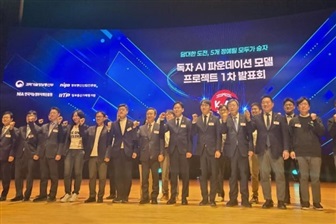
South Korea is turning up the heat in the global AI race, pushing hard to build a sovereign AI foundation model that can compete with the world’s best while being trained, governed, and optimized for local needs. In a major milestone, five top teams spanning industry and academia have revealed their first-phase results, offering a clear look at how the country’s homegrown AI efforts are taking shape—and how different strategies could define the next chapter of South Korea’s tech leadership.
At the center of this push is a simple but high-stakes goal: creating a powerful, nationally developed foundation model that supports South Korea’s language, culture, industries, and security requirements without depending entirely on foreign AI systems. As AI becomes a core layer of productivity, education, healthcare, finance, manufacturing, and public services, nations are increasingly treating large-scale AI models as strategic infrastructure. That makes “sovereign AI” more than a buzzword—it’s about control, resilience, and competitiveness.
The five teams’ early results highlight how varied the approaches are. Some contenders are emphasizing parameter scale, betting that bigger models will deliver stronger reasoning, richer language generation, and better performance across complex tasks. Others are focusing on efficiency—aiming to deliver high-quality results with smaller or more optimized models that are cheaper to train, easier to deploy, and more practical for real-world services.
Another major dividing line is multimodal capability. Several teams are moving beyond text-only AI, showcasing early progress on models that can handle multiple types of inputs and outputs—such as text paired with images, documents, or other formats. Multimodal AI is quickly becoming a key benchmark in the foundation-model landscape because it mirrors how people actually work: reading, viewing, summarizing, analyzing, and generating content across different media.
These first-phase results don’t crown a single winner, but they do signal momentum—and a serious commitment to building a domestic AI ecosystem that can power both public and private innovation. A sovereign foundation model can be tuned for Korean-language nuance, local regulations, and domestic enterprise needs, making it a stronger fit for government services, education platforms, customer support, legal and administrative workflows, and industrial applications.
Just as importantly, this competition is helping define what “best” looks like for South Korea’s AI future. Is the priority maximum scale, broad multimodal intelligence, cost-effective deployment, or specialized performance in key sectors? The answer may ultimately be a combination, with different models serving different national goals—from research excellence and global competitiveness to practical deployment across everyday services.
With these first-phase unveilings now on the table, attention will shift to what comes next: deeper evaluations, more advanced capability demonstrations, broader dataset strategies, safety and governance frameworks, and the infrastructure needed to train and run models at scale. If the current pace continues, South Korea’s sovereign AI initiative could quickly become one of the most closely watched national foundation-model efforts worldwide.


