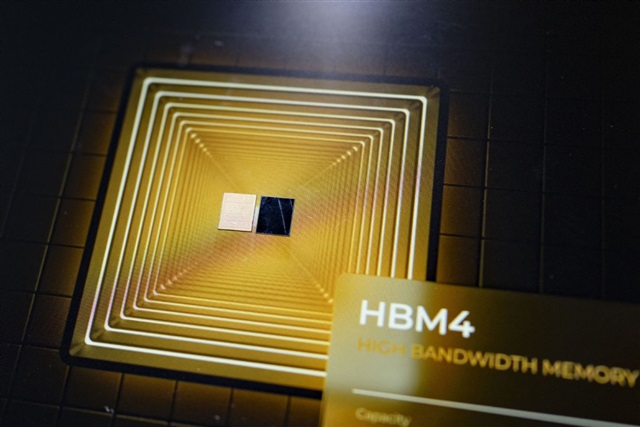
South Korea’s dominance in cutting-edge memory is riding a powerful wave of AI demand, but new competitive forces are gathering at the edges of the market. As Chinese memory maker CXMT accelerates HBM3 production and Tesla moves to build its own wafer fab for greater chip self-sufficiency, the global balance of power in semiconductors could be in for a shake-up.
AI is rewriting the rules of the memory market. Training and running large AI models requires massive bandwidth and tight power budgets, making high-bandwidth memory (HBM) the component everyone is scrambling to secure. That surge has been a tailwind for Korean chipmakers, long-standing leaders in advanced DRAM and HBM. Yet the story is evolving quickly as new players push into the most lucrative part of the stack.
CXMT’s HBM3 push signals a direct challenge in a segment where performance, yields, and scaling define leadership. HBM3 sits at the heart of modern AI accelerators and data center systems, and ramping production is no small feat. If CXMT can deliver competitive output at scale, it could pressure pricing, diversify supply for system builders, and narrow South Korea’s edge over time. Even the perception of credible competition tends to reshape procurement strategies across hyperscale customers, GPU vendors, and enterprise buyers.
The Tesla angle adds a different kind of competitive tension. Instead of relying solely on external foundries and suppliers, the company plans to pursue its own wafer fabrication as part of a broader strategy to control key technologies in-house. That could give Tesla more control over chip performance roadmaps, cost structures, and supply assurance—critical advantages for companies pushing the envelope in AI, autonomous systems, and power electronics. In an industry where lead times and allocation can make or break product launches, internal fabs can serve as powerful strategic insurance.
For South Korea’s semiconductor ecosystem, these developments raise both risks and opportunities:
– Competitive pressure on HBM leadership: Korean memory specialists have set the pace in HBM technology. A faster-than-expected ramp by a Chinese competitor could spur accelerated innovation cycles and more aggressive node transitions.
– Supply chain diversification: Big buyers increasingly want multiple sources for high-value components. The emergence of new HBM suppliers and vertically integrated chip strategies could dilute share while expanding the overall market.
– Pricing dynamics: Additional capacity and new entrants typically exert downward pressure on margins. The premium attached to HBM could normalize as more suppliers enter the field.
– Strategic responses: Expect intensified investment in next-gen HBM, advanced packaging, and close co-design with AI accelerator partners to maintain performance leadership.
Why HBM3 is the battleground
HBM is stacked memory linked to processors via ultra-wide interfaces, delivering dramatically higher bandwidth at lower power compared to traditional DRAM. In AI workloads—training large language models, real-time inference, and model fine-tuning—memory speed and efficiency often become the bottleneck. That makes HBM3 a critical enabler for GPUs, AI ASICs, and advanced CPUs deployed in hyperscale data centers and high-performance computing.
As demand for AI compute continues to soar, the market for HBM has shifted from niche to necessity. Any producer able to meet strict quality, reliability, and performance targets stands to win significant business. That’s precisely why CXMT’s acceleration is notable and why South Korea’s incumbents are likely to double down on R&D, yields, and packaging breakthroughs.
Tesla’s wafer fab ambitions and the self-sufficiency trend
Tesla’s plan to build a wafer fab reflects a broader industry trend toward vertical integration. Companies that depend on leading-edge chips for strategic products increasingly seek tighter control over design, manufacturing, and supply. In-house fabrication—while capital intensive—can unlock tailored architectures, tighter hardware-software integration, and better cost predictability. It also reduces exposure to external shocks, whether they stem from geopolitics, logistics, or foundry capacity constraints.
If executed well, this move could inspire similar strategies across automotive, robotics, and energy sectors, where specialized chips are becoming central to product differentiation. For traditional chip suppliers, that means forging deeper partnerships, offering more custom design options, and competing not just on specs but on ecosystem fit.
What to watch next
– HBM production milestones: Yields, capacity expansions, and customer design wins will reveal whether new entrants can challenge entrenched leaders in real-world deployments.
– Packaging innovation: Technologies like advanced 2.5D/3D integration, better thermal solutions, and tighter memory-processor co-optimization will be decisive in AI performance.
– AI infrastructure growth: The pace of data center build-outs and AI accelerator shipments will determine how quickly HBM demand continues to scale.
– Vertical integration playbooks: As more companies explore in-house silicon strategies, expect shifting alliances, new IP licensing models, and a more diverse landscape of chip architectures.
The bottom line
South Korea’s semiconductor industry remains in a strong position thanks to its expertise in HBM and memory scaling, but the landscape is changing. CXMT’s accelerated HBM3 push introduces a serious contender in an increasingly strategic market. Meanwhile, Tesla’s plan to pursue its own wafer fab underscores a broader turn toward chip self-sufficiency among tech leaders. Together, these developments signal fiercer competition, faster innovation cycles, and a supply chain that’s diversifying at the very moment AI demand reaches new heights.
For buyers, more choice and potentially better economics may lie ahead. For established leaders, the mandate is clear: innovate faster, execute flawlessly, and lock in deeper partnerships across the AI stack.