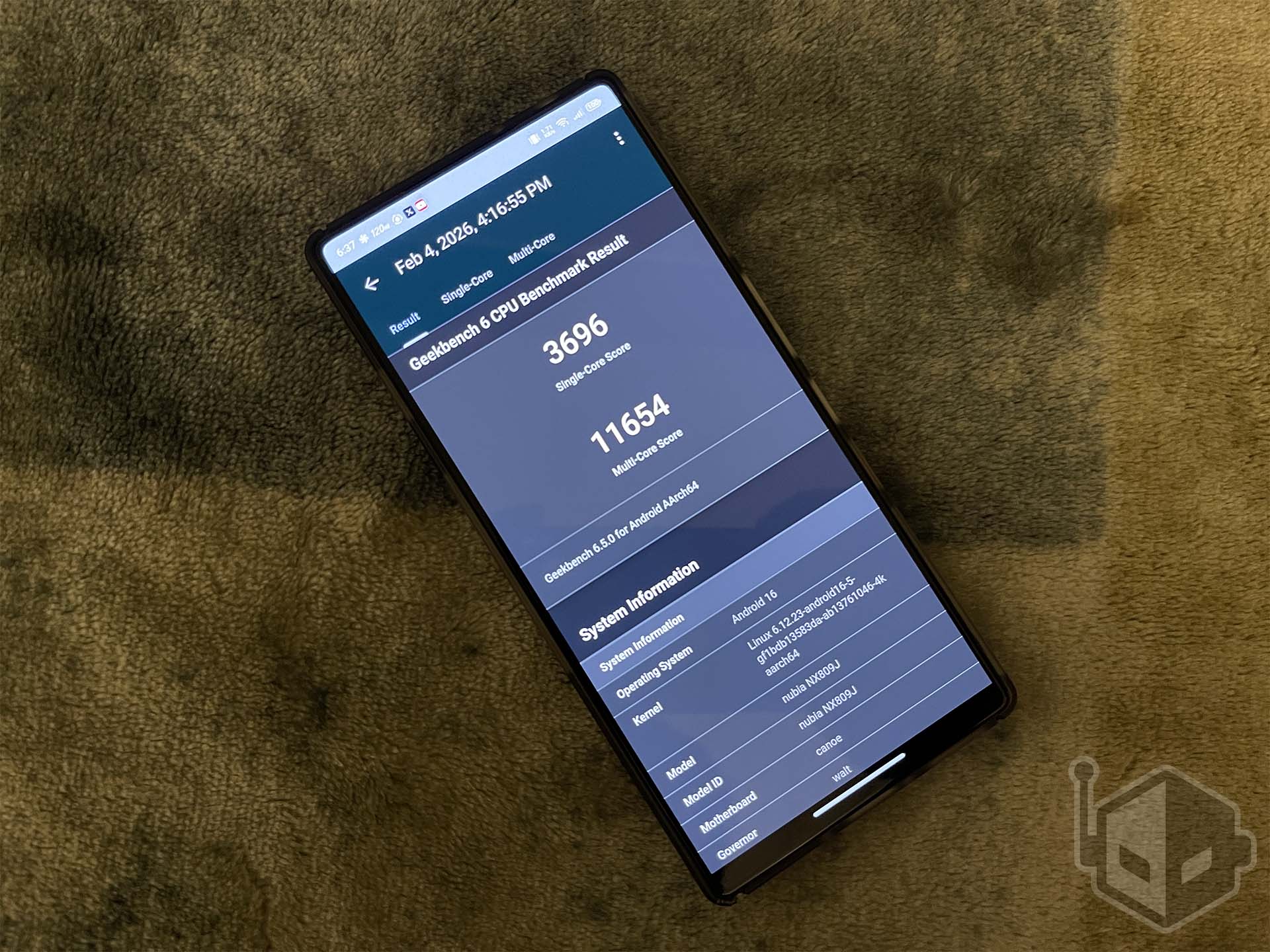
Samsung’s Galaxy S26 Ultra has surfaced in early Geekbench 6 results, giving us a first look at how Samsung’s next premium flagship might perform. As expected from recent Galaxy Ultra tradition, the listing points to an overclocked version of Qualcomm’s latest top-tier Snapdragon chipset—this time the Snapdragon 8 Elite Gen 5.
According to the benchmark entry, the chip’s performance cores are running at up to 4.74GHz rather than the typical 4.61GHz. On paper, that small clock-speed boost should help the Galaxy S26 Ultra stand out. In practice, the numbers raise a bigger question: if Samsung is shipping a slightly faster Snapdragon variant, why doesn’t it clearly dominate competing flagship phones?
Even with the overclocked Snapdragon 8 Elite Gen 5, the Galaxy S26 Ultra trails in both single-core and multi-core performance, with the gap widening significantly in multi-core results. One likely explanation is cooling. Gaming-focused phones like the REDMAGIC 11 Pro often include aggressive thermal hardware—such as a cooling fan and liquid cooling—giving the chipset more thermal headroom to sustain higher performance for longer. That matters because modern mobile processors can hit impressive peak speeds, but sustaining them depends heavily on heat management and power limits.
This also highlights a broader pattern: historically, Samsung flagships featuring overclocked Snapdragon chips haven’t always outpaced the very best from other Android competitors in raw benchmark charts. That leads to speculation about whether the “overclocked” branding is mainly for marketing—or whether Samsung is doing what it can within real-world constraints like thermals, efficiency targets, and long-term reliability.
It’s also worth noting that Samsung can only tune so much when it isn’t the designer of the underlying CPU architecture. And while Samsung’s own Exynos 2600 changes the story somewhat, that chip is still expected to lean on standard ARM CPU and GPU designs, while Qualcomm’s custom Oryon architecture may have an advantage in certain performance scenarios, at least for now.
Before jumping to conclusions, keep in mind that Geekbench 6 is only one benchmark. It’s useful for a quick snapshot of CPU performance, but it doesn’t fully capture GPU gaming performance, sustained workloads, thermal throttling behavior, or real-world responsiveness. There’s also a real chance these numbers come from pre-release hardware or early software, meaning final retail Galaxy S26 Ultra units could perform differently after launch and updates.
As more benchmark results and comparisons arrive, we’ll get a clearer picture of whether the Galaxy S26 Ultra’s overclocked Snapdragon 8 Elite Gen 5 delivers meaningful benefits beyond the spec sheet—or whether advanced cooling and sustained performance tuning continue to be the deciding factors in who takes the performance crown.