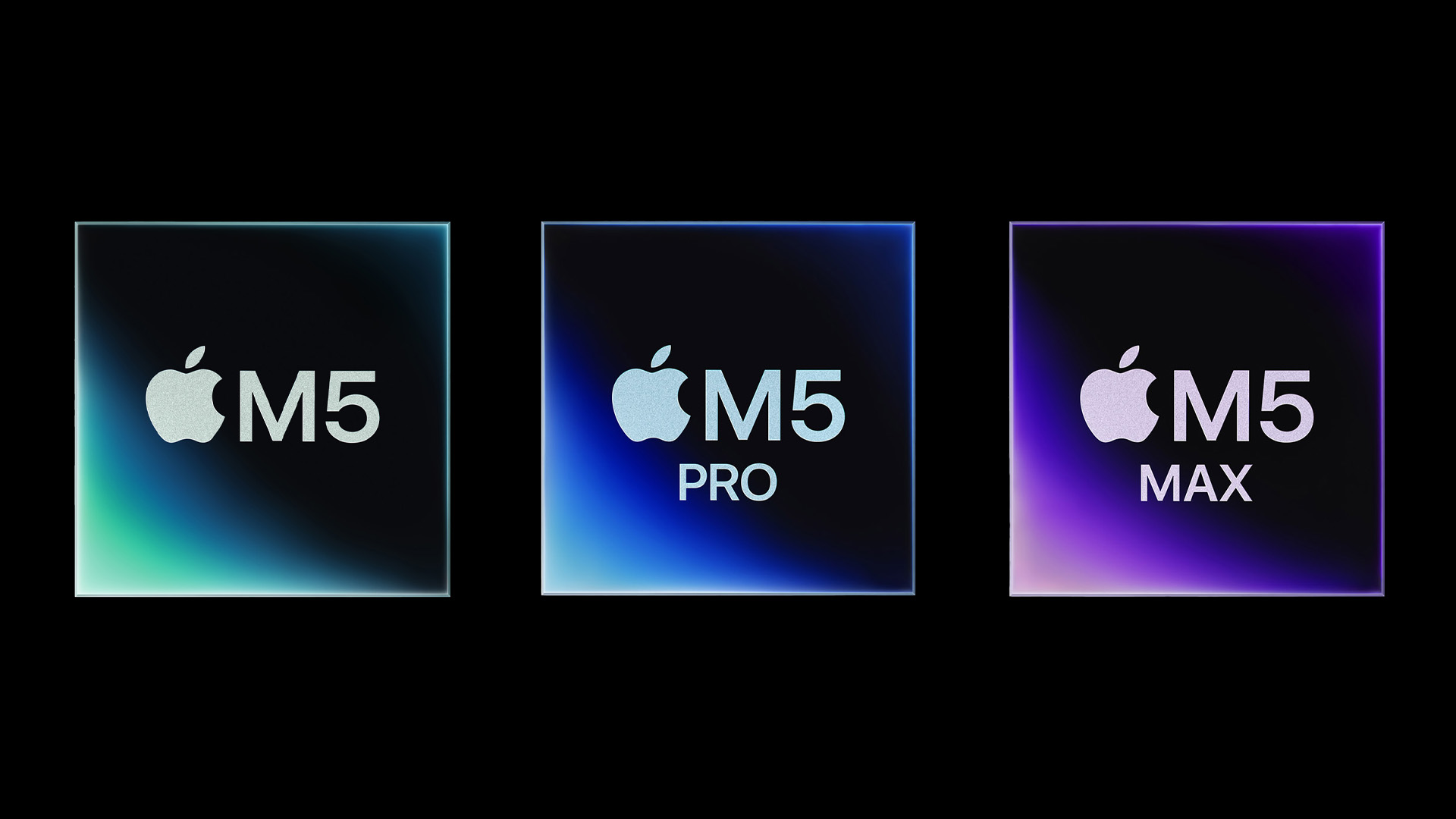
Apple’s M5 Pro and M5 Max reveal came with a new twist in Apple’s CPU-core naming, and at first glance it sounded like a big leap forward. Apple introduced the term “super” cores, which naturally made it feel like these chips were getting brand-new, higher-powered performance cores that could run faster without sacrificing efficiency thanks to its Fusion Architecture.
But once the dust settles, the “super” label looks far more like a marketing refresh than a technical breakthrough.
Here’s the key detail: the M5 was announced earlier than the M5 Pro and M5 Max, so its CPU behavior has already been observed in benchmarks. Those newly named “super” cores on the M5 are shown running at 4.61GHz. And based on the available information, the M5 Pro and M5 Max use the same 4.61GHz frequency for their super cores too. In other words, Apple didn’t raise the ceiling. The top clock speed appears unchanged across the family.
What does that mean in real-world use? Single-core and lightly threaded performance may end up looking very similar between the M5, M5 Pro, and M5 Max, at least when workloads rely primarily on those highest-clocked cores.
Where the M5 Pro and M5 Max should separate themselves is in multi-core performance—and that’s where Apple’s updated core categories start to make more sense. Notably, the M5’s lower-power cores weren’t relabeled as “performance” cores. That suggests Apple is carving out a middle tier for the Pro and Max chips: cores that likely run faster than the M5’s efficiency cores, but not as fast (or as power-hungry) as the 4.61GHz super cores.
This also explains why Apple can scale up core counts on the M5 Pro and M5 Max. By adding more of these mid-tier “performance” cores, Apple can push stronger multi-core throughput while keeping heat and power in check—an especially important balance for thin-and-light laptops like the MacBook Pro.
Below are the listed CPU configurations and clock ranges mentioned for Apple’s new silicon lineup used in the latest MacBook Pro range.
M5
10-core CPU (4 super cores at 4.61GHz, 6 efficiency cores at 3.00GHz)
M5 Pro
15-core CPU (5 super cores at 4.61GHz, 10 performance cores in the 3.00GHz to 4.61GHz range)
18-core CPU (6 super cores at 4.61GHz, 12 performance cores in the 3.00GHz to 4.61GHz range)
M5 Max
18-core CPU (6 super cores at 4.61GHz, 12 performance cores in the 3.00GHz to 4.61GHz range)
18-core CPU (6 super cores at 4.61GHz, 12 performance cores in the 3.00GHz to 4.61GHz range)
One thing stands out in Apple’s approach: rather than chasing higher peak clock speeds, it appears to be maximizing performance through smarter core scaling. With modern manufacturing like TSMC’s 3nm N3P process, there’s only so far Apple can push frequency before efficiency takes a hit. If 4.61GHz is the practical ceiling for balancing performance and battery life, then adding more cores in a sensible power envelope becomes the better path—especially for sustained workloads like video editing, compiling code, 3D rendering, and heavy multitasking.
It also highlights an interesting contrast with the broader chip industry, where some upcoming smartphone processors are rumored to be tested at higher clocks around 5.0GHz. Apple’s strategy suggests it’s prioritizing consistent performance per watt and thermal stability over headline-grabbing peak numbers.
The remaining unanswered question is the most intriguing one: what are the actual clock speeds of the new “performance” cores in the M5 Pro and M5 Max? The range listed implies they sit somewhere between 3.00GHz and 4.61GHz, but until more concrete benchmark data or technical details surface, the exact behavior of these cores remains unknown.
As more performance testing and deeper technical breakdowns emerge, the real story will become clearer—whether this new naming system represents a meaningful shift in how Apple tunes its chips, or simply a cleaner way to describe a design that’s focused on scaling multi-core power instead of boosting peak frequency.