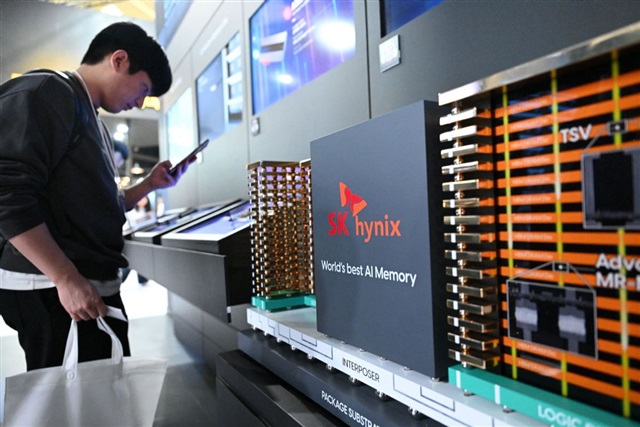
High Bandwidth Memory Enters a New Era as Advanced Packaging Becomes the Real Battleground
The race in high bandwidth memory is no longer only about faster speeds and larger capacities. As artificial intelligence, data centers, high-performance computing, and next-generation graphics processors demand more memory bandwidth than ever, the biggest challenge is shifting toward how these memory stacks are built, cooled, powered, and integrated with processors.
High bandwidth memory, commonly known as HBM, has become a critical component for AI accelerators and advanced GPUs. Its ability to deliver massive data throughput while sitting close to the processor makes it ideal for workloads that need constant, rapid access to information. But as HBM generations continue to evolve, simply increasing bandwidth is not enough. The industry now faces a more complex problem: packaging.
Modern HBM stacks are growing taller and denser. Each new generation brings more memory layers, higher capacity, and faster transfer rates. While this improves performance, it also creates new engineering hurdles. More layers mean more heat, greater power demands, and increased complexity in connecting the memory to the logic die. If these issues are not solved, the performance gains promised by future HBM could be limited by thermal and physical constraints.
This is why advanced packaging has become a central focus for memory makers and chip designers. Instead of treating packaging as a final assembly step, companies are now viewing it as a key part of chip performance. The way HBM is stacked, bonded, and connected can directly affect speed, energy efficiency, reliability, and manufacturing scalability.
One of the most important technologies being explored is hybrid bonding. Unlike traditional methods that rely on microbumps to connect stacked components, hybrid bonding allows for more direct and dense connections between layers. This can reduce power consumption, improve signal integrity, and make it possible to build thinner, more efficient memory stacks.
For AI hardware, these improvements matter significantly. Training and running large AI models requires enormous memory bandwidth. As processors become more powerful, they need memory systems that can keep up without wasting energy or overheating. Advanced HBM packaging could help unlock higher performance while keeping power and cooling requirements under better control.
Thermal management is especially important. Dense HBM stacks generate heat in a compact space, and excessive heat can reduce performance or shorten component lifespan. Better packaging techniques can improve heat dissipation, allowing future memory stacks to operate at higher speeds for longer periods. This is crucial for data centers, where efficiency and reliability directly impact operating costs.
Power consumption is another major concern. AI servers already require large amounts of energy, and memory plays a growing role in total system power usage. By improving the connections between memory layers and reducing electrical resistance, advanced packaging may help lower energy use while maintaining high bandwidth.
The shift toward packaging innovation also reflects a broader trend in the semiconductor industry. As traditional chip scaling becomes more difficult and expensive, companies are increasingly looking at chiplet designs, 3D stacking, and advanced interconnects to boost performance. HBM fits directly into this trend because it depends heavily on tight integration between memory and processors.
Future HBM generations are expected to push capacity and bandwidth even further, but their success will depend on solving packaging challenges. The companies that can deliver better stacking methods, stronger thermal control, and more efficient bonding technologies will have a major advantage in the AI memory market.
In short, the future of high bandwidth memory will not be decided by speed alone. Advanced packaging is becoming just as important as raw memory performance. As AI chips and data center processors continue to evolve, technologies such as hybrid bonding could play a defining role in the next wave of HBM innovation.