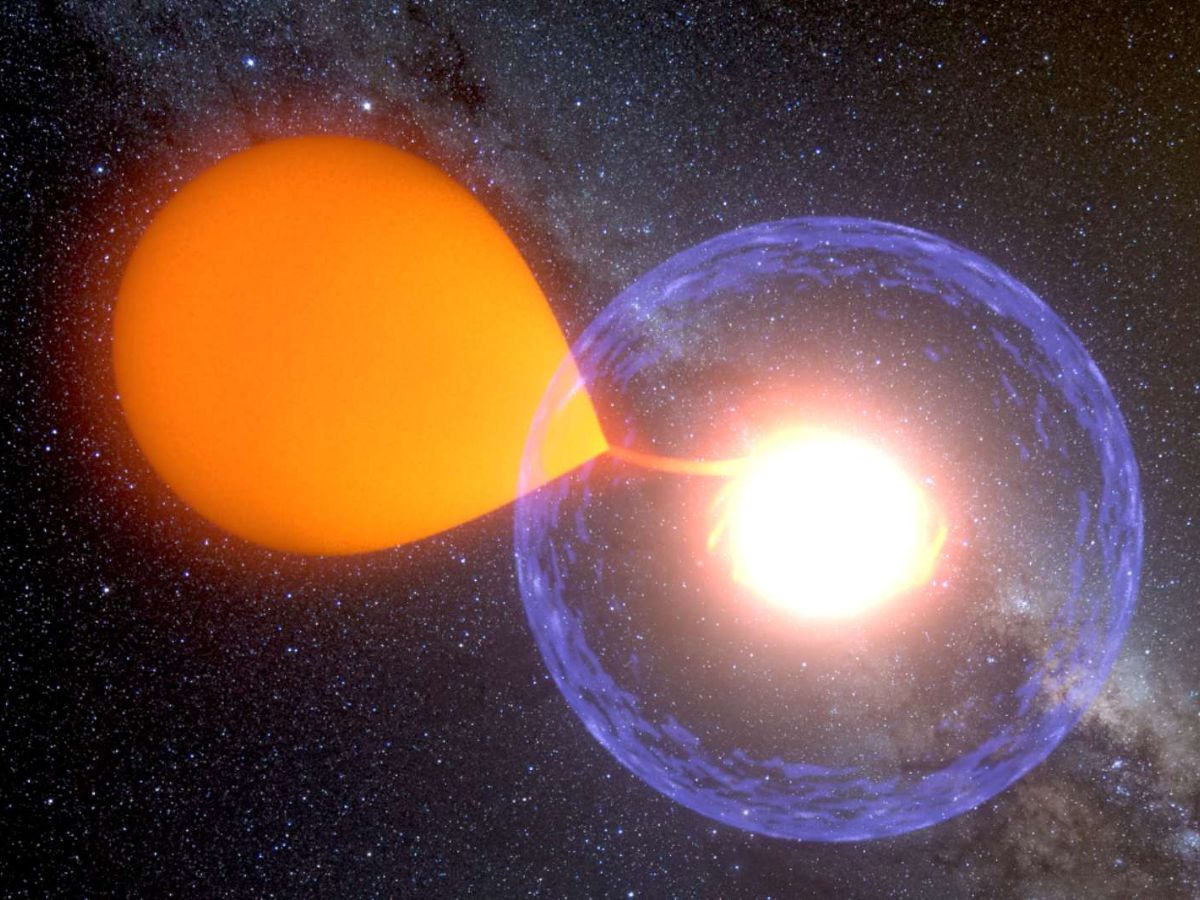
The universe continually dazzles us with its mysteries and wonders, and recently, it delivered a spectacle that is exceptionally rare: two novas appearing almost simultaneously in the sky. This extraordinary event offers scientists a unique opportunity to delve deeper into the study of these cosmic phenomena.
Imagine witnessing sudden, powerful flashes of light in the night sky. While these might lead some to speculate about extraterrestrial life, such occurrences often have fascinating explanations rooted in astrophysics. The recent appearance of two novas within just two weeks has captured the attention of sky watchers everywhere.
The first nova, V462 Lupi, was discovered on June 12, followed by V572 Velorum on June 25 in the constellation Vela. Both stars achieved a remarkable brightness, visible even without telescopes. V572 Velorum, in particular, gleamed with a magnitude of +4.8, making it easily observable from the southern hemisphere. While V462 Lupi is less luminous, its visibility spans both the northern and southern hemispheres.
The rarity of this event cannot be overstated. Stephen James O’Meara highlighted the infrequency of such occurrences, noting that a similar celestial event hasn’t been seen since 1936. These novas are the result of a white dwarf star drawing matter from a companion star until a dramatic explosion occurs. The brilliance of their light and the brief interval between their appearances make them invaluable subjects for further study.
This dual appearance promises to enhance our understanding of the dynamics and consequences of such stellar explosions. As the cosmos continues to surprise and inspire, events like this remind us of the endless wonders waiting to be explored in the night sky.