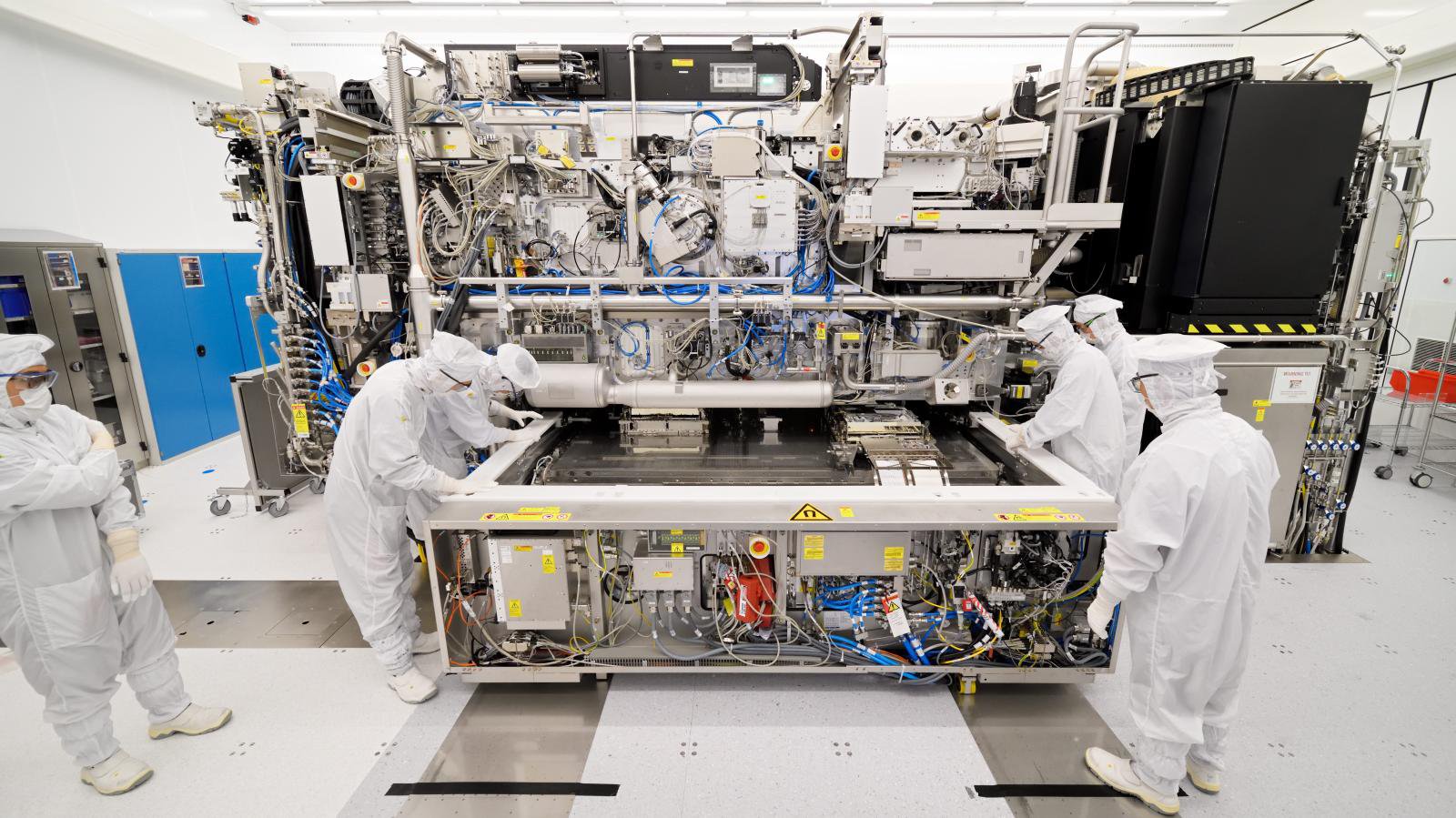
China’s race to catch up with the United States in semiconductor technology is heating up, fueled by the ongoing technological rivalry and restrictive export bans. Currently, the reliance on older DUV (Deep Ultraviolet) equipment by the nation’s leading semiconductor company, SMIC, keeps China at a competitive disadvantage. Meanwhile, the U.S. reaps the benefits of ASML’s state-of-the-art EUV (Extreme Ultraviolet) technology, maintaining a significant edge over China in chip manufacturing capabilities.
To counter this, China is striking back by fostering its own advancements in semiconductor technology. At the heart of this ambitious push is SiCarrier, a burgeoning company backed by none other than technology giant Huawei. Aiming to curtail dependency on ASML’s EUV machines, SiCarrier is gearing up to create its own cutting-edge chip-making tools.
The Chinese government, recognizing the imperative of self-reliance in the semiconductor sector, has thrown its weight behind this development. Reports indicate that SiCarrier is making strides, particularly in the field of EUV prototypes, with benchmarks set against major industry players like ASML, Applied Materials, and Lam Research. The technology being developed extends beyond lithography and includes comprehensive processes such as chemical vapor deposition, etching, and atomic layer deposition.
While specific timelines remain under wraps, the optimism surrounding SiCarrier’s progress is palpable. The Shenzhen government’s support boosts SiCarrier’s ambition to bridge the technological gap, a mission further strengthened by Huawei’s expertise and innovation in chip production. However, the challenges are formidable, as industries in the Netherlands, the U.S., and Japan have long dominated these intricate technologies.
As it stands, China’s most advanced lithography achievement is SMIC’s development of 5nm technology. However, scaling up production remains an uphill battle, hindered by older DUV machinery that leads to inefficiencies and higher defect rates. The synergy between SiCarrier, Huawei, and government backing may soon change this narrative, positioning China on a path towards competing head-to-head in the global chip manufacturing arena.
The journey to self-sufficient chip production will not be an easy one for China, but with determination and innovation driving these efforts, the landscape of semiconductor technology is set for an exciting transformation.