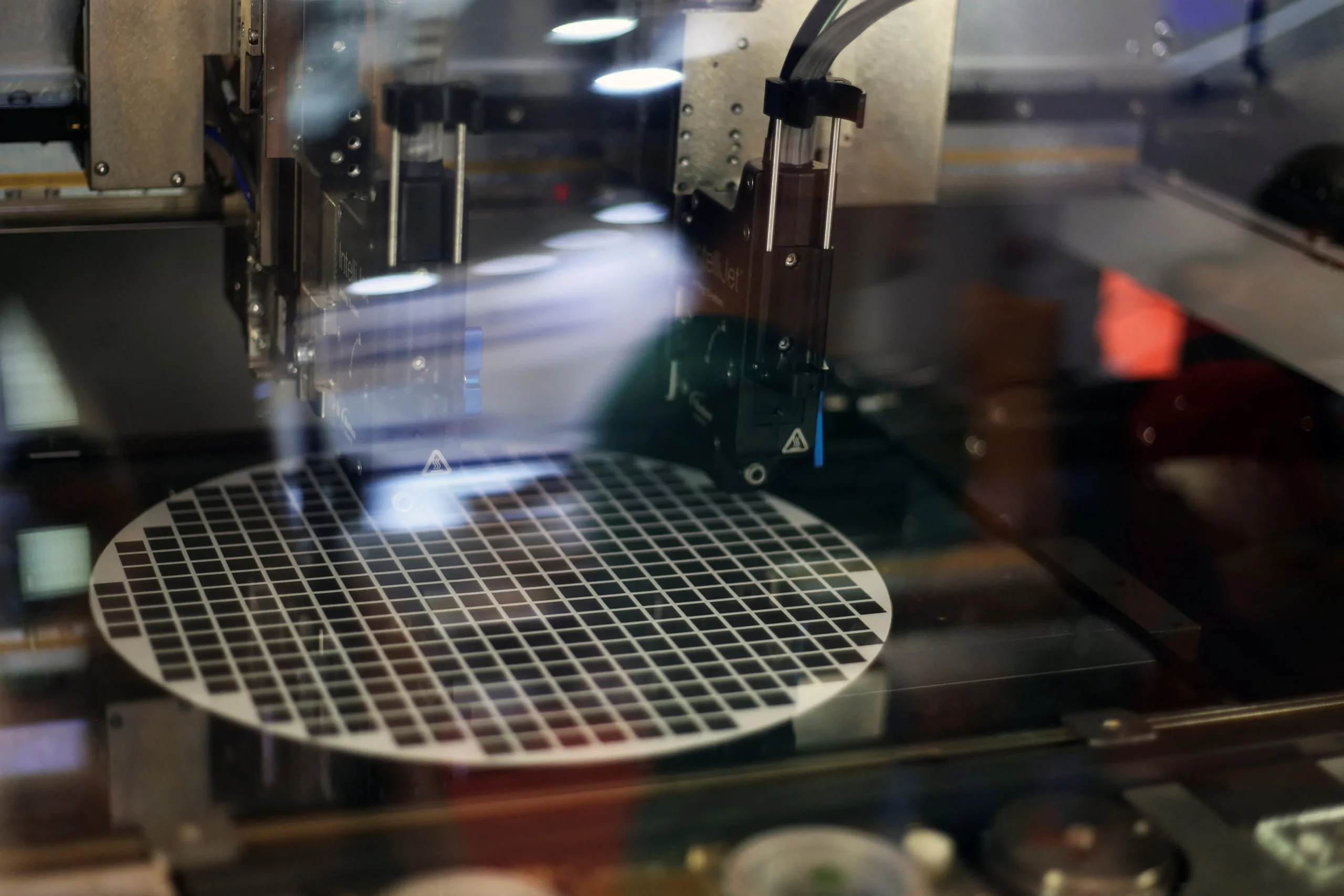
In a significant stride towards technological autonomy, SiCarrier, China’s largest manufacturer of chipmaking equipment, has introduced a bold selection of new semiconductor tools, marking a potential shift in the global semiconductor landscape. This move, unveiled at the SEMICON 2025 event in China, highlights the country’s ambition to reduce dependence on foreign technology by bolstering its in-house semiconductor capabilities.
SiCarrier, reportedly backed by Huawei, is not often recognized alongside giants like SMIC or Huawei. Yet, it plays a crucial role in China’s rapidly evolving semiconductor sector. This latest development hints at the firm’s ambition to challenge the dominance of major players such as ASML, Applied Materials, and Lam Research. Although specifics on the efficacy and market performance of these tools remain elusive, the introduction of advanced machinery like Rapid Thermal Processing (RTP) systems indicates a solid push towards technological independence.
At the heart of their efforts, SiCarrier’s focus extends to achieving the production of 5nm chips, which the company asserts is within reach using domestic tools. However, as noted by President Du Lijun, grappling with yield rate challenges remains a significant hurdle, especially under non-optical technologies. This struggle has positioned their output as more costly compared to international standards, yet the collaboration with industry giants such as SMIC and Huawei suggests that breakthroughs may be imminent.
President Du’s insights, shared with Reuters, hint at potential solutions leveraging non-optical technologies to overcome lithographic challenges. Embarking on this alternative technological path may very well pave the way for China to establish its foothold in producing advanced semiconductor nodes.
Furthermore, SiCarrier’s work aligns with China’s strategic effort to counterbalance global dependencies, notably on the Netherlands, a key supplier of chipmaking tools. Reports indicate ongoing collaborations with Huawei and the Shenzhen government to create custom Extreme Ultraviolet (EUV) prototypes. These efforts focus on laser-induced discharge plasma (LDP) technology, a crucial step toward developing homegrown EUV lithography equipment—arguably, the last piece in the puzzle for China to achieve cutting-edge semiconductor production capabilities.
With SiCarrier’s daring new lineup, China marches towards a future where it could redefine the semiconductor supply chain, positioning itself as a formidable contender in the global tech arena. As these developments unfold, the world watches closely to see how China navigates these technological frontiers.


