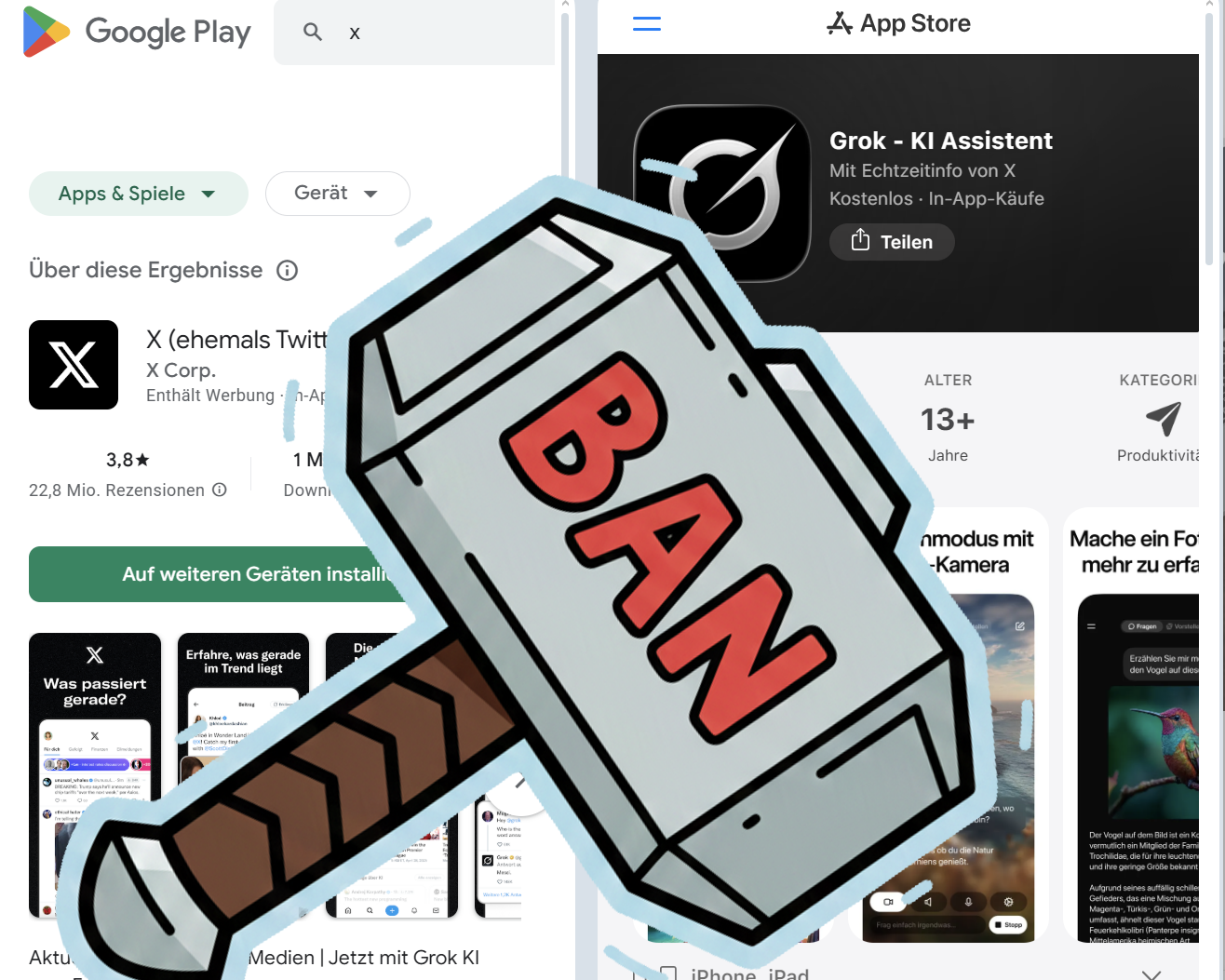
Three US senators are turning up the pressure on Apple and Google, urging both companies to remove X (formerly Twitter) and its built-in AI tool, Grok, from the App Store and Google Play. The request comes amid growing concerns that deepfakes and other AI-generated images are spreading through the platform, including content that appears to exploit women and children.
In an open letter dated January 9, 2026, Senators Ron Wyden of Oregon, Ben Ray Luján of New Mexico, and Edward J. Markey of Massachusetts addressed Apple CEO Tim Cook and Google/Alphabet CEO Sundar Pichai with a blunt message: Grok is allegedly being used to create non-consensual, sexualized images, and the senators believe that activity conflicts with the rules Apple and Google claim to enforce inside their app stores.
At the center of the senators’ argument is the idea that an app hosting or enabling this kind of content shouldn’t remain available through platforms that explicitly forbid material tied to child exploitation or abuse. They point to app store policies that ban content contributing to the exploitation of minors and emphasize that Apple’s rules go further, restricting content involving children that could be considered offensive or disturbing.
The letter also raises alarms about reports that Grok can manipulate images of real private individuals into sexualized scenes. Even more serious, the senators cite claims that an archive of potentially illegal material exists, including content described as depicting child abuse. They also state that Elon Musk, who leads X, appears to have encouraged or minimized the issue through his reactions on social media—an accusation that adds political heat to an already volatile debate around AI safety and platform responsibility.
Beyond the specific allegations, the senators warn that failing to act could weaken Apple’s and Google’s broader position that they can effectively regulate their own marketplaces without heavier outside intervention. In other words, if major app store operators are seen as tolerating apps associated with deepfakes or abusive AI-generated imagery, lawmakers may use that as evidence that stricter regulation is necessary.
To underline their point, the senators referenced prior moments when Apple and Google removed other apps even when those apps weren’t accused of distributing illegal material, arguing that the severity of the claims involving X and Grok demands at least a comparable response. Their minimum ask is a temporary suspension while the matter is investigated.
Apple and Google have been requested to provide a written assessment by January 23, 2026. If either company moves to restrict or remove X, it could become one of the biggest app store enforcement actions yet involving generative AI—especially around non-consensual deepfakes, a topic that’s quickly becoming a flashpoint for tech companies, regulators, and the public.