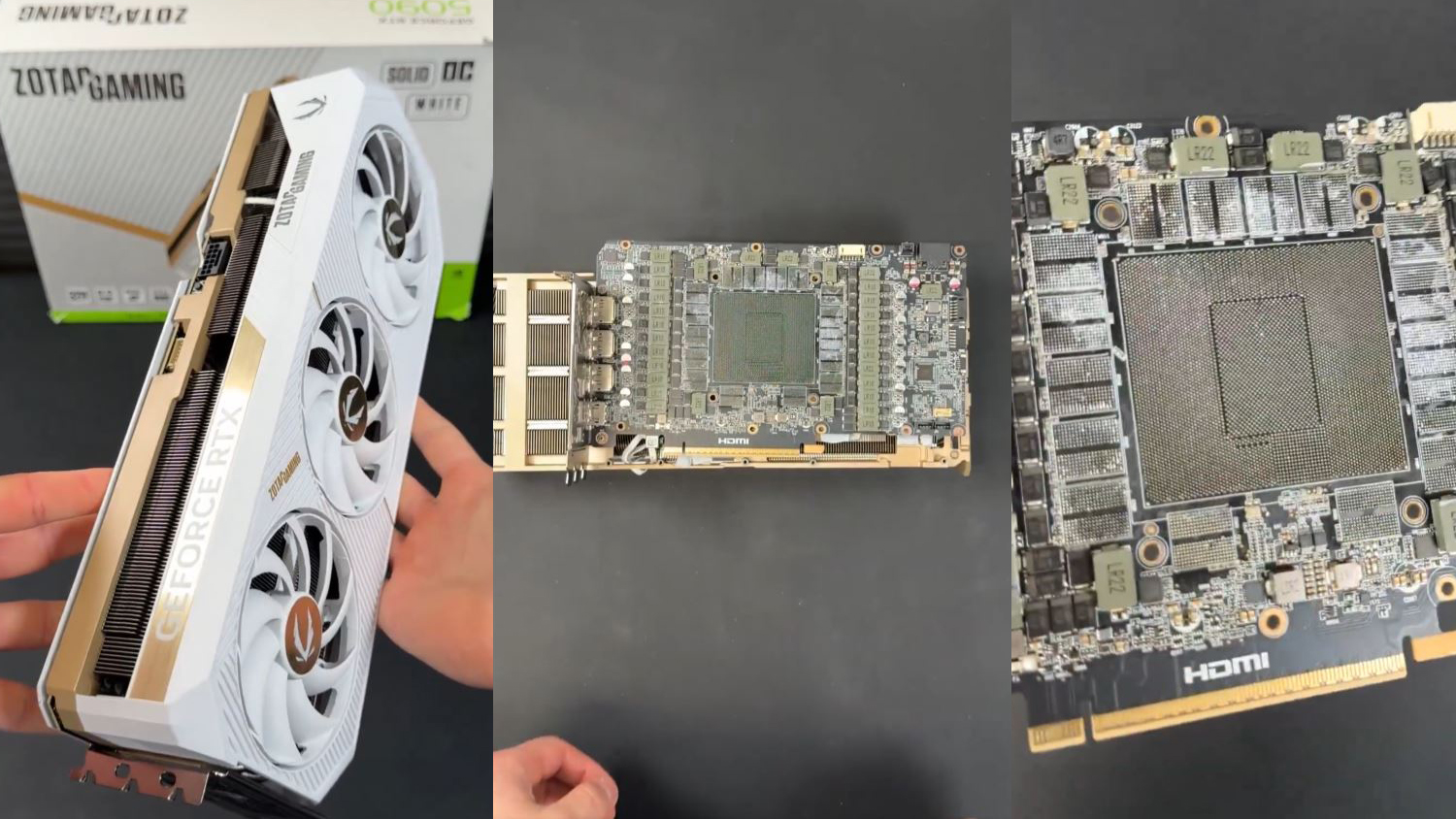
A worrying new return scam is making the rounds in the high-end graphics card market, and it’s targeting the most valuable parts of the GPU itself. With flagship graphics cards and memory chips getting more expensive and harder to find, scammers aren’t just swapping labels or sending back a different card anymore. They’re stripping the core components and returning what’s essentially an empty shell.
In one recent case, an eBay reseller received what looked like a normal return: a ZOTAC Gaming GeForce RTX 5090 that had originally been sold for around $4,000. From the outside, everything appeared legitimate. The box looked right, the card’s exterior didn’t raise alarms, and nothing immediately suggested tampering. But once the reseller opened the graphics card shroud and removed the cooler, the real damage was revealed.
According to the reseller, the RTX 5090 had been fully functional when it was sold. After the return, it no longer worked. A closer inspection showed why: the GPU die and the VRAM modules had been forcibly removed from the PCB. In other words, the most expensive parts of the graphics card were gone.
That matters because the GPU chip and the VRAM are the heart of any modern graphics card—and they make up the bulk of the total value. The remaining parts, like the cooler and the PCB, generally represent only a small fraction of the total bill of materials. Once the GPU core and memory chips are removed, the board becomes effectively useless for its original purpose.
What makes this scam particularly alarming is the level of effort involved. Removing a GPU core isn’t like pulling out a cable. It typically requires specialized tools and real soldering know-how, and the process destroys the card’s value for the original buyer. Yet the potential payoff is huge, especially when we’re talking about a top-tier card with high-value GDDR7 memory—reported here as 32 GB—at a time when demand is intense and supply constraints remain a recurring issue.
There’s also broader context that helps explain why this is happening more frequently. Extracted GPU and VRAM chips can be repurposed, and there have been ongoing reports of components being salvaged and moved onto different boards for specialized uses, including AI-focused hardware. When shortages hit and prices spike, the incentive for this kind of parts-harvesting scam rises sharply.
For resellers and online businesses, return fraud like this can be devastating. The seller not only loses the original product, but also ends up with a returned item that looks intact until it’s opened—making it harder to catch quickly and easier for bad actors to exploit return systems. In markets where RTX 5090 listings can reach $4,000 to $5,000 due to volatility and limited availability, the financial hit is massive. And as the reseller in this case put it, once the parts are gone, “the damage is already done.”
Even more concerning, cards missing core components have reportedly made their way through the supply chain and reached customers without being flagged, showing how difficult it can be to detect these scams before the product is back in circulation.
Until GPU and VRAM availability improves and pricing stabilizes, buyers and sellers should expect more attempts like this—especially around the most in-demand flagship models. For anyone selling high-end GPUs online, this trend is a reminder that return scams are evolving fast, and the “return” you receive might no longer contain the most valuable parts of what you originally shipped.