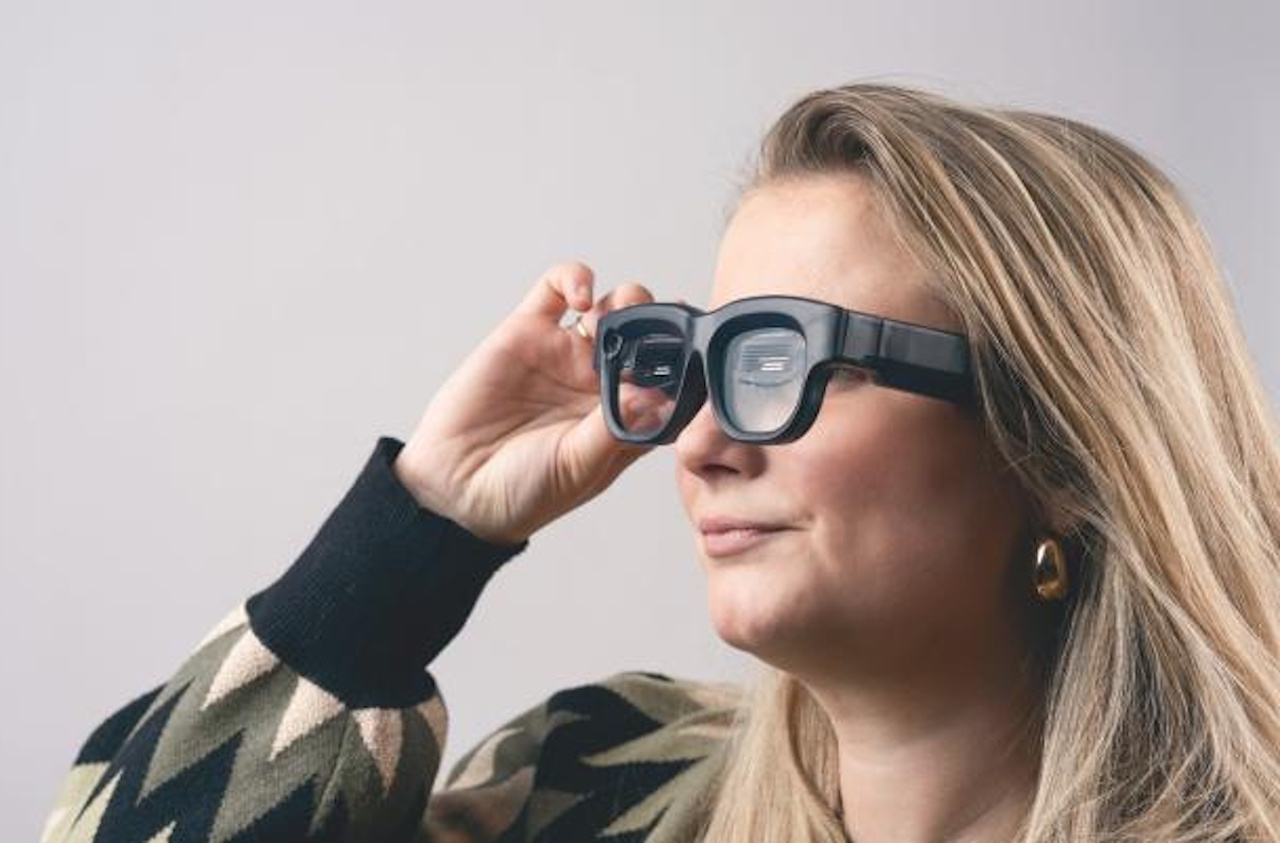
A new pair of augmented reality glasses called Luna Glass is aiming to make nighttime navigation safer and less stressful for people with visual impairments. Designed to improve how wearers perceive their surroundings in low-light settings, the device captures what’s in front of you and presents a brighter, clearer view directly in your line of sight—helping you better recognize obstacles, pathways, and details that can easily disappear after dark.
The company has opened a waitlist for Luna Glass, with 500 slots available for the next batch. That batch is currently expected to ship in the first quarter of 2026, signaling that early demand is being managed through limited production runs.
What makes Luna Glass stand out is its real-time image enhancement. A built-in camera captures the scene ahead, then the system boosts brightness and contrast before projecting the improved image in front of the wearer’s eyes. Rather than blocking natural vision, the glasses use half-mirror optics so the wearer can see both the real world and the enhanced overlay at the same time. This approach is meant to help people who struggle specifically in dim environments—including those affected by conditions such as glaucoma and macular degeneration—by providing extra visual information without fully replacing what their eyes can still perceive.
Performance will vary depending on the individual and the underlying condition, but the company suggests the technology could potentially help users with very limited remaining vision—down to around 10%—see better at night. If it delivers as intended, that could extend the hours when a person feels comfortable going outside independently, while also making it easier to spot details that would normally be lost in darkness.
Battery life is listed at about 1 to 1.5 hours on a charge. For longer use, Luna Glass can be powered using a USB-C power bank, which may be especially useful for evening outings or extended time away from home.
The glasses also appear to rely on a known optical approach used in other AR devices, including a PinTILT-style optical module and waveguide-like projection, which are commonly used to place digital imagery in the wearer’s view in a compact form factor.
With the waitlist now open and shipping aimed for early 2026, Luna Glass is positioning itself as an assistive AR tool focused on a simple but meaningful goal: helping visually impaired users see and move more confidently in the dark.


