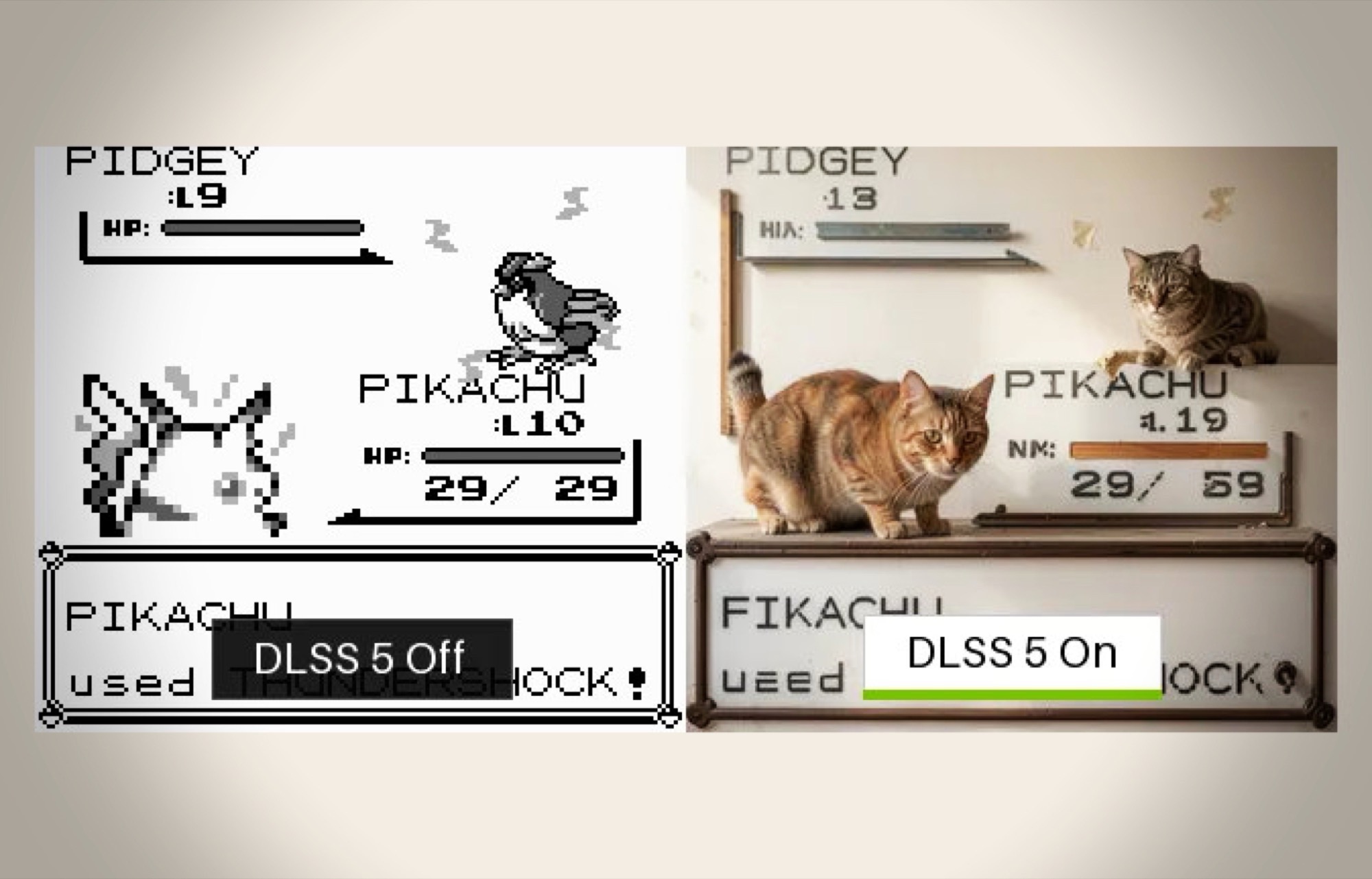
A new wave of gaming memes is taking over the internet, and it’s all fueled by the ongoing debate around Nvidia DLSS 5. The AI-driven tech has been pitched as more than a performance booster. The big promise is a dramatic graphics leap, especially in lighting, using artificial intelligence to make scenes look far more realistic. That ambition is exactly why DLSS 5 has already become one of the most controversial talking points in gaming: when AI “improves” visuals, it can also change the look and identity of a game so much that some players barely recognize it. Critics have been quick to label the vibe as “AI slop,” while others are impressed by the realism.
As the discussion spread, the internet did what it does best: it turned the whole thing into jokes. Now there’s a free web-based image generator making the rounds called DLSS 5 Anything, built specifically to create DLSS 5-style meme images. Despite the name, it’s worth noting that the tool isn’t actually powered by real DLSS 5 technology. Instead, it’s a playful way to imagine what would happen if an AI tried to “upgrade” the visuals of your favorite games into something more realistic—with results that range from impressive to completely bizarre.
The tool’s gimmick is simple: upload an image, and it generates what amounts to an AI “realism pass.” Interestingly, the more realistic the original image is, the less dramatic the transformation tends to be. But when you feed it older, retro-style game art, the changes get wild fast—exactly the kind of exaggerated makeover people imagine when they think of an AI remake.
Classic pixel games take some of the hardest hits, and that’s where the funniest outcomes show up. In early Pokémon visuals, the AI remake vibe becomes so literal that it “exposes” rooms as if the original developers forgot to add walls. Even better, some familiar creatures end up looking like something entirely different. The generator turns Pidgey and Pikachu into what look like cats wearing costumes, as if the AI is trying to force real-world logic onto stylized character designs.
Other games lose important details when AI realism is applied. The indie title Mewgenics, known for cats in every color and shape, gets transformed in a way that flattens some of its charm—especially the way equipment and customization affect the character models. The result looks “cleaner,” but it also strips away part of what makes the original art style so readable and playful.
Even courtroom legend Phoenix Wright isn’t safe. When the generator tries to convert his iconic look into a more realistic style, it exaggerates facial features in odd ways, giving him an extremely wide jawline. And that famous spiky hair? It doesn’t translate cleanly when realism takes over, proving how difficult it is for AI to preserve strong, stylized character silhouettes.
Animal Crossing also gets its own strange twist. In the AI’s version of the world, the familiar money-on-trees fantasy gets replaced with something more grounded—and funnier. Instead of moneybags, the trees appear to be growing potatoes, as if the AI decided the cozy life sim needed a more “practical” form of harvest.
The generator doesn’t stop there. A range of beloved games can be run through the same “make it realistic” treatment, including Super Mario World, FTL: Faster Than Light, Kirby Mass Attack, The Legend of Zelda: A Link Between Worlds, and even Yu-Gi-Oh! Dungeon Dice Monsters. In many cases the output looks more detailed and modern at first glance, but it often sacrifices the distinctive personality, clarity, and artistic intent that made the originals memorable.
That trade-off is exactly why the DLSS 5 conversation is so heated. When AI pushes realism, it can boost atmosphere and lighting in ways that look technically impressive, but it can also erase the stylized identity that defines so many games. DLSS 5 Anything captures that argument in meme form: it’s entertaining, sometimes uncanny, and often a reminder that “better graphics” doesn’t always mean a better-looking game.


