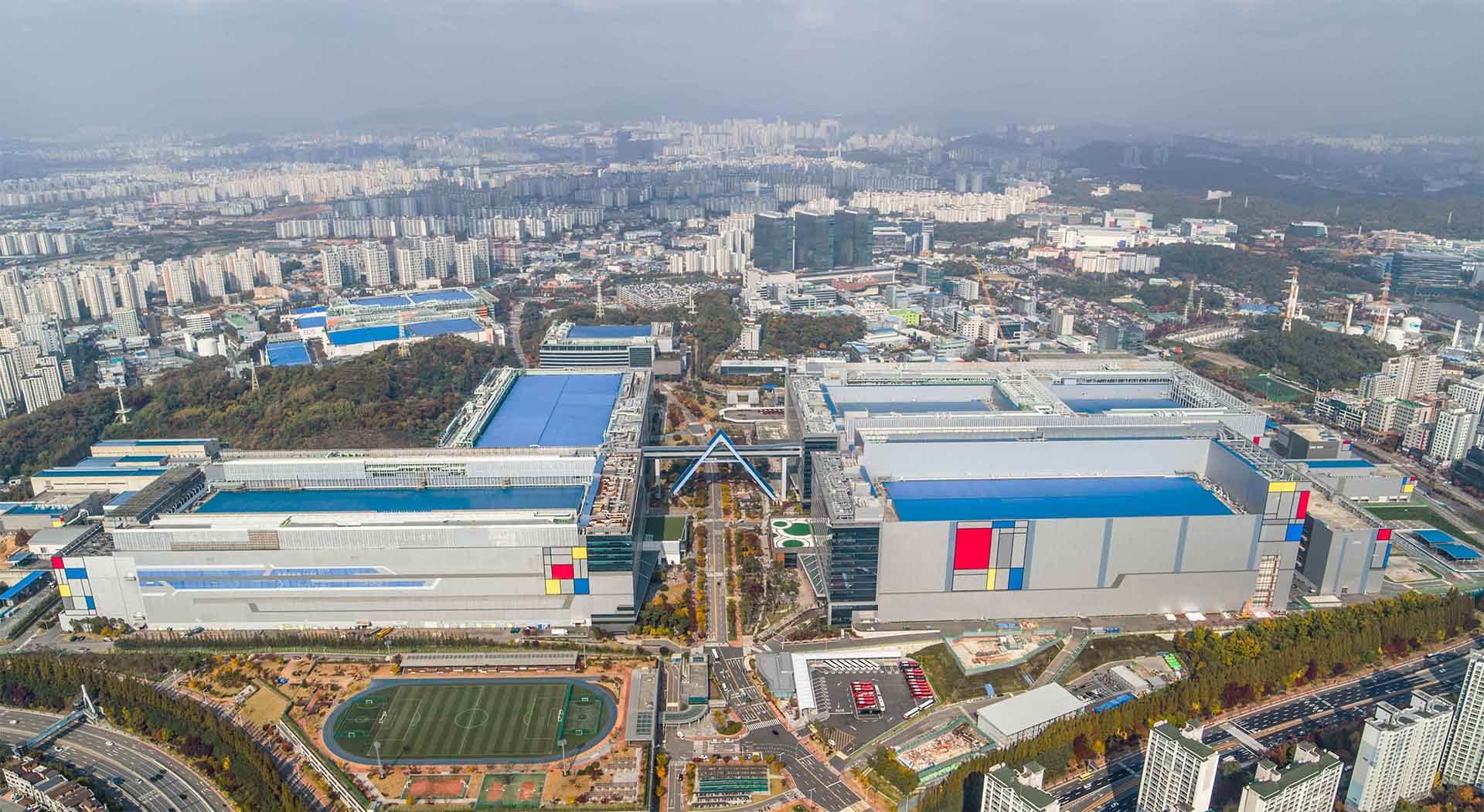
In July, Samsung Securities, a branch of the renowned Korean conglomerate, released an eye-opening report titled ‘Geopolitical Paradigm Shift and Industry.’ The report suggested that Samsung consider spinning off its foundry business, given the numerous challenges it faces, especially with its 3nm GAA process. Despite their efforts, Samsung has struggled to close the gap with TSMC in the foundry market, leading to inconsistent yields from its cutting-edge technology and pushing potential customers towards better options.
The harsh reality is stark: failing to excel in the foundry business has left Samsung with a mere 11.5 percent market share, while TSMC dominates the sector with an impressive lead. Early estimates revealed that Samsung’s 3nm GAA process had yield rates hovering around 20 percent—significantly lower than what is considered viable for mass production. Unable to overcome this hurdle, Samsung lost lucrative orders for the Snapdragon 8 Gen 3 to TSMC, and history seems poised to repeat itself with the upcoming Snapdragon 8 Gen 4.
According to Business Korea, Samsung’s inability to meet the mark with its 3nm GAA technology has discouraged customers from entering potential deals. The securities industry forecasts continuous struggles for Samsung’s non-memory business, encompassing the foundry and LSI sectors, with projected losses amounting to 500 billion won, or approximately $385 million. These ongoing challenges have confined Samsung’s market share in the foundry space to just 11.5 percent, while TSMC enjoys a commanding 62.3 percent share.
In a surprising move, Samsung Electronics plans to hold its Foundry Forum online on October 24. This decision reflects the company’s relentless efforts to resolve its dilemmas. The situation isn’t about companies collectively opposing Samsung; diversifying semiconductor supply chains and cutting chip costs remain high priorities for many.
Interestingly, Qualcomm has reportedly been exploring a dual-sourcing strategy for the Snapdragon 8 Gen 5 by partnering with both TSMC and Samsung. In theory, this approach could balance performance needs and cost concerns. Qualcomm has sought to implement this strategy before, but Samsung’s variable yield rates have repeatedly thwarted these plans. The rumor mill suggests that Qualcomm might use TSMC’s 3nm ‘N3P’ technology for its high-performance Snapdragon 8 Gen 5 variant while relying on Samsung’s SF2 (2nm GAA) for a less demanding version.
This dual-sourcing strategy is aimed at mitigating elevated wafer costs. Currently, the Snapdragon 8 Gen 4 is rumored to cost around $240, whereas MediaTek’s Dimensity 9400 is tipped to be priced at $155. Both processors are anticipated to be 20 percent more expensive than their predecessors due to their shift to TSMC’s 3nm ‘N3E’ process. This situation underlines Qualcomm’s interest in bringing Samsung back into its supplier fold. However, Samsung’s yield issues have thus far prevented it from securing orders from Qualcomm and other key clients.


