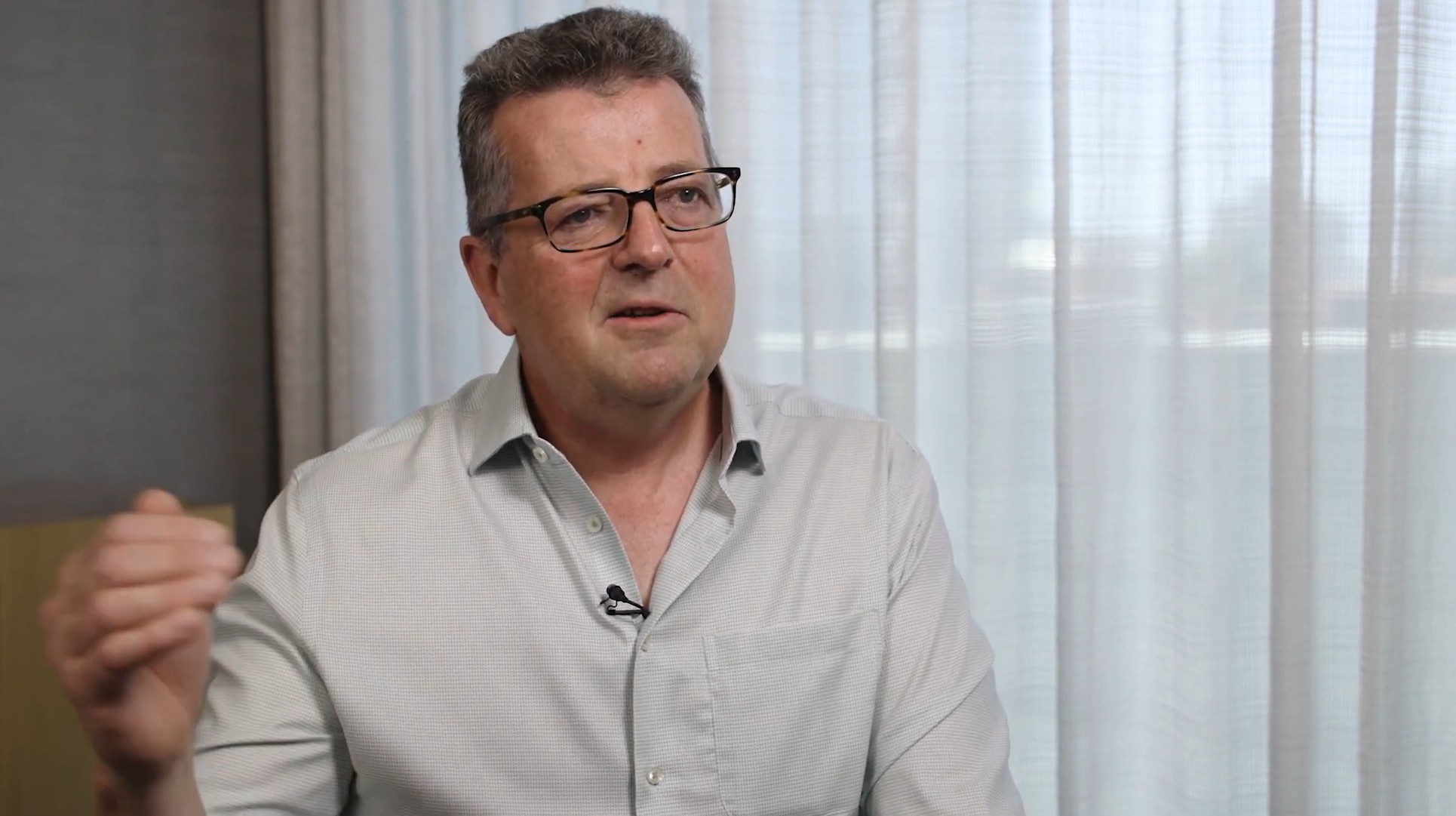
Samsung’s official Exynos 2600 unveiling didn’t arrive alone. Shortly after revealing its next-generation mobile chipset, the company made a major leadership move that could reshape the future of Exynos performance—especially in graphics. Samsung has hired John Rayfield, a former AMD vice president, as Senior Vice President overseeing the Samsung Austin Research Center (SARC) and the Advanced Computing Lab (ACL), two groups positioned to drive next-wave innovation for upcoming Exynos processors.
Rayfield’s arrival signals a sharper focus on strengthening the core building blocks of Samsung’s in-house chip strategy. That includes improving GPU performance, advancing internal IP, refining system architecture, and elevating overall efficiency—areas that increasingly decide which smartphone chips lead the pack.
In his new role, Rayfield says Samsung’s mobile graphics work has already reached an important milestone: Exynos GPUs are now delivering console-level visuals on phones. He points to the opportunities opened up by Samsung’s 2nm GAA (Gate-All-Around) process, suggesting the move to 2nm isn’t just about raw speed—it’s also about unlocking meaningful power and efficiency gains that modern mobile gaming and AI-powered features demand.
A key example is the Exynos 2600’s Xclipse 960 GPU. Samsung says it delivers up to 50% better ray tracing performance than the GPU in the Exynos 2500. That matters because ray tracing is one of the most demanding graphics technologies in real-time rendering, and improving it on mobile can translate into more realistic lighting, reflections, and overall visual depth in supported games.
Samsung is also introducing its own upscaling solution called ENSS (Exynos Neural Super Sampling). Upscaling has become increasingly important for gaming performance because it can improve frame rates by rendering at a lower resolution and then intelligently enhancing the image. With ENSS tied to neural processing, Samsung is clearly leaning into AI-assisted visuals as part of its graphics strategy.
Rayfield credits SARC and ACL for developing the Xclipse 960, calling the GPU a reflection of the teams’ engineering depth and innovation. His background suggests Samsung is serious about raising its competitive ceiling. Before joining Samsung, Rayfield served as Vice President in AMD’s Computing and Graphics Group after a previous leadership role at Intel, where he worked as Vice President and General Manager of Client AI. He’s also associated with major AI-focused PC efforts, including AMD’s Ryzen AI 300 program developed in collaboration with Microsoft.
Even with a high-profile executive hire and bold GPU claims, the big question is how the Exynos 2600 will perform against today’s strongest rivals from Qualcomm, MediaTek, and Apple. Benchmarks, sustained performance, thermals, and real-world battery life will ultimately determine whether Samsung’s latest Exynos push becomes a true turning point.
Still, Samsung appears to be laying the groundwork for long-term momentum. Beyond the first wave of 2nm GAA, reports indicate the company has completed the basic design for a second-generation 2nm GAA node. A third iteration—SF2P+—has also been reported as targeting implementation within the next two years. If those process improvements arrive on schedule, Samsung could gain more flexibility to push performance higher while keeping power consumption under control.
With Exynos 2600 now official and John Rayfield stepping in to lead two of Samsung’s most advanced chip research teams, the company is making it clear it wants its next era of mobile chipsets to compete on both efficiency and next-level graphics. The coming product cycles will show whether this strategy can translate into a genuine comeback for Exynos in flagship smartphones.