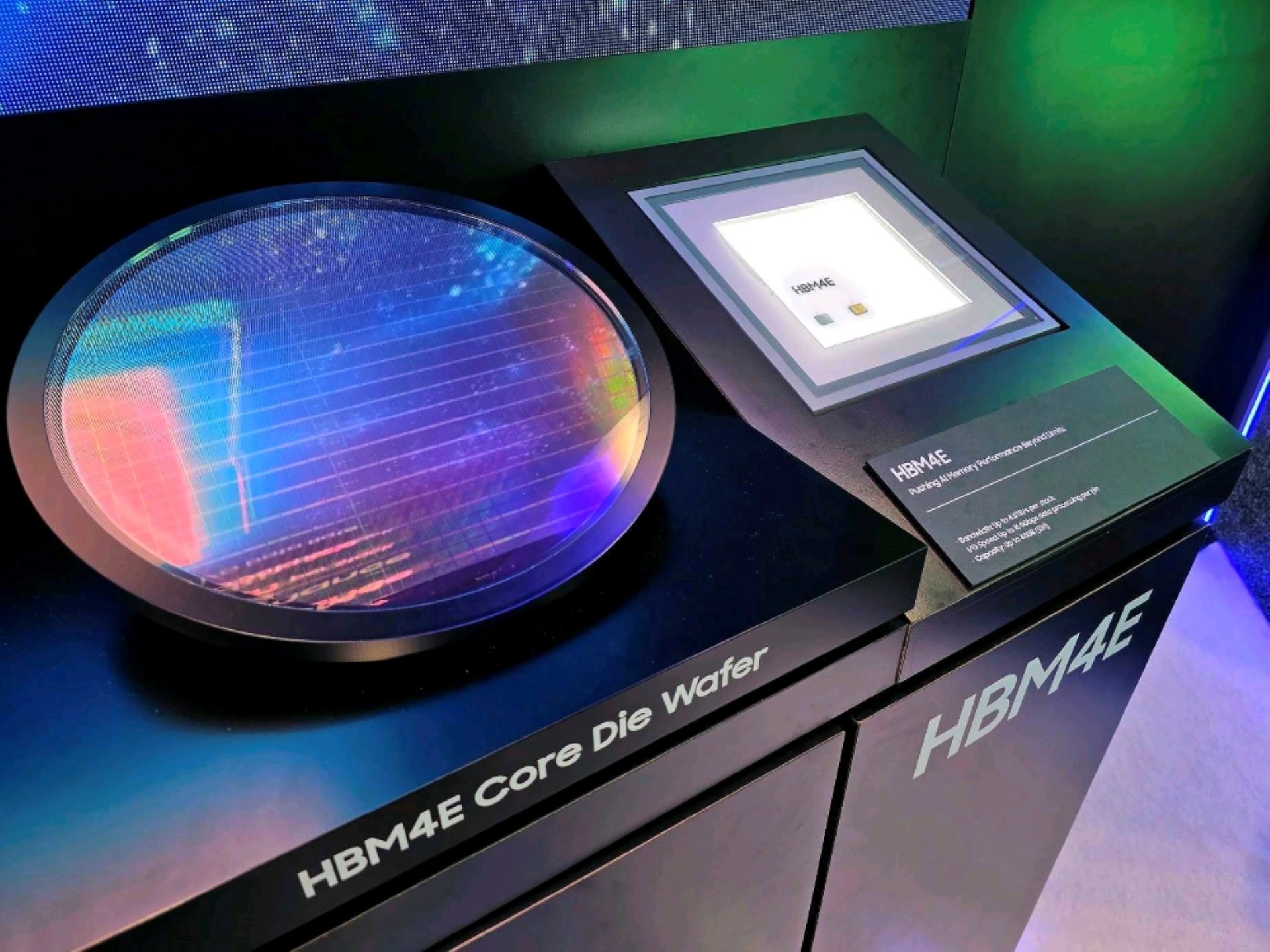
Samsung is preparing for a major shift in advanced memory manufacturing, with industry sources in Korea indicating that the company could begin large-scale production of hybrid bonding-based chips around 2029 or 2030. The move is expected to play a key role in the future of high bandwidth memory, especially as demand for more powerful AI accelerators continues to surge.
Hybrid bonding is widely viewed as one of the most important next-generation technologies for HBM production. Unlike current methods that use micro bumps to connect stacked DRAM layers, hybrid bonding removes those bumps and allows memory layers to be placed much closer together. This tighter stacking can improve power efficiency, increase bandwidth, reduce signal delay, and help create more compact memory packages for high-performance computing and artificial intelligence workloads.
The timing is especially notable because NVIDIA’s future Feynman AI GPUs are expected to arrive after the Rubin Ultra generation. NVIDIA has already shared that its Feynman platform will use 3D stacking, custom HBM, and advanced packaging support from Intel. Since Rubin Ultra is expected to use HBM4E, Feynman could potentially move toward HBM5 or a highly customized memory solution designed specifically for NVIDIA’s AI hardware.
Recent industry discussions suggest that hybrid bonding may begin appearing with HBM4E before becoming more widely adopted in later generations. Korean sources now claim Samsung sees 2029 to 2030 as a realistic window for full-scale production using this technology, placing it in line with the expected arrival of NVIDIA’s Feynman chips.
Samsung is reportedly working to secure around 50 hybrid bonding machines from BE Semiconductor, a Dutch equipment supplier known for advanced chip assembly tools. However, because Samsung may require customized versions of the equipment, sources believe the company is also considering machinery from domestic Korean suppliers. This could help Samsung fine-tune the technology for its own HBM production lines while strengthening the local semiconductor equipment ecosystem.
The company is expected to begin installing hybrid bonding equipment at its Pyeongtaek facilities by the end of this year. These installations would likely support testing, process development, and early production trials before the technology is scaled for mass manufacturing later in the decade.
Another important part of the report centers on custom HBM. In a standard HBM stack, a base die helps manage communication between the memory layers and the processor. In a custom HBM design, that base die can be replaced with a customer-specific logic die, creating a more integrated 3D system-in-package architecture. This approach could allow companies like NVIDIA to tailor memory performance more closely to the needs of their AI GPUs.
For AI chips, memory bandwidth and energy efficiency are becoming just as critical as raw compute power. As large language models, generative AI systems, and data center workloads continue to expand, chipmakers need faster and more efficient memory solutions. Hybrid bonding could help meet those demands by enabling denser HBM stacks with improved electrical performance.
If Samsung successfully brings hybrid bonding into high-volume HBM production by 2029 or 2030, it could significantly strengthen its position in the advanced memory market. The company is competing in a sector where AI hardware demand is reshaping investment priorities, and next-generation packaging technologies are becoming essential for future performance gains.
While the timeline remains based on industry sources rather than an official Samsung announcement, the direction is clear: the race for next-generation HBM is accelerating. Hybrid bonding, custom memory designs, and 3D chip packaging are expected to become central technologies for future AI processors, and Samsung appears to be positioning itself for that next phase.