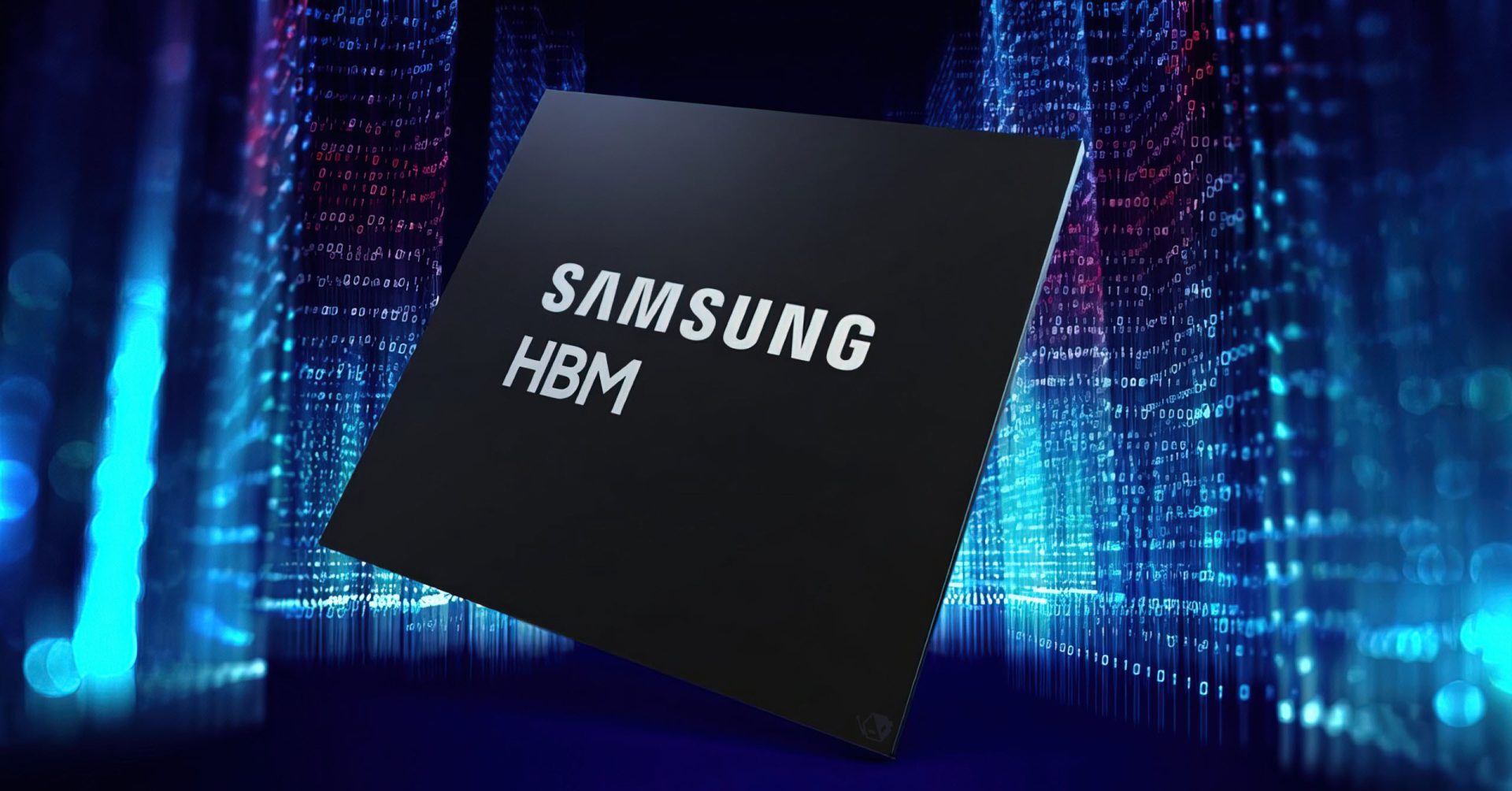
Samsung is preparing a major shift in how quickly it designs and launches new generations of HBM (High Bandwidth Memory), moving from a two-year development rhythm to a one-year cycle. The goal is simple: keep pace with the explosive demand being driven by the ongoing AI boom, where faster accelerators and larger AI models are pushing memory requirements higher with every product cycle.
HBM has become one of the most important building blocks inside modern AI hardware. It’s widely used in data center accelerators because it delivers extremely high bandwidth in a compact package, helping GPUs and AI chips feed massive amounts of data to compute cores with far less bottlenecking than traditional memory solutions. As AI infrastructure spending ramps up globally, the HBM market has turned into a high-stakes race among leading DRAM manufacturers.
Until now, Samsung has typically introduced new HBM generations roughly every two years. Its current flagship is HBM3E, and the next big step is HBM4, which is expected to arrive to support upcoming next-generation AI accelerators from major players. At the same time, not every customer moves at the same speed—some companies still rely on older HBM standards to balance performance and rising platform costs while remaining competitive.
But the AI “super cycle” is accelerating hardware timelines across the industry, and Samsung reportedly no longer sees a two-year cadence as fast enough. By moving to annual HBM generation updates, Samsung aims to better align with the launch schedules of top AI accelerator customers, whose platforms are increasingly refreshed every year. This faster rollout strategy is also designed to strengthen Samsung’s position against other HBM competitors, where being late by even one generation can mean losing crucial design wins and long-term supply agreements.
A yearly HBM roadmap could also give Samsung an advantage in the growing market for customized HBM solutions, sometimes discussed in terms of future “HBM5-class” and beyond. Many large technology companies want shorter development timelines and more efficient supply chains, and they’re increasingly interested in memory that can be tuned to match specific accelerator designs. Cutting the HBM development cycle down to one year gives Samsung more flexibility to react quickly when a customer changes specs, timelines, or performance targets.
Another factor working in Samsung’s favor is its vertically integrated manufacturing approach. The company handles key stages internally, from base die production to memory stacking and packaging. That level of in-house control can help speed up iteration, improve coordination between process steps, and potentially reduce delays when transitioning from one HBM generation to the next.
Advanced packaging and interconnect technologies will be critical to making this faster cadence possible. Hybrid Bonding, in particular, is viewed as an important enabler for next-generation and customized HBM designs, helping deliver better density, performance, and efficiency in future stacks. The first visible outcome of Samsung’s next wave of efforts is expected to be HBM4E, which is reportedly on track for sampling in the second half of the year.
If Samsung successfully executes on moving to a new HBM generation every year, it could become a defining strategy for staying competitive in AI memory—where demand is surging, product cycles are shrinking, and leadership increasingly depends on delivering the right memory technology at exactly the right time.