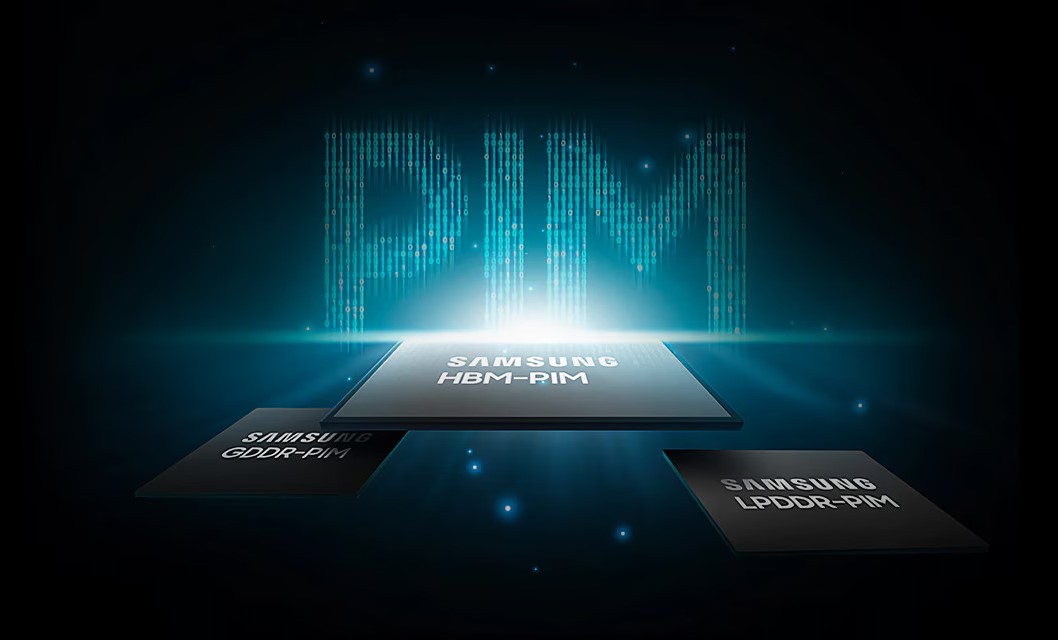
In a groundbreaking collaboration, two titans of the DRAM industry have decided to put aside their rivalry to work towards a common goal: standardizing LPDDR6-PIM memory technology. Samsung and SK Hynix, known for their fierce competition, are joining forces to promote the LPDDR6-PIM standard, recognizing the enormous potential this technology holds for the future of computing.
Processing-In-Memory (PIM) technology is set to revolutionize LPDDR6 memory, which aims to address critical challenges in computing capabilities. By integrating PIM, the new memory standard seeks to overcome the limitations of the “Storage Wall” and the “Power Wall.” The Storage Wall refers to the constraints in data transfer between memory and processors, while the Power Wall pertains to increased energy consumption as computational demands rise. Both obstacles need to be overcome to enable faster processing of AI workloads and to enhance the performance of high-end systems significantly.
Samsung and SK Hynix’s collaboration involves gaining approval from JEDEC, the organization responsible for standardizing microelectronics, to ensure widespread adoption of LPDDR6-PIM memory. Once this standardization is achieved, DRAM manufacturers can incorporate PIM technology into their products, offering the market more advanced LPDDR6 memory capable of faster computation.
PIM technology functions by integrating additional circuits into memory chips to perform computations like matrix multiplications and logic operations directly. This reduces the reliance on the system’s processor and minimizes the need for extensive data transfer, enhancing both processing efficiency and energy consumption. Moreover, using PIM with standard memory interfaces such as DDR and LPDDR ensures compatibility with existing platforms, promising a seamless transition.
One of the most exciting aspects of this advancement is its potential impact on energy consumption. By incorporating PIM technology, Samsung anticipates energy savings of up to 70% in both client and server DRAM, including LPDDR, GDDR, and HBM memories. This could translate into substantial savings for companies and make significant strides towards more sustainable computing practices.
With the rising demand for higher performance in both mainstream devices and server platforms, tackling escalating energy costs is crucial. Samsung and SK Hynix’s joint efforts to leverage PIM technology are not only set to drive innovation in memory technology but also promise a brighter, more efficient future for the tech industry.