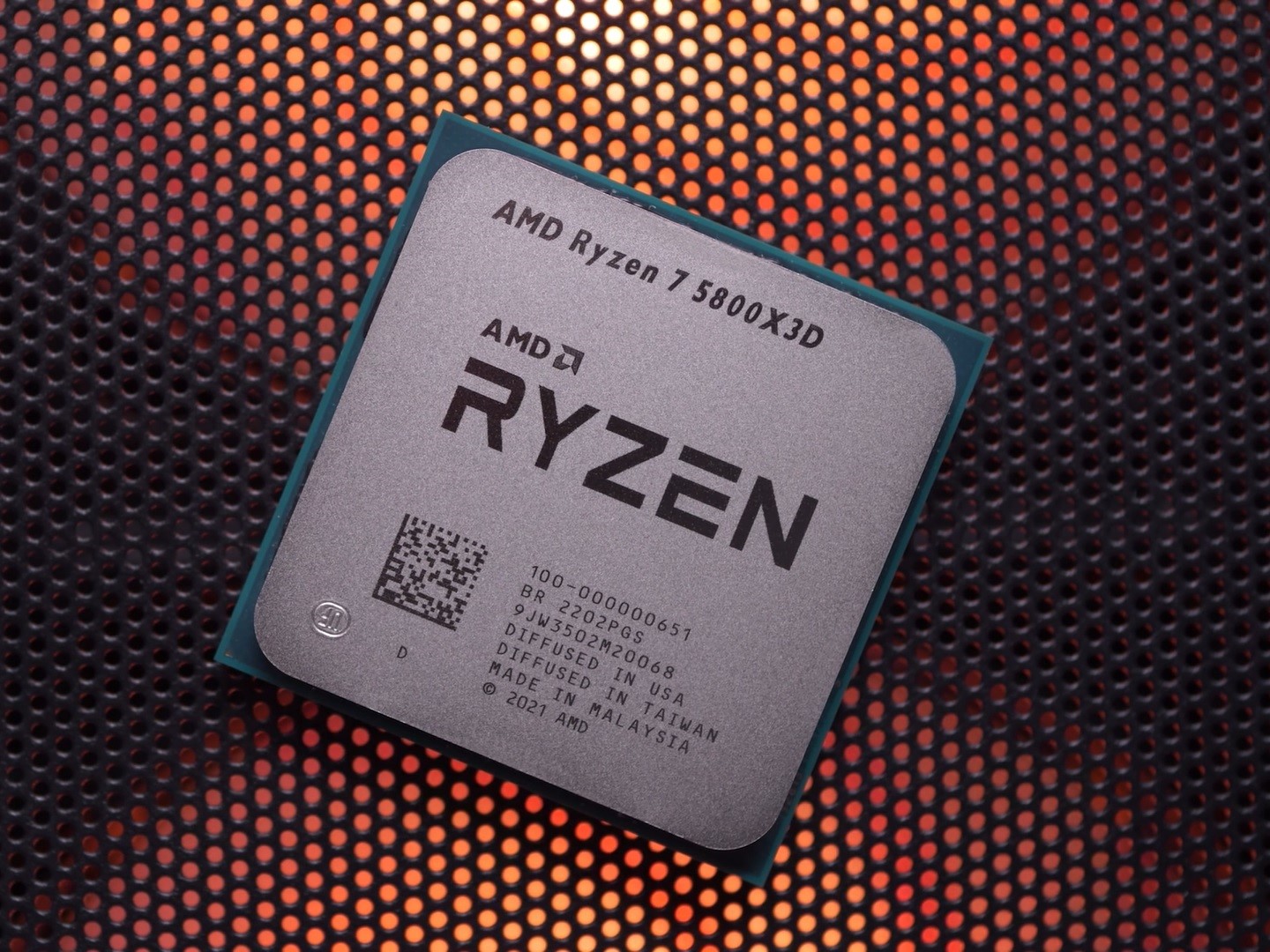
Back in 2022, AMD’s Ryzen 7 5800X3D earned a reputation as the fastest gaming CPU you could buy. It even managed to outperform Intel’s far pricier flagship at the time, the Core i9-12900K, making it a go-to recommendation for gamers who wanted maximum frame rates without going all-in on a top-tier platform.
Four years later, what’s surprising isn’t that the 5800X3D still works well—it’s that it’s still genuinely competitive against today’s newest processors. Recent gaming benchmarks from Hardware Unboxed show the Ryzen 7 5800X3D landing only a few percentage points behind Intel’s current flagship, the Core Ultra 9 285K, in a modern 1080p gaming test suite. That’s a big deal for anyone still on the AM4 platform, and it also suggests that “older” doesn’t automatically mean “outdated” when it comes to high-FPS gaming.
In a set of 14 games tested at 1080p with medium settings, the Ryzen 7 5800X3D delivered an average of 188 FPS, with 1% lows coming in at 151 FPS. Those numbers put it right alongside newer options like the Ryzen 5 9600X, and only slightly behind Intel’s latest flagship overall. As expected, AMD’s newer Ryzen 7 9800X3D remains in a different class, posting around a 35% higher average frame rate than the 5800X3D—but that gap doesn’t erase how strong the older chip still looks for mainstream gaming.
The pattern continues when visuals are pushed higher. At 1080p ultra settings, the Ryzen 7 5800X3D continues to trade blows with popular gaming CPUs like Intel’s Core i5-14600K and AMD’s Ryzen 5 9600X. In one comparison, where the Core i5-14600K and Ryzen 5 9600X averaged 153 FPS, the Ryzen 7 5800X3D was right there at 151 FPS, essentially matching the experience in real-world play.
What this means in practical terms is simple: even in modern releases, the Ryzen 7 5800X3D doesn’t feel like a relic. Games that many players consider demanding—like Battlefield 6—are still well within its comfort zone, especially if you’re pairing the CPU with a capable graphics card. For current owners, this is welcome confirmation that upgrading just because something newer exists may not be necessary. And for anyone putting together a value-focused gaming PC, it reinforces why the 5800X3D has remained one of the most talked-about gaming processors long after launch.
There’s also a bigger market angle here: the case for keeping AM4 alive a little longer. Hardware Unboxed argues AMD should consider bringing back AM4 CPUs like the Ryzen 7 5800X3D, and the reasoning is easy to understand in today’s pricing climate. With a continuing supply crunch affecting memory, DDR4 pricing, while still higher than many would like, remains considerably more approachable than DDR5 for budget and midrange builders.
That matters because the newest AMD Zen 5 and Intel Arrow Lake platforms are DDR5-only. So even if a gamer finds a good deal on a modern CPU, the overall build cost can climb quickly once a DDR5 kit and a compatible motherboard are added. For many players, especially those aiming for strong 1080p performance, a DDR4-based AM4 system built around a chip like the Ryzen 7 5800X3D can still land in the performance sweet spot—without pushing the budget into premium territory.
In a market where “next-gen” often comes with “next-level pricing,” the Ryzen 7 5800X3D stands out as proof that a smart CPU design can age extremely well. If AMD were to make more AM4 gaming chips available again, it could give cost-conscious gamers a much-needed high-performance option at a time when platform upgrades are getting harder to justify.