NVIDIA’s GeForce RTX 5090 is once again in the spotlight for the kind of problem PC gamers hoped was fading away: power connector burning incidents. Similar issues have haunted recent high-end GeForce cards, and despite changes meant to improve safety and reliability, fresh reports show the risk hasn’t completely disappeared—especially on power-hungry flagship GPUs.
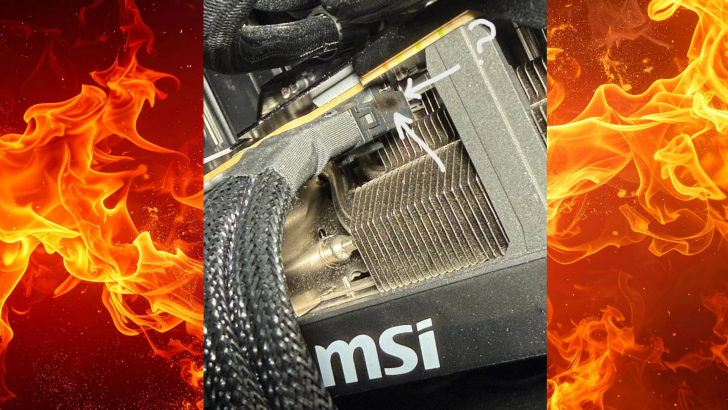
In a new case shared on Reddit, a user said their Windows PC suddenly stopped detecting the GeForce RTX 5090 during normal use. After opening the system to investigate, they discovered visible burn marks around the power connection on the graphics card. What makes this incident stand out is how extreme the damage appears to be: the adapter cable seems essentially fused to the GPU’s power socket. According to the report, the connector won’t come out even with reasonable pressure, suggesting the heat and melting may have effectively “welded” the plug into place.
Other users in the discussion urged the owner not to force the connector out, warning that yanking it could cause additional harm to the graphics card, the power cable, or the connector housing—potentially turning a bad situation into an even more expensive repair.
This report is also particularly frustrating for the owner because it isn’t their first RTX 5090 headache. They mentioned previously dealing with artifacting problems, adding to the impression that their experience with the RTX 5090 has been unusually unlucky. The user’s next step is to pursue an RMA through MSI, though they expressed uncertainty about how warranty claims may apply to this kind of connector damage.
One key detail: this wasn’t caused by an aftermarket or third-party cable. The affected cable is described as MSI’s own included (stock) solution, which removes one of the most common complications people point to in these situations.
It’s worth noting that the RTX 5090 uses the newer 12V-2×6 connector rather than the older 12VHPWR standard that drew heavy criticism in earlier incidents. The updated connector was widely seen as a step toward reducing failures, but as reports like this suggest, real-world outcomes can still vary—particularly when extremely high power draw is involved.
While these GPU burning incidents can seem random, there are still practical steps that may reduce the odds of trouble. Gamers and PC builders can double-check that the power connector is fully seated, avoid partially inserted plugs, and use a quality power supply that provides a native 12V-2×6 connection rather than relying on adapters where possible. Even then, as the RTX 5090 class of graphics cards pushes power and performance to the limit, the possibility of connector-related problems may remain a concern for some builds.