Rollme View Series AI Smart Glasses Launch With Sony 12MP Camera, Live Translation, and $99.99 Price
Rollme has introduced its new View Series AI smart glasses, bringing camera-equipped eyewear, voice assistance, real-time translation, and open-ear audio into a more affordable price range. The lineup includes two models, the Rollme AuraView and Rollme ProView, both priced at $99.99 through the company’s official store.
The biggest highlight of the Rollme View Series is the built-in Sony 12MP camera. Rollme says the camera can capture a shot in just 0.6 seconds after pressing the capture button, making it useful for quick first-person photos and hands-free-style moments. The camera also includes electronic image stabilization, which should help reduce shakiness and motion blur when recording from a head-mounted perspective.
That stabilization could be especially important for smart glasses, as first-person video can often look unstable when the wearer is walking, turning, or moving quickly. However, Rollme has not yet shared details about video resolution, frame rate, or onboard storage capacity, so buyers may want to wait for more technical information if video recording quality is a priority.
The Rollme AuraView and ProView also include a dual-chip system designed to power their smart features. A built-in AI assistant can respond to voice commands, answer questions, retrieve information, and help with basic tasks. The glasses also support visual recognition, allowing them to identify objects and landmarks in front of the wearer.
Another key feature is translation. Rollme says the glasses can translate printed text, such as books, signs, and documents, as the wearer looks at them. There is also a live translation mode for spoken conversations, which could make the glasses useful for travel, language learning, international meetings, or studying abroad.
At this stage, Rollme has not confirmed whether these AI and translation features run directly on the glasses or rely on cloud processing. The company also has not listed which languages are supported for live translation or text translation.
For audio, the View Series uses dual independent open-ear speakers, allowing users to listen to sound without blocking the ear canal. This design can be helpful for users who want to hear music, voice prompts, calls, or translations while still staying aware of their surroundings. The glasses also include high-sensitivity microphones with noise reduction for Bluetooth calls, which should improve voice clarity in busy environments.
Battery life is handled by a 280mAh battery. Rollme describes the glasses as suitable for all-day use, although it has not provided a specific hour-by-hour battery rating for recording, calling, translation, or standby time.
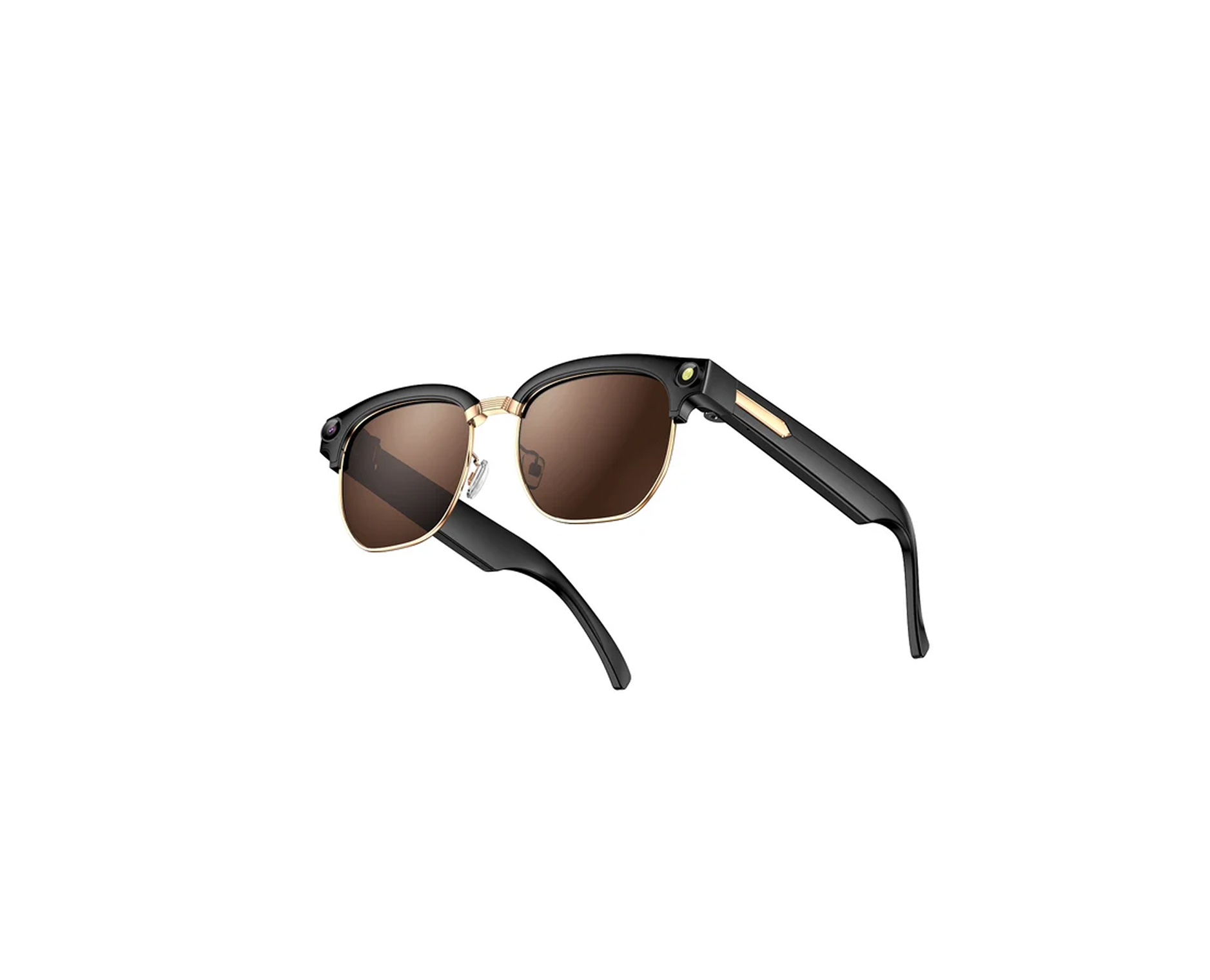
The main difference between the AuraView and ProView is the frame design. The Rollme AuraView features a metal half-rim frame with brown-tinted lenses, giving it a more casual sunglass-style look. The Rollme ProView uses a full-rim frame and includes two lens options: dark sunglass lenses and clear lenses. That makes the ProView more flexible for users who want to switch between outdoor and indoor use.
Both models are made with TR90 material, which is commonly used in lightweight eyewear. Rollme also says the frames are designed with balanced weight distribution for more comfortable long-term wear. However, the company has not published the exact weight of either model.
The $99.99 launch price puts the Rollme View Series slightly above the company’s earlier AirView smart glasses, which launched in August 2025 for $79.99. That means the new models are about $20 more expensive, representing a price increase of roughly 25 percent in a year.
With a Sony 12MP camera, AI-powered visual recognition, live translation, open-ear speakers, and two frame styles, the Rollme AuraView and ProView are positioned as budget-friendly AI smart glasses for everyday use, travel, learning, and quick first-person capture. The missing details around video specs, storage, supported languages, and exact battery life leave some questions unanswered, but at $99.99, the View Series could attract buyers looking for smart glasses with practical AI features without paying premium prices.