Japanese semiconductor manufacturer Rohm is stepping up its plans in India, signaling growing confidence in the country’s fast-developing semiconductor ecosystem. The company is positioning India not only as a key market for power semiconductors used in vehicles and industrial equipment, but also as a potential future manufacturing and export base as local capabilities mature.
At the center of Rohm’s latest move is a strategic partnership with Indian OSAT company Suchi Semicon. The collaboration is designed to strengthen backend semiconductor manufacturing in India, with a focus on critical processes like assembly and testing. It reflects a wider global shift toward localized production, as governments and industries increasingly treat semiconductors as strategic materials and prioritize resilient supply chains.
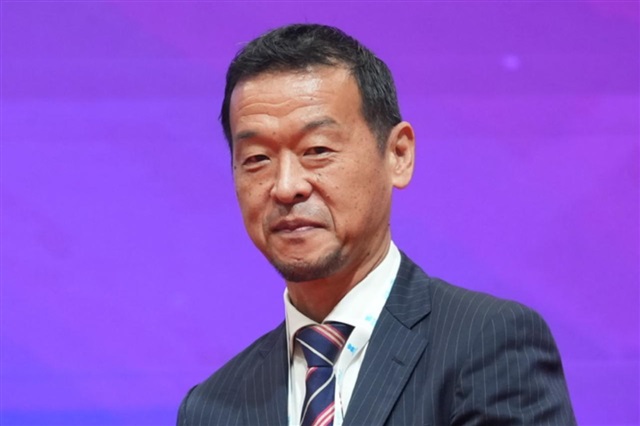
Makoto Terada, Managing Director at Rohm Semiconductor India, framed the decision as a response to changing global dynamics and rising expectations for local sourcing. With “local production for local consumption” gaining momentum worldwide, Rohm identified building a stable manufacturing and supply framework for the Indian market as an urgent priority.
Rohm’s India manufacturing roadmap has been in the works for some time. Terada said the company began evaluating potential outsourcing and manufacturing partners around 2024. After assessing the evolving landscape, Rohm concluded that Suchi Semicon and Tata Electronics offered strong alignment with its goals, leading to partnerships with both.
While early discussions with Suchi Semicon focused heavily on backend manufacturing collaboration, the scope expanded as both sides found common ground. Beyond manufacturing, Rohm and Suchi Semicon also aligned on joint marketing and business development aimed at accelerating Rohm’s growth in India—an important sign that the partnership is meant to build long-term momentum, not just near-term capacity.
Automotive production timelines are now coming into view. Rohm expects India to first serve domestic customers, especially as the country’s automotive and industrial demand rises. The company already has a foundation in place through its design and development center in Pune, established in 2020, where products are developed around the specific requirements of Indian customers. Rohm’s immediate goal is to secure a stable local supply framework, with automotive products identified as the first major milestone. The company is aiming to begin mass production shipments of automotive products in 2026.
Over the longer term, Rohm is keeping a broader ambition on the table: exporting India-manufactured products to global markets. That outcome will depend on how quickly the ecosystem scales, how competitive local operations become, and how global customer demand evolves.
Importantly, Rohm emphasizes that this India strategy is being driven less by the need to redistribute manufacturing risk and more by customer pull inside the country. Terada noted that the partnership is primarily about responding to growing demand from Indian customers who want locally manufactured components, closely tied to the national push for domestic production. At the same time, Rohm is planning with a longer horizon, building capabilities that could also serve global customers as India’s manufacturing readiness strengthens.
Beyond incentives and policy, Rohm sees a deeper structural advantage in India: talent. Terada highlighted the country’s large pool of highly trained engineers as a major reason for Rohm’s positive outlook. That matters because semiconductor packaging, testing, and application engineering are skill-intensive disciplines that require specialized expertise. Rohm also points to expanding domestic electronics demand and improving logistics connectivity as factors that can improve India’s attractiveness over time, especially as supply chains and supporting industries develop further.
Still, scaling semiconductor manufacturing for automotive and industrial markets comes with strict requirements. Terada underscored that meeting global reliability expectations is non-negotiable, especially for power semiconductors used in vehicles and mission-critical industrial systems. Compliance with international standards such as AECQ certification, along with long-term reliability testing, will be essential. Rohm says it is working closely with local partners like Suchi Semicon and Tata Electronics to ensure processes and quality benchmarks align with global expectations.
Rohm also sees India as more than a manufacturing location. As the ecosystem expands, the company expects opportunities to deepen engagement through local engineering support, power electronics co-development, and stronger application engineering teams to help customers in fast-growing sectors like electric mobility, renewable energy, and industrial electronics.
A particularly important area is next-generation power semiconductors, where Rohm has been investing heavily worldwide—especially in silicon carbide (SiC) devices. These components are increasingly central to the future of energy and transportation because they can improve efficiency in electric vehicles, charging infrastructure, and power conversion systems. Rohm believes these technologies will be crucial as India scales EV adoption and expands electronics manufacturing.
Taken together, Rohm’s moves point to a clear message: India is becoming a serious contender in the global semiconductor value chain, starting with backend manufacturing and local supply for automotive and industrial demand. If quality standards, talent development, and ecosystem maturity continue to progress, Rohm’s India operations could eventually evolve from “made for India” to “made in India for the world.”