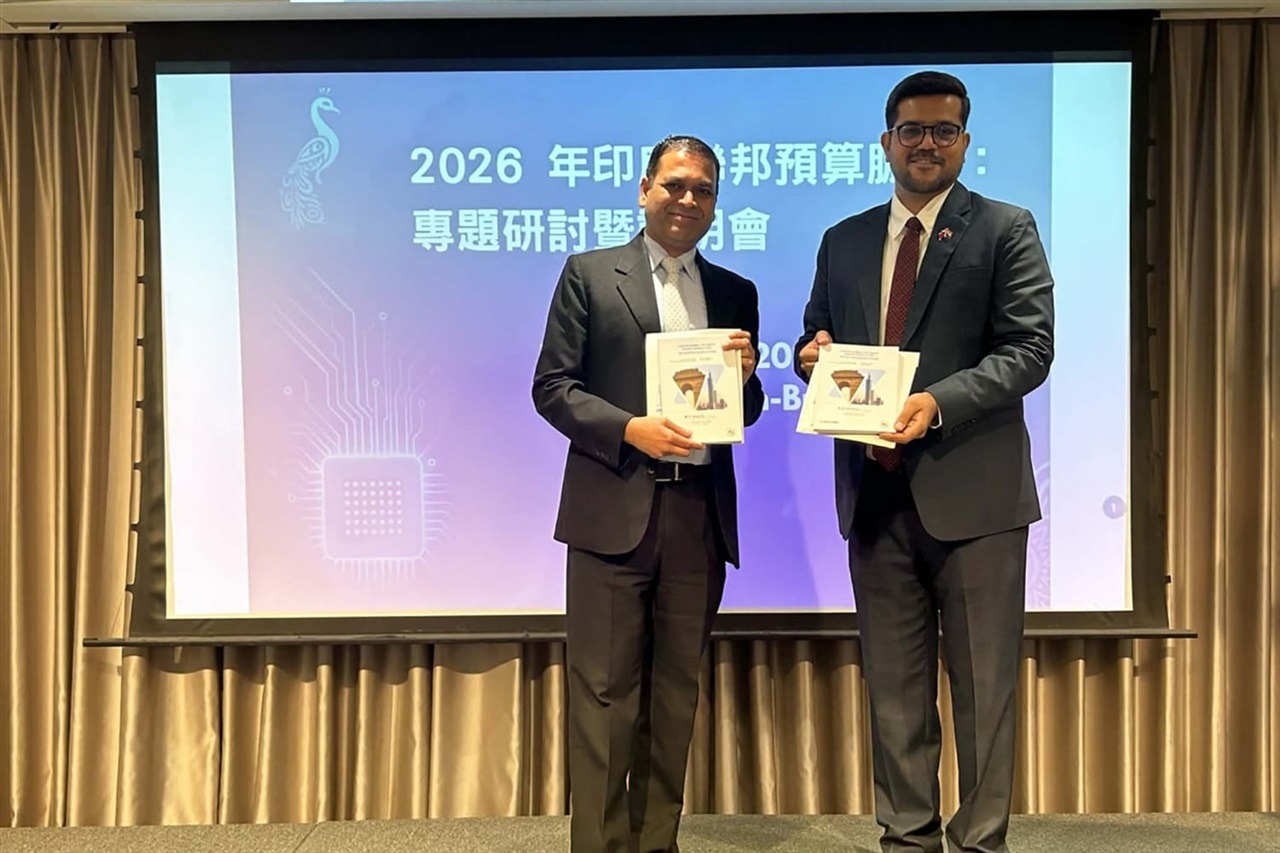
India’s Union Budget 2026 is being positioned as a major push to pull more of the global technology supply chain into India, and the strongest signals are aimed squarely at semiconductor and electronics manufacturing. Unveiled as part of a policy briefing on March 16, 2026, the budget outlines a mix of tax exemptions, duty reductions, and legal changes designed to make India easier to invest in, cheaper to manufacture in, and more predictable for long-term planning.
A central theme is reducing “import friction” for companies building serious manufacturing capacity in India. One of the standout incentives is a five-year income tax exemption for foreign companies that supply capital goods and tooling to Indian contract manufacturers operating in bonded zones. This benefit is available until 2031, offering a clear runway for international suppliers that support local production lines, especially in electronics and chip-related equipment.
Speakers at the India Taipei Association workshop stressed that India’s budget has become more than an annual financial plan—it functions as a policy map for strategic economic partners. The message to overseas manufacturers was direct: India wants to move beyond being a large consumer market and become a core production base and R&D destination. The strongest advantages, they argued, will go to companies willing to build deeper operations rather than limiting activities to assembly-only work.
Semiconductors take center stage in the 2026 package through the launch of India Semiconductor Mission (ISM) 2.0. The program doubles committed investment to about US$4.41 billion to strengthen India’s domestic chip ecosystem, and it offers subsidies covering up to 50% of project costs. On top of that, the budget shifts customs duties toward 0% on around 70 categories of capital goods and critical semiconductor inputs. Materials and inputs cited include silicon quartz and boron—items that can significantly affect cost structures for semiconductor manufacturing and advanced electronics supply chains.
Electronics manufacturing also gets a boost through expanded funding for the Electronic Components Manufacturing Scheme (ECMS). The approach is designed to open doors for global printed circuit board makers and component suppliers to scale operations, reduce costs, and improve regional competitiveness across South Asia—particularly for firms looking for a new manufacturing base with a growing domestic market nearby.
Beyond incentives, India is also changing the rules of the game with a legal overhaul aimed at making taxation clearer and lowering disputes. The new Income Tax Act 2025 replaces a decades-old framework with simplified wording intended to reduce ambiguity and litigation for foreign investors. In a move that will matter to technology licensors and service providers, the effective tax rate for technical service fees and technology transfers is reduced from 20% to 8.75%. For digital infrastructure investors, another long-horizon signal is the extension of a tax holiday for data centers until 2047, reinforcing India’s ambition to grow as a major hub for cloud, AI, and data-intensive services. Together with the capital equipment supplier incentives running until 2031, the package aims to create a longer window of predictability—something multinational manufacturers and infrastructure operators often consider essential.
These policy goals are already translating into on-the-ground projects. Gujarat is a key example, where Tata Electronics is advancing what is described as India’s first 12-inch wafer fabrication plant in Dholera. The US$11 billion project uses technology licensed from Taiwan’s PSMC and, as of late 2025 updates referenced at the event, had reported rapid progress without construction delays. Milestones mentioned include a mock-up cleanroom and ongoing piling work for wastewater treatment facilities and project offices—elements that signal movement from announcement to execution.
At the same time, the budget-era manufacturing push isn’t just about buildings and machinery—it’s also about skills. Workforce readiness was highlighted through specialized initiatives tied to Micron Technology, including a Center for Excellence created with local institutions. The program includes a mandated 90-day skill training track intended to ensure engineers can contribute immediately as semiconductor operations scale up.
While chips and electronics attracted the most attention, the budget also identifies seven “strategic and frontier” sectors for scaled manufacturing, signaling that India’s supply-chain strategy is broader than semiconductors alone. These include rare earth permanent magnets, bio-pharma, chemical parks, textiles, and capital goods. One scheme sets out to develop “Rare Earth Corridors” with mining and processing in states such as Odisha and Tamil Nadu. In bio-pharma, India is targeting 5% of global market share for biological medicines, backed by expanded research capacity and over 1,000 clinical trial sites. The government also plans three chemical parks using a cluster-style plug-and-play model, and it is pushing an Integrated Textile Programme designed to support labor-intensive growth plus technical textile parks aimed at export gains. For capital goods, a US$1.10 billion outlay is planned to strengthen high-tech tool rooms and support domestic container manufacturing ecosystems.
Geopolitics is described as a major tailwind behind this new urgency. Discussions at the workshop pointed to global “de-risking” and technology decoupling trends that have placed semiconductors at the center of international competition. The argument presented is that combining Taiwan’s manufacturing depth with India’s large STEM talent pool could shift collaboration from simple capacity expansion to deeper industrial integration. Another export-focused incentive highlighted was the prospect that expanded trade negotiations could allow the vast majority of Indian-made goods—figures cited reached 99.5%—to enter markets like the EU duty-free, raising the attractiveness of India as a production base for companies that sell globally.
Within India, states are competing aggressively to attract semiconductor and electronics investments. Gujarat promoted Dholera as a purpose-built “Semicon City” with a complete ecosystem, efficient logistics, and stable power supply. State support was described as including a 20–25% subsidy on capital expenditure that can be combined with federal grants. Tamil Nadu positioned itself as an electronics export powerhouse and a leading hub for electric vehicle production, while also emphasizing an established cluster of Taiwanese-linked supply chain activity, with companies such as Foxconn, Foxlink, Pou Chen, and Feng Tay cited as part of the ecosystem. The pitch from both states is clear: incentives are national, but execution and speed can be won region by region.
Bilateral trade between India and Taiwan is expected to cross US$12 billion this year, and the broader takeaway from the event was that India’s 2026 budget is crafted to convert interest into irreversible commitments—factories, supply contracts, technology transfers, and trained teams on the ground. For electronics and semiconductor firms evaluating “where next” for manufacturing, the budget signals that India wants not just a footprint, but a full-fledged production presence designed for scale, resilience, and global exports.