India’s first wave of OSAT (outsourced semiconductor assembly and test) projects is starting to look less like a series of big capacity promises and more like a real competitive push. Instead of measuring progress only against other domestic facilities, some Indian backend players are now openly comparing themselves with established OSAT hubs across Southeast Asia—and claiming they can win on price.
One of the clearest signals comes from Gujarat-based Suchi Semicon. The company says it has reached price parity with well-known OSAT providers in Southeast Asia, even as it acknowledges that China’s massive scale still enables lower-cost backend manufacturing.
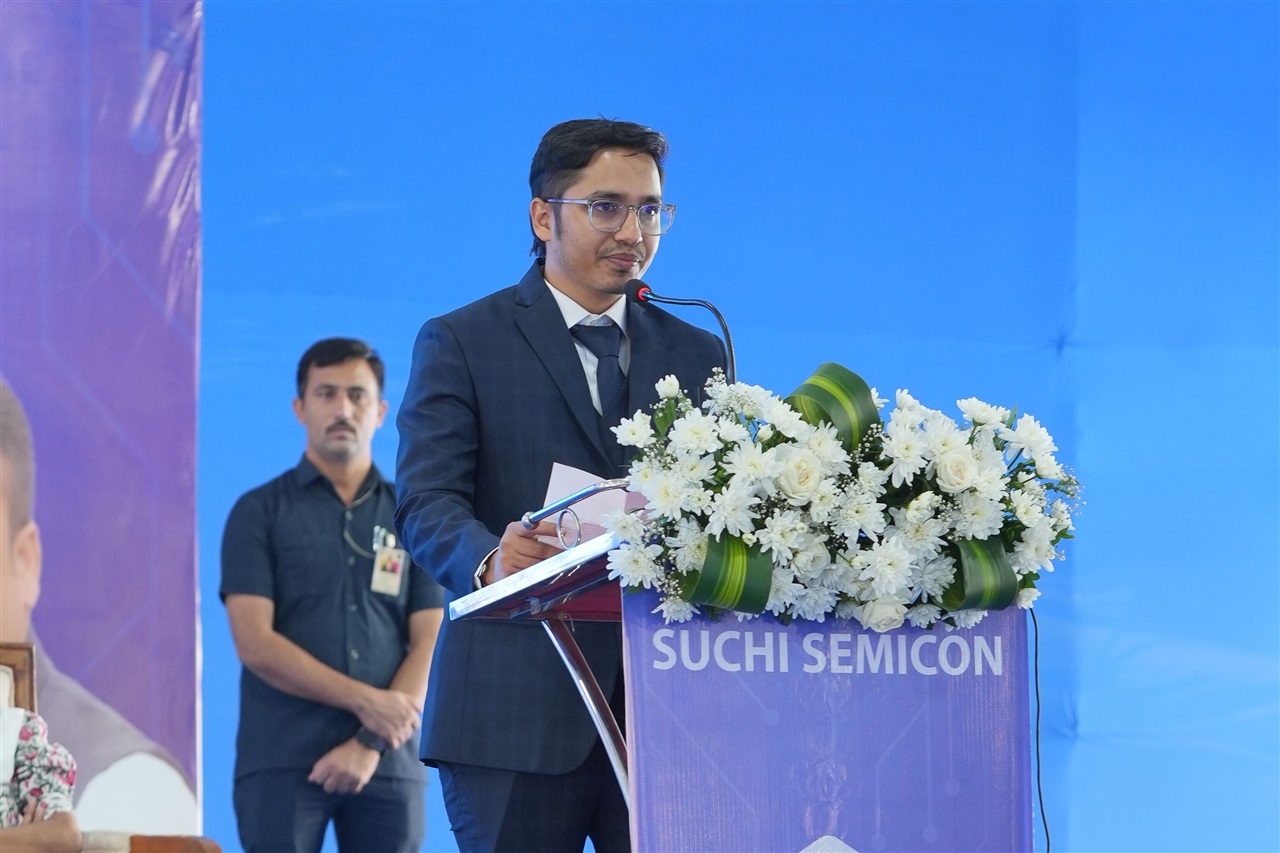
“Excluding China, we are highly competitive on pricing,” said Shetal Mehta, Director of Suchi Semicon. He added that customers evaluating options across Malaysia, Singapore, and Taiwan have told the company its pricing looks attractive and that they’re interested in moving forward.
That pricing message matters because it reframes how India’s OSAT story is being told. The focus is shifting from “building locally” to “competing regionally,” with India positioning itself as a viable alternative for global supply chains that want more geographic diversification—especially for industrial and automotive programs.
From first wafers to low-volume manufacturing: why OSAT ramps take time
Suchi’s initial packaging production began with SOIC (small outline integrated circuit) packages. The company started processing wafers in December 2024 and says it is currently operating at low-volume manufacturing (LVM) levels along with qualification lots.
According to Mehta, running in LVM today gives the company room to scale without putting quality and delivery performance at risk as it prepares for its next step: ramping QFN (quad flat no-lead) packaging. In backend manufacturing, that cautious ramp is normal. Even if equipment is installed, utilization is often dictated by customer audits, qualification schedules, and reliability testing—not just by how much capacity is available on paper.
A roughly 12-month journey from first production to early low-volume output is also consistent with typical “greenfield” OSAT timelines, where the path to sustained volume manufacturing can easily take 24 to 36 months.
QFN and power packages are next, but qualification rules the calendar
After launching SOIC packaging, Suchi expanded its roadmap into QFN packaging and power packages aimed at higher-value segments like industrial electronics and automotive applications.
For QFN, the company expects to begin sample shipments in early 2026. However, those early shipments are intended primarily for customer qualification rather than immediate volume production. Mehta estimates qualification can take around 12 to 18 months, and the bigger commercial payoff—multi-year contracts—often lands later, around 36 to 60 months after engagement begins.
Power packages are on a separate track. Suchi plans to ship power package samples in April, initially focused on industrial and automotive customers. The company is also pursuing IATF 16949 certification, a widely recognized automotive quality management standard, targeting completion in the first half of 2026. While Suchi recently characterized its operations as “automotive-grade ready,” formal certification is still in progress—an important distinction in automotive supply chains, where approvals and reliability expectations are stringent and timelines are long.
Why Indian OSAT pricing can look competitive
When asked why Suchi believes it can compete on pricing with OSAT providers in places like Malaysia and Vietnam, Mehta pointed to a mix of operational realities and policy support.
India’s relatively low operating costs help, and government schemes—both national and state-level support from Gujarat—also factor into the overall cost structure. Suchi did not break down exactly how much comes from structural cost advantages versus incentives, but the implication is clear: today’s pricing competitiveness is being built from both business fundamentals and policy tailwinds.
At the same time, the company is realistic about the global landscape. China’s backend ecosystem remains more cost-competitive, largely because of its scale, mature supplier networks, and high-volume manufacturing efficiencies.
Looking ahead, an important question for India’s emerging OSAT sector will be how pricing holds up as volumes increase and as incentives evolve or potentially phase down. Long-term competitiveness depends on whether operating efficiency and ecosystem depth can eventually carry more of the cost advantage.
What could slow growth in 2026: materials, equipment, and talent
Like many new semiconductor manufacturing initiatives, India’s backend buildout isn’t constrained by only one bottleneck. Mehta described day-to-day operations as a rotating set of challenges—sometimes materials, sometimes equipment, sometimes a shortage of engineers who can repair tools quickly, and often gaps in training when production needs to ramp.
Those constraints reflect a broader ecosystem reality: building OSAT capacity is not only about installing machines. It requires a reliable flow of qualified materials, steady tool uptime, process discipline, and a deep bench of technicians and engineers who can keep lines running consistently.
What this means for supply chain planners and automotive programs
For companies considering India as a backend diversification option, Suchi’s timeline is a useful indicator of what to expect. Meaningful OSAT capacity for industrial and especially automotive use cases appears to be roughly 18 to 24 months away, largely due to the qualification cycles required. For automotive programs, even if customer engagement happens now, volume production is more likely to land in 2027 or 2028.
The bigger takeaway is that Indian OSAT companies are increasingly trying to win business on fundamentals—price, roadmap, and quality systems—rather than relying only on proximity to India’s growing electronics market.
Whether India can sustain regional relevance beyond the initial buildout will likely depend on three things: how many qualification programs successfully convert into multi-year production contracts; how cost structures evolve as policy support changes; and how quickly automotive certifications enable deeper integration with tier-1 supply chains. As Southeast Asian OSAT hubs continue expanding too, the competitiveness gap will become easier to measure through real production performance and contract wins rather than projections.