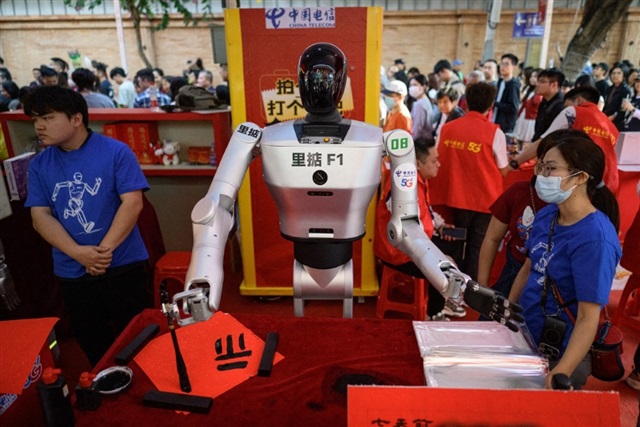
CCTV’s 2026 Spring Festival Gala didn’t just celebrate the Lunar New Year—it doubled as China’s most high-profile robotics showcase to date. In what many are calling the most robot-saturated edition in the gala’s history, the nationally watched broadcast leaned heavily into humanoid and quadruped robots, effectively turning prime-time entertainment into a live advertisement for the country’s fast-growing robotics industry.
Rather than appearing as a one-off novelty, robots were woven throughout multiple segments, from martial arts performances to comedy skits and even a holiday-themed short film. The scale and variety of these appearances made one thing clear: this wasn’t just about spectacle. It signaled a coordinated effort to normalize robots in public life while showcasing the capabilities of China’s domestic robotics makers.
Four separate robotics companies were featured across the program, highlighting how competitive the space has become—and how urgently these firms are chasing mainstream recognition. The Spring Festival Gala, with its massive audience and cultural weight, offered something few marketing campaigns can match: instant national visibility, wrapped in family-friendly tradition. For robotics companies trying to win enterprise contracts, attract partners, and build consumer trust, that kind of exposure can be more valuable than any product launch event.
The strategy also points to bigger business goals. High visibility can translate into real-world demand, especially as companies push to turn public interest into purchase orders. It can also help build momentum for fundraising and potential IPO plans, where brand recognition and a sense of inevitability can influence market confidence. In other words, the gala wasn’t only a stage—it was a signal to investors, buyers, and competitors that these companies are ready to scale.
At the same time, the broadcast’s robot-heavy approach landed in a cultural moment shaped by mixed feelings, especially among younger audiences. While robotics represents technological progress and national ambition, it can also trigger skepticism about hype, job disruption, or whether these machines are being promoted faster than they’re genuinely useful. That tension—between excitement and doubt—hovered over the gala’s glossy showcase, making the event as much a commentary on public mood as a celebration of innovation.
By placing robots front and center in entertainment formats that reach nearly every household, the 2026 Spring Festival Gala set a new benchmark for how technology can be promoted through mass culture. Whether audiences embraced it wholeheartedly or watched with a raised eyebrow, one outcome is undeniable: China’s robotics industry just received its biggest mainstream advertisement yet, and the race to turn televised fame into market success is officially on.


