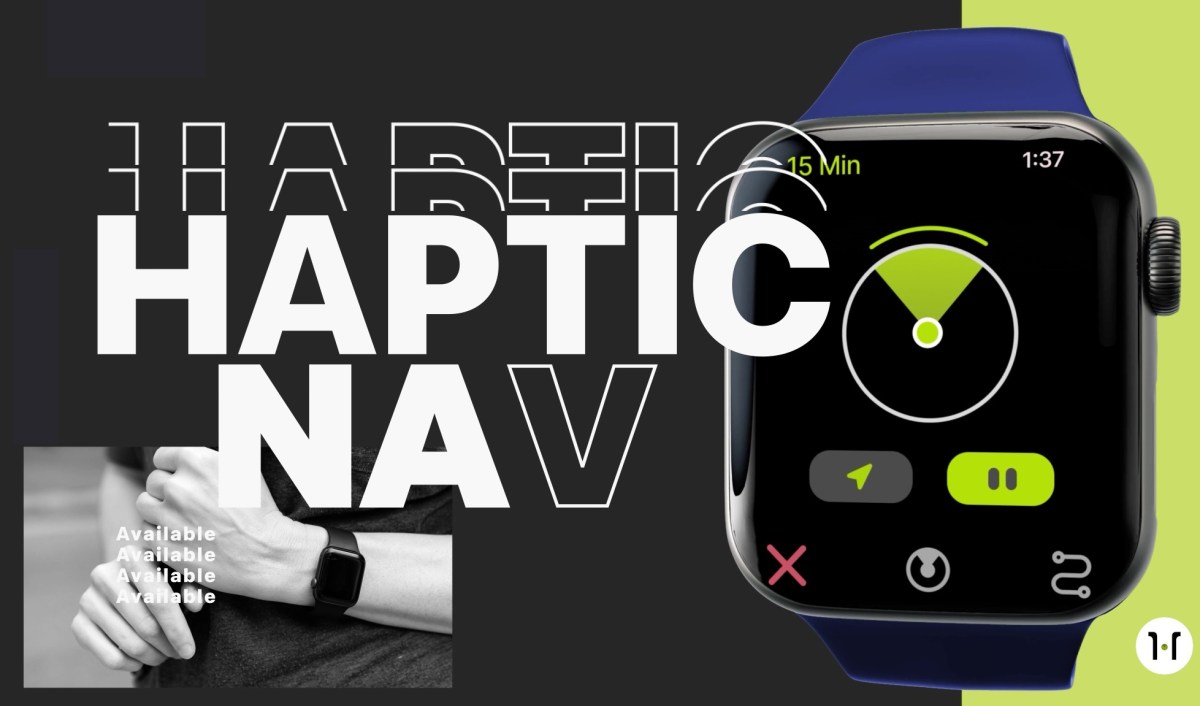
In today’s tech-driven world, smartphones and navigation apps are nearly indispensable. Yet, for individuals with blindness or low vision, these tools can be more challenging to use. Enter Haptic, a company that’s pioneering a non-visual, non-verbal navigation system designed to make getting around more intuitive and accessible for everyone. The innovative approach Haptic employs is truly revolutionary, and they’re ready to take it global.
Haptic has made significant strides since its inception in 2017, inspired by a personal tragedy when a friend’s accident resulted in blindness. The team embarked on a mission to create a navigation method that didn’t rely on traditional visual or auditory cues, which can sometimes fall short in convenience and practicality.
Most navigation tools today capitalize on screen-reading and audible directions. However, as Enzo Caruso, Haptic’s co-founder and head of business, eloquently suggests, there are untapped ways of interaction—particularly through touch. “Touch is a universal language,” he stated, emphasizing its potential to transform navigation by providing information through sensation.
The breakthrough Haptic has achieved, which they’ve patented, employs vibrational and tactile feedback, guiding users through a series of sensations. As users walk, the device delivers a continuous pulse when they’re on course, intensifying or quickening if they stray off path—a concept they’ve dubbed the “haptic corridor.” While it might sound abstract, the creators assure that its intuitive design allows users to grasp its functioning in mere seconds.
The beauty of this technology is not just its simplicity. It transcends language barriers, doesn’t require specialized equipment, and can be utilized across various environments, from bustling city streets to vast open areas, with future plans for indoor navigation.
Initially conveyed through a custom wearable, the technology now benefits from advancements in existing consumer electronics. Caruso pointedly questioned, “Do you want to compete with giants like Google and Apple, or collaborate with them?” By integrating their system into devices like smartwatches, Haptic aims to expand their user base exponentially.
Kevin Yoo, CEO and co-founder, shared that Haptic is shifting gears in 2024—from merely proving their concept to mass distribution. Strategic partnerships with tech behemoths could propel their reach, making scenarios like seamlessly finding your Uber through smartwatch pulses a commonplace reality, not just for people with vision impairments, but for everyone.
The potential applications are vast and exciting. Imagine navigating without needing to constantly check your phone—whether in an airport or a crowded venue. Haptic’s technology promises to turn this into an everyday convenience.
Currently, Haptic is collaborating with organizations such as Waymap, Cooley, WID, and Infinite Access. They’ve recently secured a substantial contract with Aira, an application that supports those with vision impairment by providing live assistance. Haptic’s innovation could minimize the need for constant guidance by offering precise directions through tactile feedback.
Haptic’s business model focuses on licensing and integration rather than direct app monetization. Their app is freely available in 31 countries, and they’re actively seeking additional partnerships to further expand their reach. With ongoing fundraising, the company aims to forge alliances with major entities like Uber and T-Mobile to truly revolutionize navigation as we know it.
The journey is far from over, but Haptic is well on its way to transforming the landscape of accessible technology, redefining how navigation is perceived and experienced—one tactile pulse at a time.