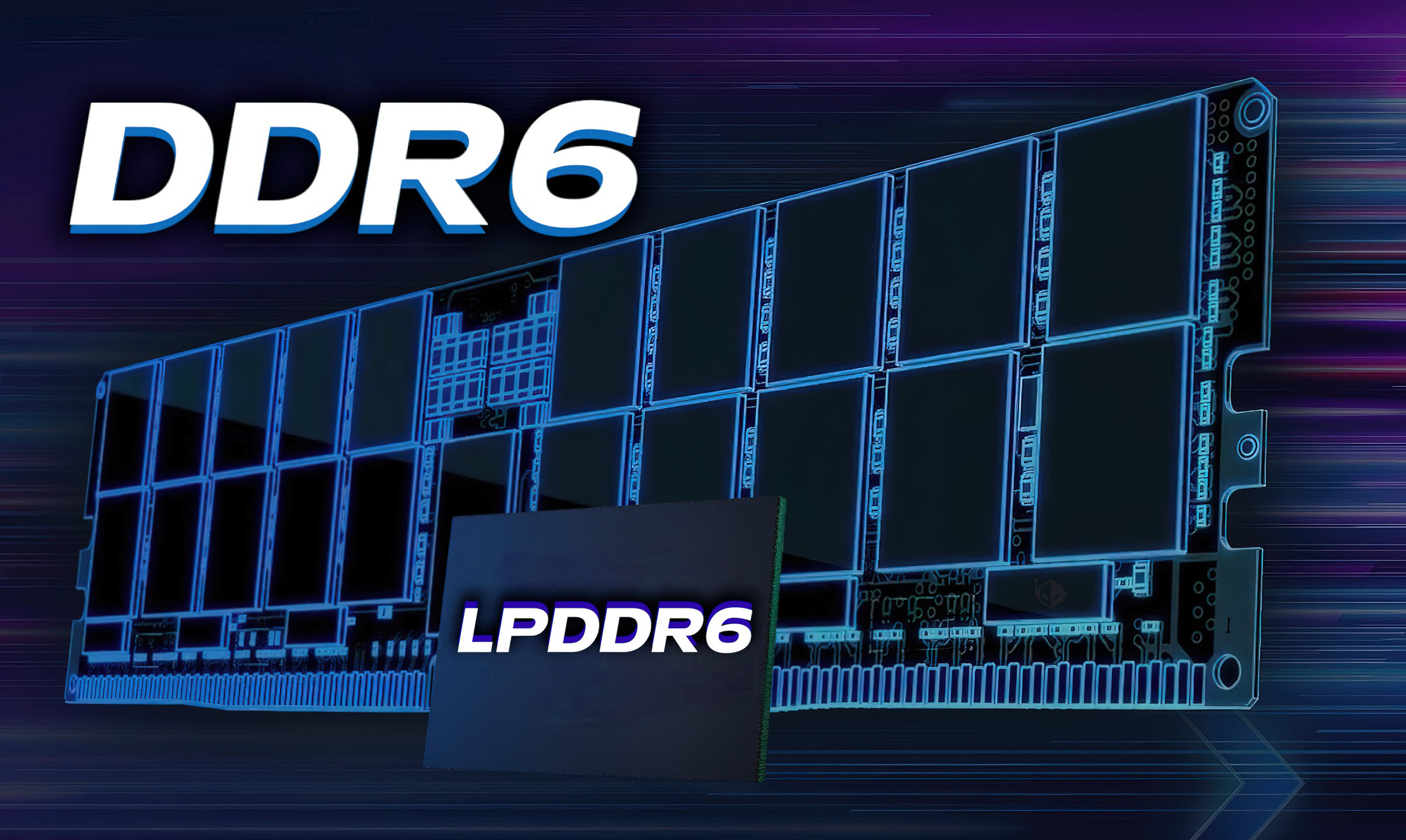
The race is on for next-generation DDR6 memory as various module and motherboard manufacturers dive deep into developing their cutting-edge solutions. While DDR6 may be a few years away from gracing mainstream platforms, the groundwork is well underway, with new designs like CAMM2 boasting speeds of up to an impressive 17,600 MT/s.
The specifications for DDR6 were finalized by JEDEC in 2024, sparking rapid advancement in the field. Reports indicate that the demand within high-performance computing (HPC) has spurred DRAM makers to expedite their development timelines. Major players such as Samsung, Micron, and SK Hynix are leading the charge, with platform testing anticipated to conclude by 2026. By 2027, we could see the first applications of DDR6 emerging as next-generation servers roll out.
Collaboration between tech giants like AMD, Intel, and NVIDIA with DRAM manufacturers is in full swing to bring DDR6 to the forefront as swiftly as possible. The new standard promises a significant leap, starting with a base transfer rate of 8800 MT/s — an 83% increase over DDR5’s 4800 MT/s. Incredibly, DDR6 could achieve speeds reaching up to 17,600 MT/s, marking a substantial enhancement over today’s fastest DDR5 modules.
DDR6 will also introduce a novel architectural design, transitioning to a 4×24-bit channel structure from DDR5’s 2×32-bit channel. This change is expected to revolutionize data transfer capabilities and set the stage for unprecedented performance.
Initially, DDR6 is likely to find its footing in the HPC and AI markets, aligning closely with JEDEC specifications. While it may take time for DDR6 to reach its full potential, it mirrors DDR5’s gradual climb, which only recently surpassed speeds of 8000-9000 MT/s.
A noteworthy advancement in slot design will be required to maintain signal quality and support high-bandwidth in high-density, low-impedance settings. The CAMM2 design is emerging as a pivotal innovation, potentially gaining momentum alongside DDR6’s rise. Although its adoption has been slow, DDR6 might finally propel CAMM2 into the spotlight.
There’s speculation that high-end notebooks might also tap into DDR6 capabilities, especially with future CPUs from Intel and AMD. This suggests a potential consumer market, though it might lean towards LPDDR6 for mobile applications, which prioritize low-power solutions.
As with DDR5, the journey to widespread acceptance for DDR6 will demand time and a robust ecosystem. Enthusiasts will undoubtedly be drawn to higher speeds, but mainstream success hinges on consumer uptake. Initially, DDR6 is expected to come with a higher price tag, paralleling the trajectory observed with DDR5.