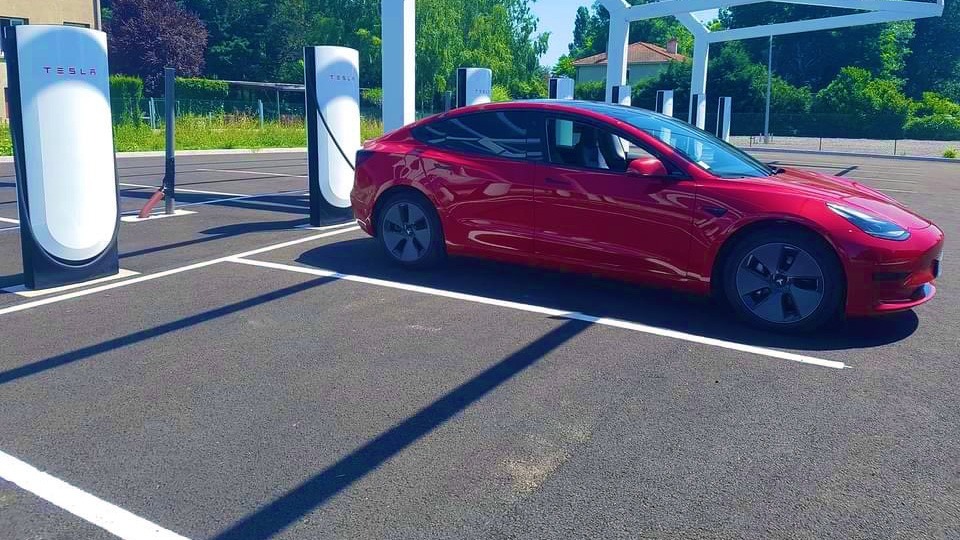
Electric Vehicle (EV) manufacturers are tackling one of the industry’s most significant hurdles – slow charging times. Leading battery suppliers for companies like Tesla are now developing groundbreaking 6C batteries, which could dramatically reduce charging times to rival the convenience of refueling traditional internal combustion engine (ICE) vehicles at a gas station.
Last year witnessed significant progress in the EV sector, with announcements of innovative battery technologies that can charge from 20% to 80% in a mere 10 minutes, even in cold weather conditions. This progression, particularly with Lithium Iron Phosphate (LFP) cells as found in certain Tesla Model 3 variants, has set the stage for the swift development of 6C charging capabilities.
Now, industry giants such as CATL and BYD are doubling down on their efforts to bring 6C batteries to the market. This move is largely due to the realization that one of the critical factors affecting EV sales is the consumers’ desire for quick charging solutions.
CATL, taking lead as the world’s most extensive battery maker, is reportedly set to unveil its 6C battery technology within the second half of the current year. This innovation will be part of what they’re calling their second-generation Kirin battery architecture, which introduces advances in both cell packaging and materials chemistry.
To bring these ultrafast charging times to the mass market and support popular models like the Tesla Model 3 or Model Y, CATL is intended to utilize a hybrid chemistry method. This method combines elements of both ternary lithium and iron phosphate. Iron phosphate is particularly appealing for its abundance and affordability, leading to cost-effective energy solutions. CATL’s proposed strategy includes incorporating only a small percentage – about 5% – of ternary metals to strike a balance between cost and the higher performance necessary for 6C charging.
The upcoming Kirin battery packs will also boast an improved cooling solution, situated between the cells, necessary for managing the intense heat generated during the fast-charging process. Ongoing developments aim to upgrade the current 16 kW heat dissipation capability to ensure that batteries can handle a full recharge in 10 minutes safely.
Additionally, enhancements are expected in the composition of the graphite electrodes and the electrolyte mixture to endure the rigors of 6C charging speeds. Not to be outflanked, BYD is also investing in its innovative endeavors, keen on upgrading its Blade Battery architecture to embrace 6C charging technology.
Despite these advances, the EV industry still faces an overarching challenge: upgrading the charging infrastructure to deliver the power output required for these high-speed charging capabilities. The readiness of charging networks is crucial in maximizing the benefits of 6C technology.
In conclusion, the advent of 6C batteries signifies a significant leap forward for the electric vehicle industry. This charging technology has the potential to alleviate consumer range anxiety and make electric vehicles a more attractive proposition for the wider public. As we anticipate the launch of these rapid-charging batteries, the focus shifts to the wider EV ecosystem and its capacity to support such a considerable transformation.