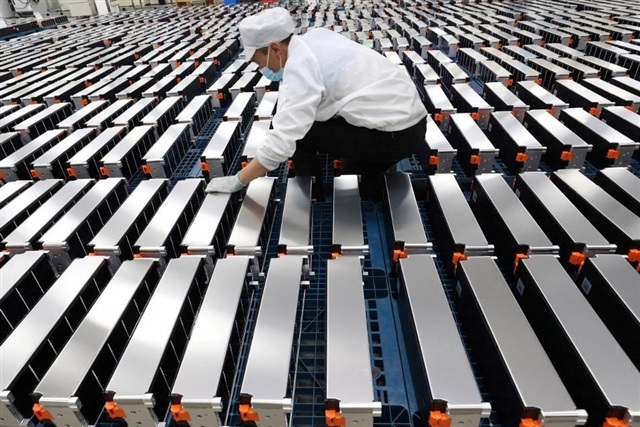
China’s battery heavyweights are widening their lead in the global electric vehicle supply chain, and South Korea’s longtime champions are feeling the pressure. Fresh industry data points to shrinking market share for LG Energy Solution, SK On, and Samsung SDI, as Chinese competitors accelerate with low-cost lithium iron phosphate technology, rapid strategic shifts, and unmatched production efficiency. The momentum has shifted, and it’s reshaping the economics of EVs worldwide.
At the heart of this change is the resurgence of LFP batteries. Once viewed as a compromise, LFP has matured into a compelling choice for mass-market electric cars and energy storage systems. It delivers strong safety, longer cycle life, and lower costs due to cheaper raw materials and simpler manufacturing. As automakers race to cut sticker prices without sacrificing reliability, LFP has become the chemistry of choice for base and mid-tier EV trims, as well as for home, commercial, and grid-scale storage where energy density is less critical than cost and longevity.
Chinese battery makers seized this opening with speed and scale. Their command over the materials supply chain, relentless process optimization, and high-volume manufacturing have driven costs down and production output up. Add to that fast adoption of innovations like cell-to-pack integration and efficient prismatic cell designs, and the result is a powerful cost-performance advantage that’s hard to match. The domestic EV boom in China further fuels this momentum, allowing factories to run at high utilization, iterate quickly, and export competitively priced cells globally.
South Korea’s leaders, by contrast, built their strengths in high-nickel chemistries that power premium, long-range vehicles. These batteries still dominate performance segments and remain crucial for trucks, SUVs, and high-end models that demand maximum energy density. But as global demand shifts toward affordable EVs and cost-sensitive energy storage, the balance has tilted. Utilization at some Korean lines has come under pressure, and the three major manufacturers are ceding market share at an accelerating pace.
This isn’t just a story of chemistry—it’s about strategy and timing. LFP’s rapid ascent required retooling, new supplier relationships, and product line realignment. Chinese rivals executed those moves earlier and at extraordinary scale. Meanwhile, Korean firms have been focused on expanding capacity in North America and Europe to serve global automakers and align with evolving policy incentives. That long-term strategy remains pivotal, but the near-term market has rewarded nimble shifts to LFP and aggressive cost-down execution.
For consumers, the implications are largely positive. As LFP-equipped models proliferate, EV prices are trending down, making ownership more attainable. Fleet operators and commercial buyers benefit from batteries optimized for durability and total cost of ownership. And in energy storage, LFP’s stability and affordability are helping unlock more renewables and grid resilience.
The competitive landscape, however, is intensifying. Price pressure and potential overcapacity could squeeze margins across the sector. To regain momentum, Korean battery makers are already moving on several fronts:
– Expanding portfolios to include LFP alongside high-nickel chemistries, targeting both EV and energy storage markets.
– Accelerating research into next-gen technologies such as solid-state, high-manganese cathodes, and dry-electrode manufacturing to slash costs and boost efficiency.
– Localizing production in key markets to meet automaker needs, secure incentives, and shorten supply chains.
– Strengthening upstream materials partnerships to stabilize costs and ensure long-term supply of lithium, iron phosphate, and other critical inputs.
In the near term, expect a clearer segmentation of the battery market. LFP will dominate value-focused EVs and storage applications where cost and safety lead, while high-nickel cells continue to power premium and long-range vehicles. Over time, manufacturing breakthroughs and new chemistries could blur these lines again, but today’s demand signals favor the fastest, most cost-effective solutions—and Chinese producers have capitalized decisively.
The race is far from over. Global automakers still want diversified supply, technology roadmaps are evolving, and policy frameworks in the United States and Europe are nudging production closer to end markets. South Korea’s battery makers have deep expertise, strong customer relationships, and a track record of scaling complex technologies. The challenge now is execution speed: matching China’s efficiency, expanding LFP capacity where it makes sense, and pushing next-generation innovations to market.
What’s undeniable is the shift underway. With LFP’s cost advantage, strategic agility, and manufacturing scale, Chinese battery players have seized the initiative. Korea’s top trio are being forced to adapt faster than ever—and the companies that can balance cost, performance, and reliability at global scale will define the next decade of electric mobility.